Vance Unveils ‘Temporary Forever’ Plan for Microsoft’s H-1B Workforce
The new standard promises foreign tech workers all the belonging of America, minus the unsettling permanence.
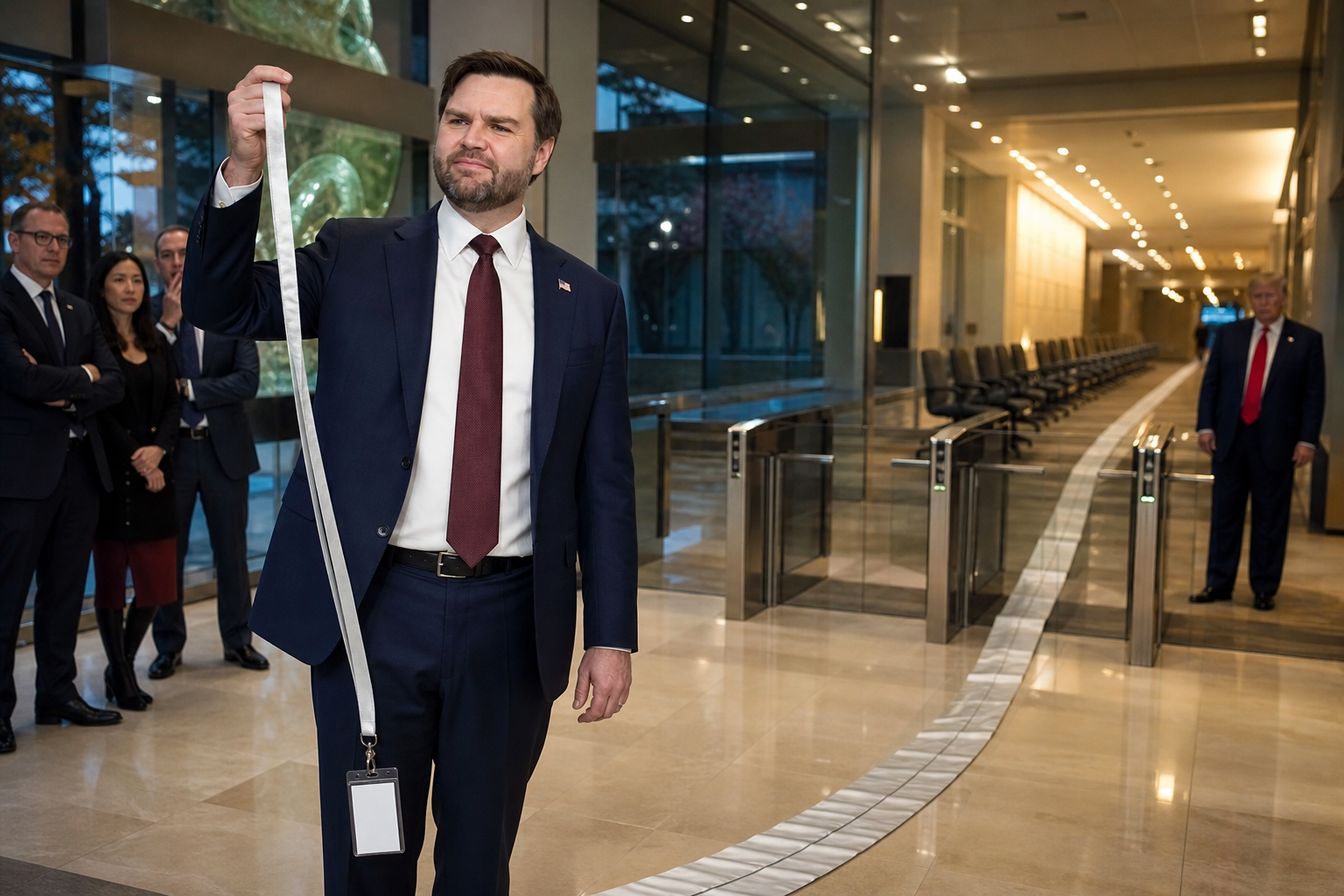
WASHINGTON—Following the administration’s move to suspend Microsoft and other major technology firms from a program used to sponsor H-1B workers for permanent residency, Vice President JD Vance unveiled a fictional new workplace principle Thursday: nobody should be trapped in an exploitative temporary arrangement without first being given the dignity of remaining temporary forever.
The initiative, called Temporary Forever, would recognize companies that keep highly skilled foreign workers in a state of professionally productive suspense while avoiding the bureaucratically reckless promise that they might someday belong anywhere in particular.
“For too long, corporations have told workers, ‘You are family,’ and then irresponsibly given them a path to establish an independent adult life,” said an imaginary Labor Department spokesman, standing beside a velvet-covered plaque shaped like an employee badge with no expiration date because it had never technically been activated. “We are restoring the American workplace tradition of deep mutual commitment with absolutely no legal implications.”
The policy comes after Vance argued that major tech companies had used the visa system while laying off American workers, casting the affected foreign workers as people caught in an arrangement that gave employers too much control over their futures. The fictional administration concluded that the cleanest response was to make sure no worker could confuse a future with an expectation.
Microsoft’s human-resources division immediately welcomed the clarity. In a leaked parody training video, a soothing narrator explains that employees are no longer “waiting for permanent residency,” an expression judged unnecessarily hopeful. They are now “participating in an open-ended belonging experience.”
Workers would receive a commemorative lanyard in a tasteful shade of administrative beige and access to a new company meditation app, Presently, which reminds users every morning that the present is the only immigration status anyone can truly count on.
“This removes the stressful binary of being either valued enough to stay or free enough to leave,” said the fictional HR executive. “Our people can finally focus on innovation, knowing their relationship to the country will remain as agile as a quarterly staffing model.”
At first, the rollout appeared to create an awkward public-relations problem for tech executives, who had spent years describing sponsorship as proof they wanted top talent to build a life in America. That concern was resolved when the administration offered companies a new certification: Employer of Enduring Conditionality.
To qualify, a company need only show that it has built a culture where employees feel sufficiently appreciated to work late, relocate repeatedly and refrain from asking what happens after “for now.” Firms achieving platinum status may replace annual service awards with small hourglasses, each containing just enough sand to make an employee nervous during lunch.
The second problem arrived almost immediately. Several executives worried that a workforce denied any plausible path to permanence might eventually decide to work somewhere else, including countries that had not converted employee retention into a philosophical position.
Administration officials dismissed that concern as old-fashioned. Under Temporary Forever, companies are encouraged to retain talent through the timeless management tools of purpose, mission and a calendar invitation labeled “Quick Sync on Your Future” that is rescheduled every six weeks until nobody remembers who sent it.
There was also a brief internal debate over whether the policy contradicted the administration’s argument that foreign workers should not be tied so tightly to a single employer. That meeting ended when someone pointed out that the contradiction was actually the program’s greatest strength: workers would no longer be dependent on one company for a green card because the green card itself had been removed from the conversation.
By afternoon, Microsoft had reportedly begun revising its onboarding materials. The company’s famous campus culture would remain intact, sources said, except the welcome packet would no longer ask new hires where they see themselves in five years. It would ask whether five years had ever really been a useful unit of measurement.
At the White House, officials celebrated the policy as a breakthrough in labor mobility, provided workers understood that mobility meant moving between conference rooms while their future stayed exactly where it was.
Vance Unveils ‘Temporary Forever’ Plan for Microsoft’s H-1B Workforce
The new standard promises foreign tech workers all the belonging of America, minus the unsettling permanence.
WHAT STARTED THIS MESS
The event underneath the joke is real. The SPILL premise, dialogue and escalation above are fictional parody.
- NBC Microsoft is being suspended from program to apply for green cards for H-1B visa workers, Vance says ↗
- Reuters US suspending permanent residency program for Microsoft, Vance says ↗
- AP Microsoft is being suspended from program to apply for green cards for H-1B visa workers, Vance says ↗
- POLITICO Vance says Microsoft, Adobe barred from sponsoring H-1B workers for green cards ↗
- CNN Trump admin bars Microsoft and other tech companies from seeking permanent residency for foreign workers ↗
- PBS NewsHour WATCH: Vance says Microsoft is being suspended from green card program for H-1B visa workers - PBS ↗