Trump Team Places Iran, Grocery Aisles and ICE on Performance Improvement Plans
The administration insists reality can remain employed if it starts showing more initiative around presidential messaging.
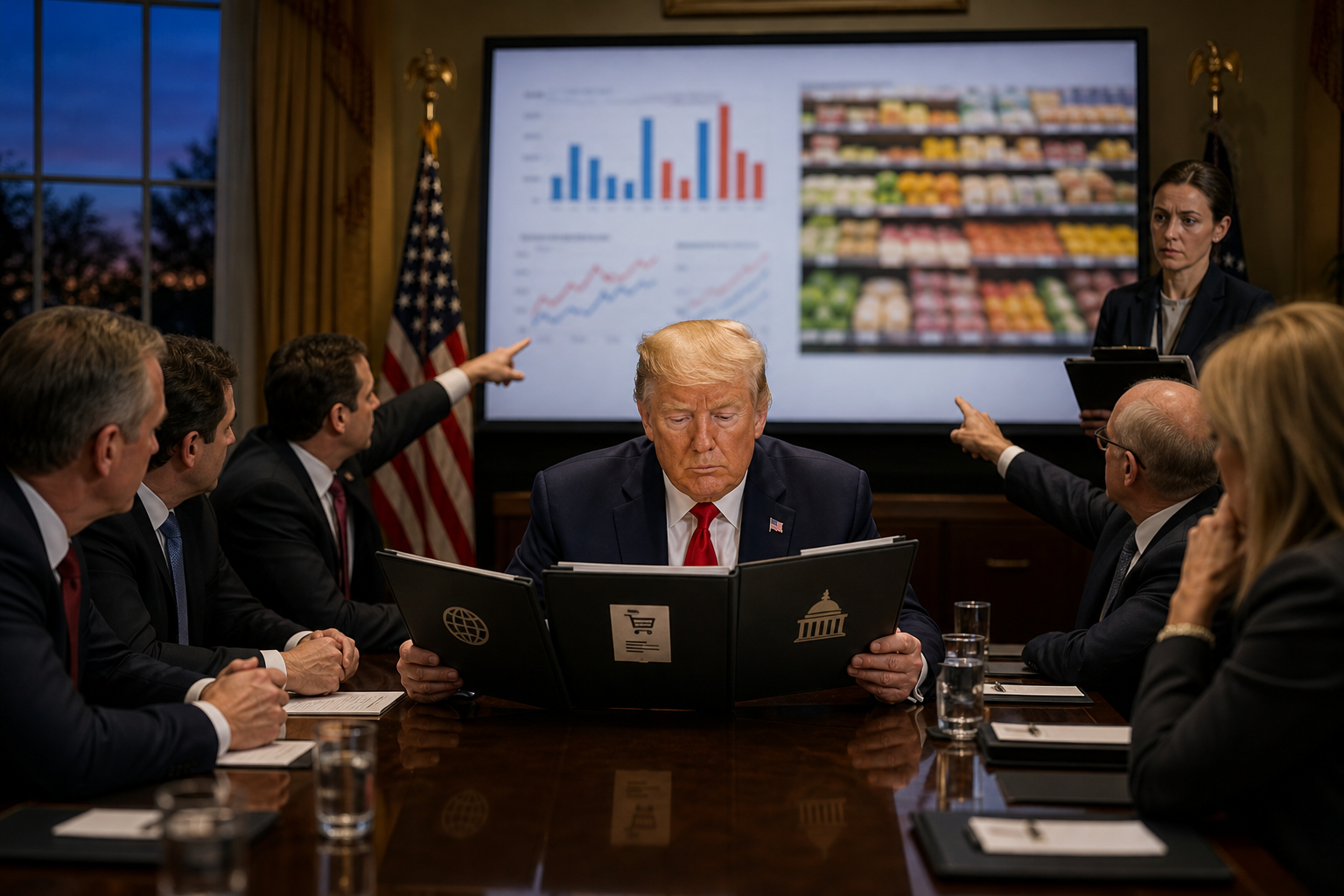
WASHINGTON — The White House has placed Iran, the American grocery aisle and the federal immigration apparatus on separate 30-day Performance Improvement Plans after Rep.-elect Scott Wiener accused President Trump of being “not connected to reality” on all three subjects.
According to a fictional internal memo obtained by SPILL from a copier that had clearly seen too much, the administration remains committed to “a culture of excellence in which external conditions actively support leadership’s preferred understanding of events.” Iran has been instructed to reduce any behavior that might complicate statements about deterrence. Grocery stores have been asked to stop arranging prices in a way that “creates an unnecessarily visual relationship between inflation and the public.” Immigration enforcement has been reminded that operations should project firmness without producing the kind of outcomes that make everyone in the room suddenly discover nuance.
“This is not punishment,” said a fictional senior adviser wearing the expression of a man who had just asked the atmosphere to improve its attitude. “It’s an opportunity for geopolitical actors, household staples and federal agencies to demonstrate that they are coachable.”
Under the plan, Iran must attend weekly alignment sessions with a communications team that will explain the strategic value of behaving like a solved problem. The country will be evaluated on its ability to avoid missile headlines, oil-market consequences and any use of the phrase “red line,” which the memo describes as “a legacy visual asset with inconsistent deliverables.”
The grocery aisle’s plan is more ambitious. Eggs, coffee, ground beef and whatever product has most recently made a cable-news host hold up a receipt like a classified document will be required to participate in a new initiative called Price Positivity. Rather than lowering prices, the products will be encouraged to “tell a more complete story” about their cost through font selection, seasonal framing and patriotic shelf placement.
One proposed pilot program would place a small American flag beside every item that rose in price, allowing shoppers to understand that paying more is not necessarily a problem if it occurs near a symbol they respect.
“The customer has been overly focused on the number,” the adviser said. “We want them to experience the number as part of a journey.”
The immigration plan proved more delicate. Staff members initially proposed asking enforcement agencies to stop producing optics that complicated the administration’s political messaging. But an operations official reportedly objected that the agencies had already spent years mastering the difficult art of being described as both too aggressive and insufficiently aggressive by people sharing the same podium.
That objection triggered the first major setback in the reality initiative: a meeting intended to discipline the immigration system for creating contradictions ended with three political factions filing workplace complaints against the word “contradiction.”
At that point, consultants brought in to salvage the project made a discovery. The problem was not that reality kept failing to support the president. The problem was that reality had been permitted to operate as a single product.
The White House then unveiled Reality Premium, a tiered subscription model allowing different audiences to receive the version of current events best calibrated to their existing blood pressure. Under the basic plan, Iran is contained, prices are improving and immigration policy is working perfectly. The family plan adds one designated relative who may ask what any of that means. A high-end donor package includes access to a private briefing where officials explain that the situation is actually much more complicated, but in a reassuringly expensive way.
Wiener, who has not joined the administration’s fictional human-resources department despite what several frantic drafts of the memo appeared to assume, was reportedly sent a calendar invitation titled “Cross-Functional Discussion: Rebuilding Trust With Observable Conditions.”
He declined after noticing the meeting was scheduled for the same time as reality.
Trump Team Places Iran, Grocery Aisles and ICE on Performance Improvement Plans
The administration insists reality can remain employed if it starts showing more initiative around presidential messaging.
WHAT STARTED THIS MESS
The event underneath the joke is real. The SPILL premise, dialogue and escalation above are fictional parody.
- PBS NewsHour Oil shock from Iran war led to drop in carbon pollution, scientists say - PBS ↗
- CNN Newly-elected Adam Hamawy on US support for Israel, war with Iran ↗
- CBS Rep.-elect Scott Wiener says Trump is "not connected to reality" on Iran, economy, immigration ↗
- Reuters Iran will not allow enriched nuclear material to leave the country, security chief says ↗
- AP Immigration arrests go on unabated despite Trump's misgivings after the GOP's midterm wipeout ↗