Trump Administration Calls Grocery Receipts ‘Unvetted Narratives’
A new White House review will determine whether the total at the bottom has enough context to be believed.
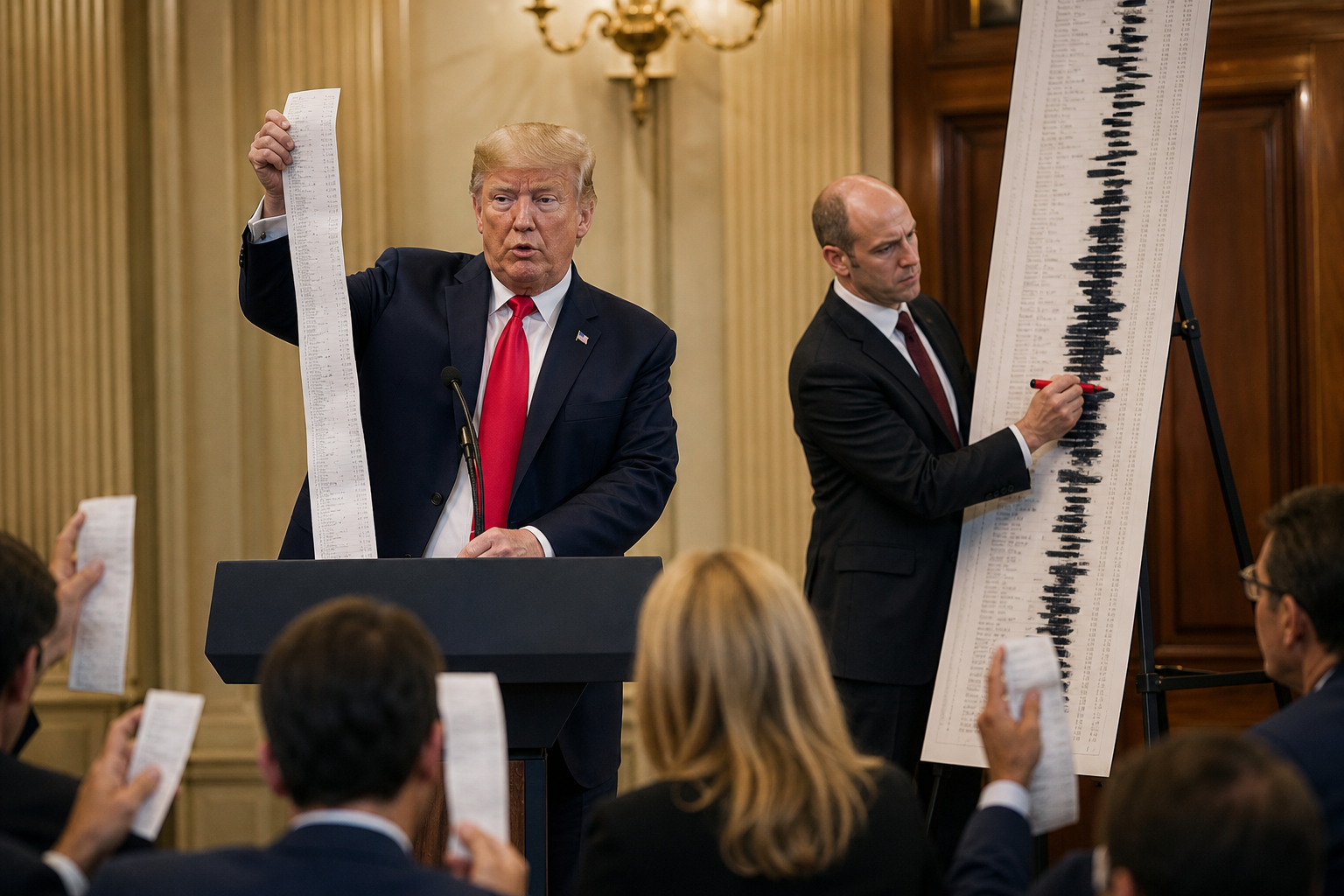
WASHINGTON — The White House moved Friday to restore public confidence in the economy by questioning the credibility of grocery receipts, which it described as “highly emotional documents assembled under fluorescent lighting by parties with a clear financial interest in feeling stressed.”
The action follows a Reuters/Ipsos poll finding that 78% of Americans blame President Trump’s policies for prices rising faster than their earnings, including a substantial share of Republicans. Rather than contest the number, administration officials said the public had been exposed to too many “single-source narratives” printed on thermal paper and handed directly to consumers at moments of vulnerability.
“A receipt may tell you that eggs, coffee and detergent cost more than they did last week,” said fictional White House affordability adviser Chad Dimmock, standing before an easel displaying a receipt with several passages blacked out. “But does it tell you about leadership? Does it tell you about energy dominance? Does it explain that the cashier had a bad attitude? No. It is a radically incomplete document.”
Under the new Receipt Integrity Framework, shoppers will be encouraged to submit questionable totals for review before discussing them with family members, neighbors or anyone waiting behind them in line. The government will then assign each purchase a Context Score, reflecting factors including global conditions, prior administrations, seasonal weather patterns, and whether the shopper had selected an artisanal pasta sauce without first exhausting the shelf-stable options.
The program’s first finding was that a $214.63 supermarket bill from suburban Ohio could not be treated as reliable evidence of anything because it lacked a countervailing quote from a bulk-package manufacturer.
For several hours, the policy appeared to be a straightforward attempt to move the national conversation away from prices and toward the people rudely noticing them. Then the Office of Public Liaison discovered a more serious threat: Americans were keeping receipts.
“We had assumed these were discarded in a civilized manner, preferably before reaching the parking lot,” said one fictional official involved in the rollout. “Instead, people have them folded in wallets. They have them in glove compartments. Some have spreadsheets. At that point you are no longer dealing with a consumer. You are dealing with an archivist.”
The White House has therefore unveiled a voluntary Receipt Surrender Initiative, asking Americans to turn in old evidence of what things cost before it can be “misunderstood through comparison.” Participants will receive a commemorative pocket card reading THE ECONOMY IS EXPERIENCING A STRONGER VERSION OF AFFORDABILITY, plus access to a helpline where trained representatives can explain why a higher total may actually demonstrate that the country has become too prosperous to recognize a bargain.
Not every agency embraced the plan. The Labor Department reportedly objected after learning that receipts would be required to pass a basic credibility screening before being included in household-budget discussions. A draft questionnaire asked whether the receipt had ever coordinated with partisan refrigerators, whether its prices had been independently verified by a billionaire, and whether the shopper had considered buying fewer groceries as a gesture of national unity.
The Commerce Department, however, saw opportunity. It proposed a new certification seal for compliant retailers: THIS TOTAL HAS NOT BEEN FACT-CHECKED BY YOUR MOOD. Stores that participate would be allowed to print a second total beneath the first, showing what the bill might have cost in a hypothetical America where every cabinet meeting ends with applause and imported goods respectfully absorb their own tariffs.
Trump was said to be especially interested in the proposal after aides explained that receipt paper could be made longer, allowing the favorable context to appear several feet below the number customers see at checkout. The president reportedly asked whether the context could be printed first.
By late afternoon, the administration faced an unexpected procedural setback. A receipt from a Virginia grocery store, appearing without counsel, had submitted itself to the review process. It was described by people familiar with the matter as calm, chronological and devastatingly specific.
After examining the document, officials concluded it could not be released to the public in its current form because it contained multiple unsupported allegations, including milk, bread, and the total.
Trump Administration Calls Grocery Receipts ‘Unvetted Narratives’
A new White House review will determine whether the total at the bottom has enough context to be believed.
WHAT STARTED THIS MESS
The event underneath the joke is real. The SPILL premise, dialogue and escalation above are fictional parody.
- MS NOW POTUS Promise Check: Has Trump restored American manufacturing? ↗
- CBS Trump promised to lower prices for Americans. Here's what the data shows. ↗
- NBC Trump’s moves to boost diesel supplies have not yet lowered prices ↗
- Reuters US diesel prices remain high despite Trump's moves to boost supplies ↗
- FOX Radical anti-Trump language riddles California voter guide on high-stakes ballot measure ↗