Senate Campaigns Start Apologizing to Voters Who Already Voted
A late-breaking scandal, a revised economic plan and one regrettable podcast appearance have arrived after the customer already checked out.
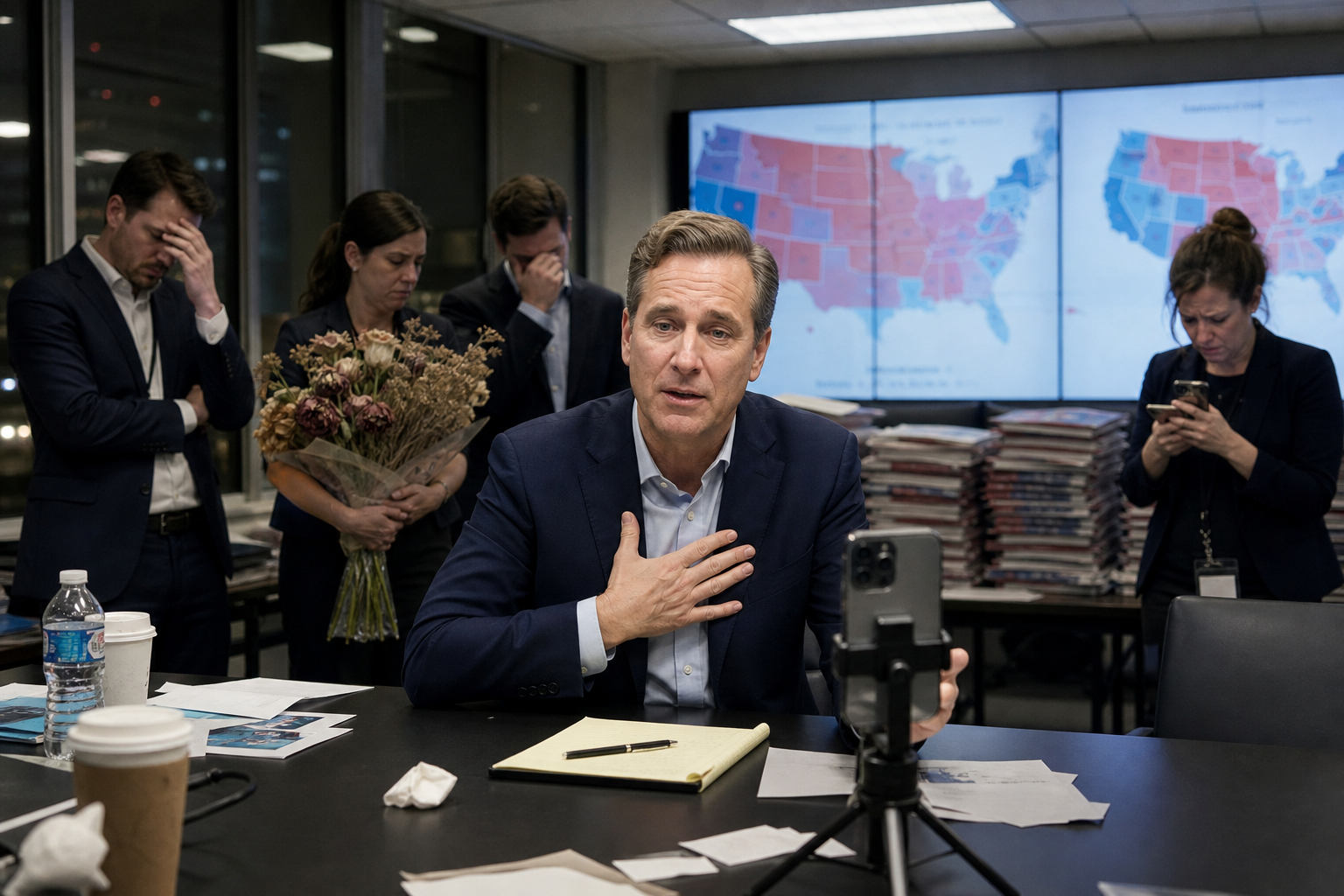
With millions of Americans casting ballots before Election Day, Senate campaigns across the country have unveiled a new voter-contact strategy: apologizing directly to people whose political relationship with them is already legally complete.
“We understand you may have voted before learning our candidate had a fresh, emotionally calibrated answer on prescription-drug costs,” said a fictional battleground-state communications director, standing before a bank of televisions tuned to cable panels explaining why the race had suddenly become all about prescription-drug costs. “Please know that answer was always inside him. It simply required three focus groups, a donor retreat and an opponent saying something worse first.”
The new outreach effort, known internally as Post-Ballot Care, is designed for voters who mailed or submitted their ballots before campaigns could fully benefit from the final ten days of televised anguish. Each voter receives a warm note thanking them for participating in democracy and gently acknowledging that, had they waited until Thursday afternoon, they might have enjoyed an entirely different version of the candidate.
One draft message reads: “We noticed you voted before our nominee discovered a grandfather who fixed refrigerators. While your ballot cannot be revised, please accept this story about a man named Earl who taught him the value of American workmanship.”
The problem emerged when campaign consultants realized their traditional October routine had become technically backward. For decades, candidates could spend the final stretch unveiling endorsements, releasing medical records, denouncing obscure college essays and staring into factory machinery with the controlled sorrow of a man who has just learned machinery has concerns. But early voting means an alarming number of citizens have already rendered a verdict before the campaign can announce that its candidate has, after much reflection, become the kind of person who listens.
“There used to be a beautiful rhythm to it,” said another fictional strategist. “You’d panic, then pivot, then run an ad with a diner waitress looking out a window. Now half the electorate has voted while you’re still arguing over whether the candidate should wear the navy shirt or the blue shirt that says, ‘I own a boat but would never mention it.’”
At first, campaigns attempted to win back early voters through increasingly sophisticated forms of regret. One Senate operation sent a video apology from its candidate filmed in a kitchen, where he admitted he had not adequately communicated his plan to lower costs, then paused beside an unopened carton of eggs as if awaiting a hostile cross-examination from breakfast. Another offered supporters a “closure call” with a regional deputy field organizer, who would listen silently while voters described every television ad they had been spared by voting early.
Then the consultants discovered a more frightening possibility: the early voters were not angry. They were simply gone.
That realization has thrown professional politics into crisis. Campaigns are built around the belief that every person is one more ad, speech, rumor, debate clip or strategically grainy family photo away from becoming available again. An already-cast ballot introduces a concept most consultants find deeply unsettling: a citizen who has encountered the product, made a decision and declined to remain in the marketing funnel.
In response, several fictional Senate campaigns have appointed “relationship recovery directors” to identify messages that could have been useful three weeks ago. These officials now sit in war rooms studying old polling memos with the grave concentration normally reserved for hurricanes, asking whether a candidate’s tough-on-Washington bus tour should have begun before, rather than after, Washington became the subject of every ad.
The directors have also started flagging late campaign developments according to their emotional relevance to people who can no longer be reached. A surprise endorsement is classified as “bittersweet.” A damaging report is “for internal grieving only.” A debate performance is tagged “excellent for morale among staffers who still believe time is a circle.”
Not everyone is adapting well. Candidates accustomed to announcing a “new phase” of their campaigns every 36 hours have struggled with the fact that voters may have selected a senator during phase four and are now receiving texts about phase eleven. One candidate reportedly demanded that his team “reopen the conversation” with early voters, prompting aides to explain that the conversation had been conducted through a ballot, which is famous for not accepting follow-up questions.
By Election Day, campaign veterans expect the apology operation to become the most active department in American politics. Win or lose, every candidate will be able to assure the public that they finally found the message voters needed just moments after the voters had thoughtfully placed it in a sealed envelope.
Senate Campaigns Start Apologizing to Voters Who Already Voted
A late-breaking scandal, a revised economic plan and one regrettable podcast appearance have arrived after the customer already checked out.
WHAT STARTED THIS MESS
The event underneath the joke is real. The SPILL premise, dialogue and escalation above are fictional parody.
- CBS Long Island mother of 3 says hospital where she was born saved her life ↗
- POLITICO Democrats are anticipating a blue wave. Long Island could be a wild card. ↗
- MS NOW Democrats are deploying volunteers wearing blue on Election Day. Here’s what they’ll do. ↗
- NPR Here's how Democrats in Congress are preparing for election fraud claims ↗
- PBS NewsHour Millions more Americans vote ahead of Election Day as early voting jumps across Senate battlegrounds - PBS ↗