Russian Deepfake Begins 47-County Tour to Earn Texas Voters’ Distrust
A Kremlin-linked operation discovers that in Texas, even a fabricated scandal needs local field staff.
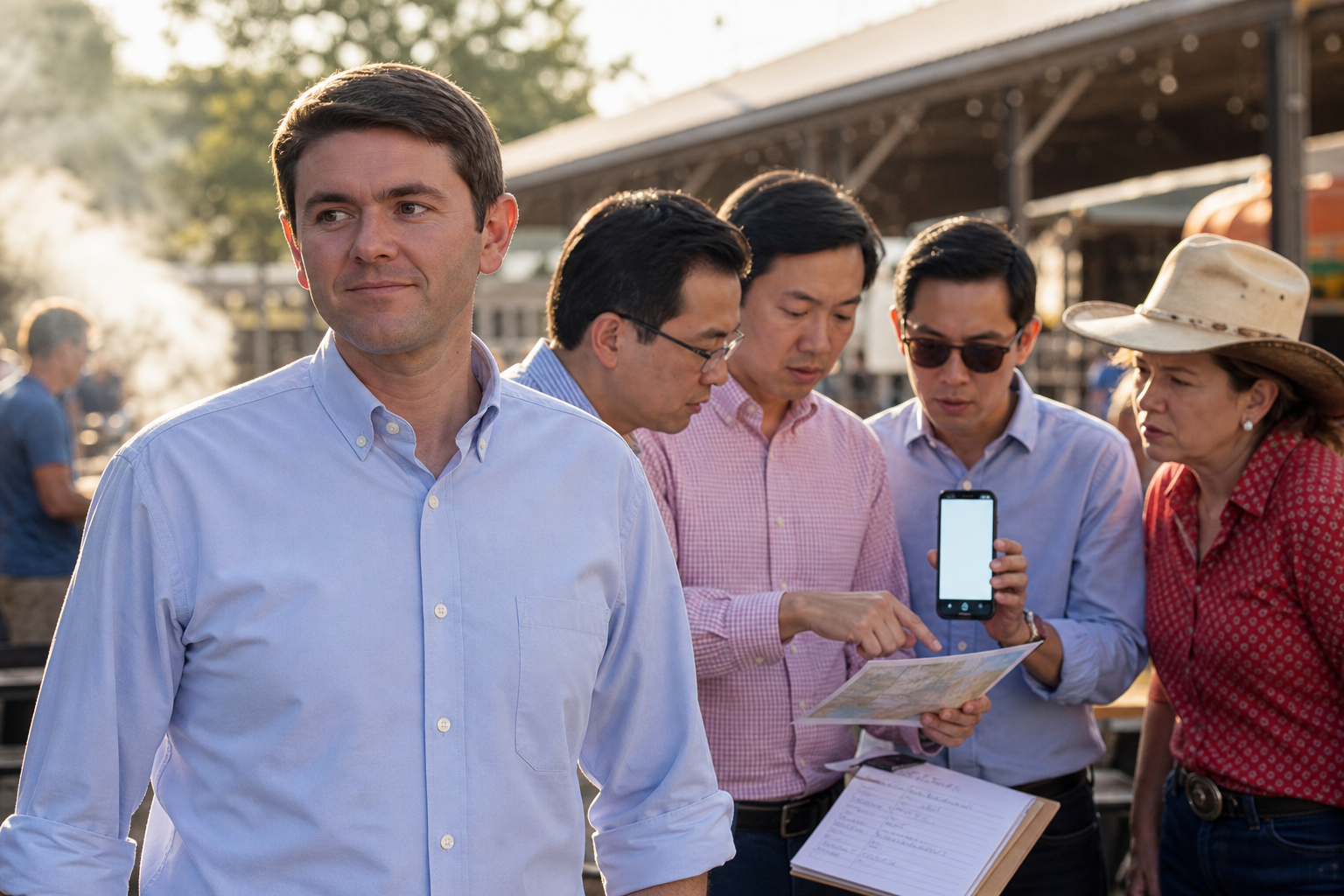
Facing allegations that its AI-generated videos targeting Texas Senate candidate James Talarico lacked even the faintest trace of local credibility, a Russia-aligned influence operation announced Friday that it would begin a 47-county listening tour across Texas to earn the kind of voter distrust normally cultivated over several exhausting election cycles.
“We came in thinking you just upload a video, attach a horrible lie to it and let the algorithm do the rest,” said a fictional senior strategist for Storm-1516, speaking from what appeared to be a windowless office decorated with one deeply inaccurate photograph of a cowboy. “But Texas is a relationship state. People need to know you have listened to their concerns before you exploit them at industrial scale.”
The group’s new field program, Falsehoods With Roots, will send synthetic spokespeople to diner parking lots, county fairs and rooms where regional political consultants stand beside retractable banners explaining that they are “not technically with the campaign.” Each deepfake will be trained to begin conversations with a question about property taxes, wait politely through a seven-minute answer about a drainage district, then introduce a completely fabricated national scandal with the solemnity of someone asking where everybody stands on toll roads.
The decision followed reports that researchers assessed with high confidence that the videos were produced by Storm-1516, a Russia-aligned operation known for circulating sensational false material through fake personas and newly created accounts. The clips targeted Talarico during a competitive Texas Senate race, giving the operation the uncomfortable distinction of arriving in American electoral politics without a consultant, a donor list or even the basic decency to pretend it had attended high school somewhere nearby.
Texas campaign veterans initially mocked the operation’s amateurism. One fictional Republican consultant said the videos made the fatal mistake of trying to create outrage “before anyone had been invited to a private barbecue where three people say they heard something concerning from a man named Rick.” A Democratic consultant agreed, calling the effort “wildly premature” and offering to help the Russians develop a more sustainable, locally sourced relationship with suspicion.
That offer created an immediate problem for the Kremlin operation. Within hours, the group had received twelve proposals for a strategic communications package called Texas Truthiness: Authentic-Looking Anxiety for a Premium Electorate. The cheapest package included voter-segment analysis, a pronunciation guide for towns the consultants themselves had never visited, and a crisis plan for when a candidate’s spouse posts a screenshot proving the whole thing is fake.
“Their material had no texture,” said an imaginary Austin consultant whose website features a black-and-white photograph of himself looking toward an unspecified future. “If you want to mislead Texans, you cannot just hand them a lie. You have to let them discover it while waiting for somebody to unlock the community center.”
The listening tour’s first stop reportedly went poorly. An AI-generated volunteer attempted to ask residents of Bell County what kept them up at night, only to receive detailed answers about water pressure, highway construction, school bonds and whether a particular restaurant had “gone downhill since the ownership change.” After ninety minutes, the algorithm abandoned its disinformation script and began insisting that the most urgent threat to democracy was a proposed roundabout.
Officials at the fictional Russian operation called the exchange a breakthrough. “For the first time, our model experienced genuine grassroots frustration,” the strategist said. “It is now much more difficult to tell where the foreign interference ends and the Texas public-comment period begins.”
The second stop was even more alarming. A local campaign operative explained that effective Texas political messaging required approximately six months of coffee-shop visibility, three rival factions claiming credit for the same county endorsement, and one candidate insisting a viral video did not represent “the real conversation happening at kitchen tables.” Storm-1516 immediately paused its operations to ask whether kitchen tables could be accessed through a data partnership.
By Friday afternoon, the group had rebranded the entire effort as a civic engagement initiative and released a draft itinerary featuring “organic concern” sessions in Waco, Lubbock and an aggressively vague suburb outside Houston. The itinerary was withdrawn after a consultant pointed out that no credible Texas political operation would schedule anything during football season without first pretending it had no choice.
At press time, the deepfake had reportedly gained enough local seasoning to accuse a municipal bond measure of being funded by George Soros, a sentence so authentically Texas that three consultants immediately asked who was paying for it.
Russian Deepfake Begins 47-County Tour to Earn Texas Voters’ Distrust
A Kremlin-linked operation discovers that in Texas, even a fabricated scandal needs local field staff.
WHAT STARTED THIS MESS
The event underneath the joke is real. The SPILL premise, dialogue and escalation above are fictional parody.
- FOX WATCH LIVE: James Talarico speaks at campaign meet-and-greet in Temple, TX ↗
- NBC Russian operative likely behind fake videos targeting Texas Senate candidate James Talarico ↗
- AP Fear and hope in Texas: Paxton vs. Talarico in an expensive US Senate showdown ↗
- CBS Poll shows Talarico leading Paxton in Texas Senate race, CBS News political analysts weigh in ↗