Lula Makes Brazil’s Cabinet Practice Its ‘I Can Change’ Speech
With a runoff tightening, every ministry has been asked to identify the exact moment it began taking the relationship for granted.
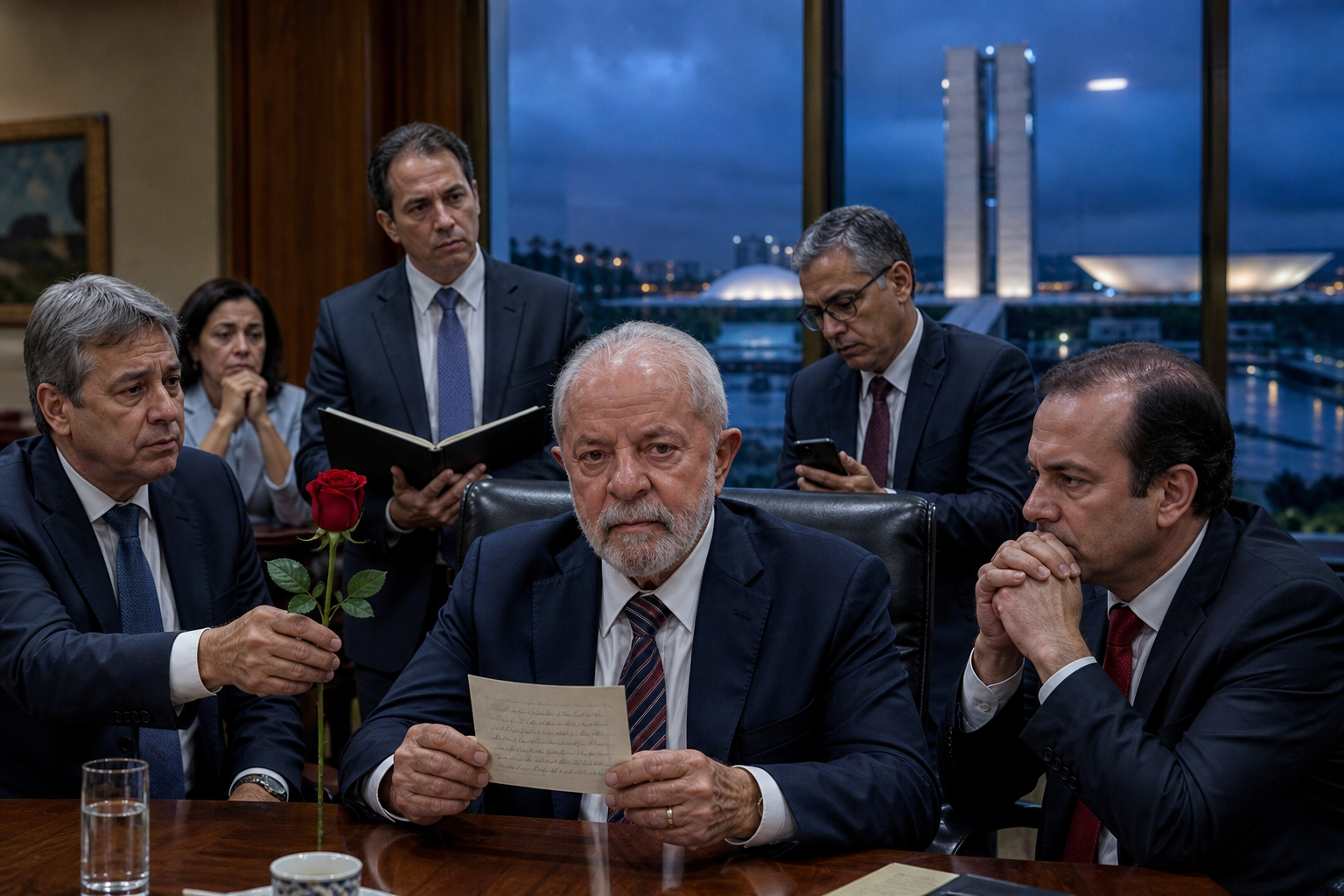
PARODY. With Brazil heading toward a tense presidential runoff, Luiz Inácio Lula da Silva has reportedly instructed every federal ministry to prepare a personal, emotionally credible apology to the Brazilian public for “the years when we assumed you knew we cared.”
The initiative, called Brazil, Please Don’t Leave Like This, follows a campaign push featuring state programs, benefits and economic measures aimed at persuading voters that the government has not merely noticed their concerns but has located them in a color-coded spreadsheet with a little red heart beside the cell.
At a closed-door cabinet session in Brasília, ministers were told they could no longer arrive with policy binders, fiscal projections or the phrase “structural challenge.” Instead, each was given a dining chair, a low lamp and a consultant from the Ministry of Human Development trained to ask, “And when did the voter first start feeling unseen?”
The transportation minister reportedly went first. “I know I said I would be home by six,” he began, gripping a photograph of an unfinished overpass, “but then there was a permitting issue, and also I was scared of how much you needed me.” The room fell silent until the finance minister asked whether the apology would require a supplementary appropriation.
Lula, according to fictional attendees, nodded sympathetically but demanded more vulnerability. “Nobody wants a partner who says they’re listening while opening another presentation,” he said. “You have to make them feel the budget was always about them.”
The resulting campaign schedule is less a governing agenda than a spectacularly expensive reconciliation weekend. A family receives word about cheaper electricity and immediately gets a follow-up call asking whether the lighting in the kitchen has been “emotionally adequate.” A worker hears about expanded credit, then receives a handwritten note from Brasília saying the government understands trust cannot be rebuilt with money alone, although money has been reserved just in case trust responds well to it.
For a brief moment, the strategy appeared to work. Brazilians accustomed to being addressed as demographic categories were startled by the sudden attention. One fictional voter said three ministries had called in a single afternoon, with the agriculture department leaving a voice mail that simply said, “We’ve been thinking about your grocery bill,” before breathing heavily and hanging up.
Then the operation encountered its first serious complication: once the government began acting like a contrite former partner, people started behaving like people who had finally been allowed to finish a sentence.
At a town hall in Minas Gerais, a teacher asked why officials had discovered the national importance of her daily life only after pollsters began treating it as a potentially decisive variable. A delivery driver wanted to know whether the state’s new tenderness would survive the runoff, or whether he should expect the government to become “very busy with work” on Monday morning. A pensioner asked if she could receive one of the new benefits without being made to watch a cabinet minister explain his growth journey.
The questions created panic among campaign aides, who had planned for gratitude, cautious optimism and perhaps a tasteful embrace with the macroeconomic outlook. They had not prepared for voters to recognize that a government capable of finding money, urgency and personal warmth in October might possess a calendar.
That is when the program took an unexpected turn. Rather than retreat, the administration created a National Office of Follow-Through, where ministers must now return every week and demonstrate that their concern has not cooled into a commemorative tote bag. The office’s first task was reportedly to ban the phrase “You know how much this country means to me” unless accompanied by an implementation timeline.
The Bolsonaro campaign initially mocked the spectacle as theatrical. But advisers quickly discovered that opposing a government for paying attention to people is difficult when your alternative is a press conference about how nobody should need to be noticed so aggressively. Its response team has now begun testing a message centered on stability, seriousness and the soothing promise that no ministry will ever call to discuss where things went wrong.
Back in Brasília, Lula’s cabinet has embraced the new discipline with the fervor of people who have just learned the relationship contains other participants. The education minister has stopped saying “investment in the future” and started asking which future, for whom, and why it apparently required a runoff to become available. The housing minister arrived at the latest meeting carrying no charts at all, just a small box of keys and a note reading, “I saw this and thought of your rent.”
By election day, officials hope the country will see a government transformed: humbler, more attentive and capable of remembering a voter’s concerns without first checking whether they live in a swing state. If that fails, the cabinet has one final plan: show up outside Brazil’s window at 2 a.m. holding a boombox playing the national budget.
Lula Makes Brazil’s Cabinet Practice Its ‘I Can Change’ Speech
With a runoff tightening, every ministry has been asked to identify the exact moment it began taking the relationship for granted.
WHAT STARTED THIS MESS
The event underneath the joke is real. The SPILL premise, dialogue and escalation above are fictional parody.
- NPR Brazil's runoff: Lula's legacy vs. Bolsonaro's dynasty ↗
- CNN Lula has defined Brazil’s left for decades. Can his movement survive another Bolsonaro? ↗
- AP Brazil's Lula opens state toolbox to woo voters in runoff against Bolsonaro. Here's what is on offer ↗
- Reuters Flavio Bolsonaro and Lula about even ahead of Brazil runoff, Datafolha poll shows ↗
- NBC Brazil votes in pivotal runoff between Lula and Bolsonaro Jr. ↗
- FOX Brazil becomes next test for Latin America’s surging conservative movement ↗