Democrats Give Affordability Agenda a Tracking Number
The package is officially out for delivery, which in Washington means it has entered a cul-de-sac behind three committees and a donor retreat.
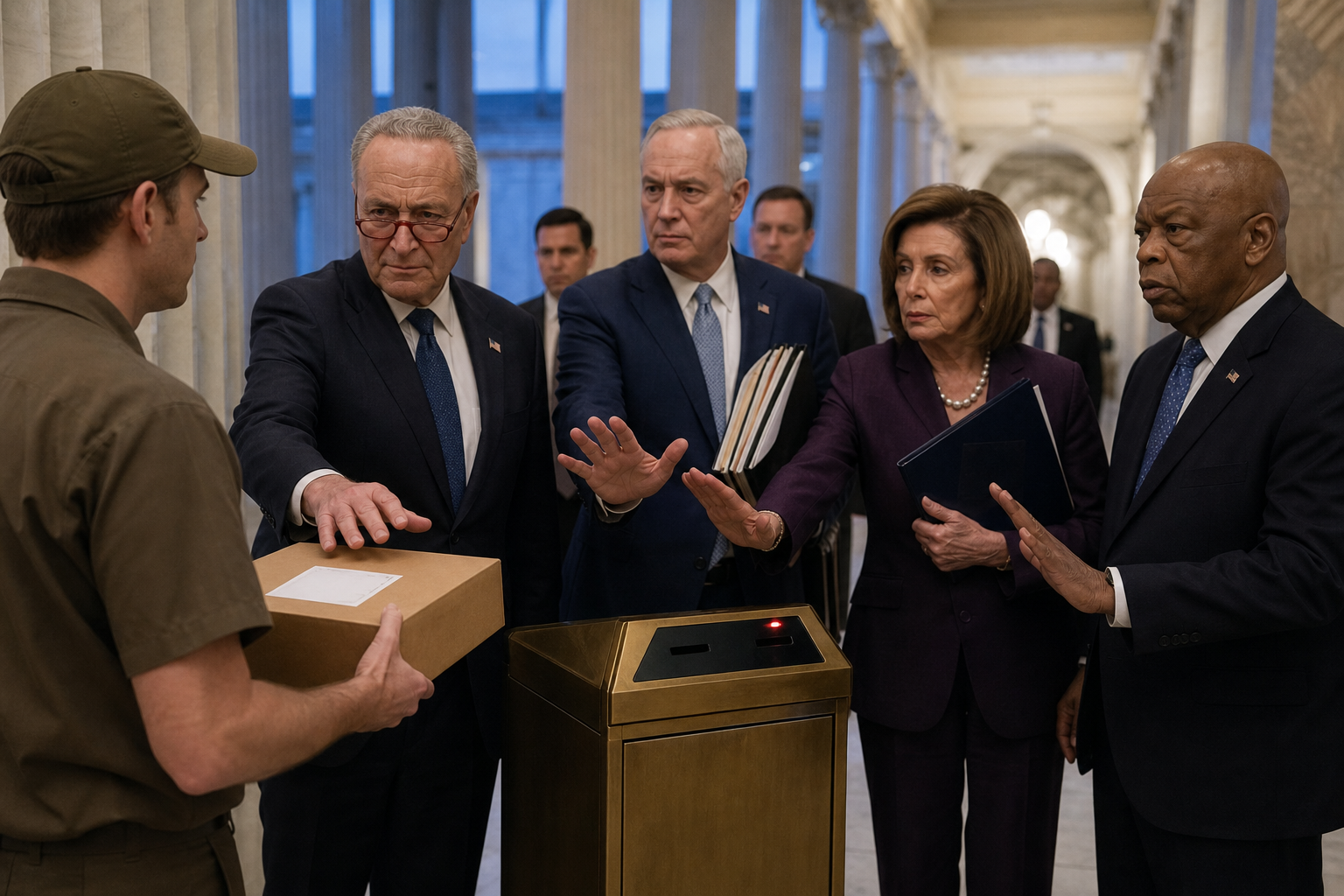
WASHINGTON—Fresh off winning control of Congress and promising Americans that life would become less expensive before everyone developed a permanent flinch response to opening the refrigerator, Democratic leaders on Sunday issued the party’s affordability agenda a tracking number.
The move followed Rep. Debbie Dingell’s warning that Democrats have two years to “deliver” if they hope to win the 2028 presidential election. Within minutes, aides said voters would be able to monitor their progress through a calming blue interface showing a tiny animated Congress traveling in circles somewhere outside a regional distribution center.
“Your priorities have been received,” the portal announced. “Estimated arrival: before the next time this becomes a character test for the Democratic Party.”
The first update was encouraging. Housing costs, prescription drugs, utility bills and child care had all been scanned into the Democratic Legislative Network at 9:14 a.m. Then the package appeared to make remarkable progress, passing through the House, the Senate, a bicameral working group and a televised panel where six people agreed the box was extremely important.
By lunch, however, the status changed to: Delivery delayed because recipient was unavailable.
Democratic leaders initially disputed the notice. “The American people are very much available,” said one senior aide, speaking from a conference room where a dozen lawmakers were trying to determine whether lowering costs should be described as relief, growth, fairness, freedom, kitchen-table economics or a thing the other caucus had prevented them from doing.
The delivery driver, a veteran Capitol Hill staffer who asked not to be named because he had already been blamed for a messaging rollout involving a tote bag, said the problem was more technical.
“Every time I get to the door, somebody says they support the package in principle but can’t sign for it until we remove the part that allows the package to exist,” he said. “Then another person asks whether we can make the package tougher. I don’t know what that means. It’s a bill about rent.”
For several hours, the caucus treated the delay as a communications issue. Consultants proposed a new notification system in which voters would receive hourly messages reading, “Big movement!” whenever a committee chair entered the building holding coffee.
But the strategy shifted after party officials learned the tracking page had become the most popular feature in Washington. Lobbyists began refreshing it for signs of tax language. Cable-news producers formed a panel to debate whether the package’s brief stop in the Rules Committee represented a mandate. A bipartisan group of senators requested that the agenda be rerouted through their home states, where they said it could enjoy “a more thoughtful delivery environment” after a series of fundraisers.
Then came the reveal no one wanted: the package had not been lost. It had been delivered weeks earlier, in fragments, to the actual people it was meant for—workers, renters, families and consumers—and they had opened it immediately, because unlike Congress, they were familiar with the concept of needing something.
What remained in Washington was the ceremonial packaging: the press conference, the branding architecture, the coalition-management foam peanuts and a 74-page memo explaining why a policy that lowers bills must first survive a debate over whether it sufficiently honors rural diners, suburban patience and the spiritual dignity of a Senate parliamentarian.
The discovery produced a brief panic among party leadership. If voters had already received the consequences of policy, an aide warned, there would be no reason to hold a second rollout with podiums, flags and a phrase like “delivering for hardworking Americans” printed at an angle.
Democrats quickly regained their footing. By evening, the tracking portal had been updated to show the affordability agenda moving through its final and most dangerous stage: Awaiting customer review.
“We are committed to getting this done,” said a leadership aide. “And if we can’t, voters will at least receive a remarkably detailed notification explaining which branch of government left the package behind a decorative planter.”
Democrats Give Affordability Agenda a Tracking Number
The package is officially out for delivery, which in Washington means it has entered a cul-de-sac behind three committees and a donor retreat.
WHAT STARTED THIS MESS
The event underneath the joke is real. The SPILL premise, dialogue and escalation above are fictional parody.