Canada Declares Independence From America, Immediately Checks Oil Price App
Mark Carney’s new sovereignty budget asks Canadians to trust themselves, their infrastructure and one unusually cooperative barrel of crude.
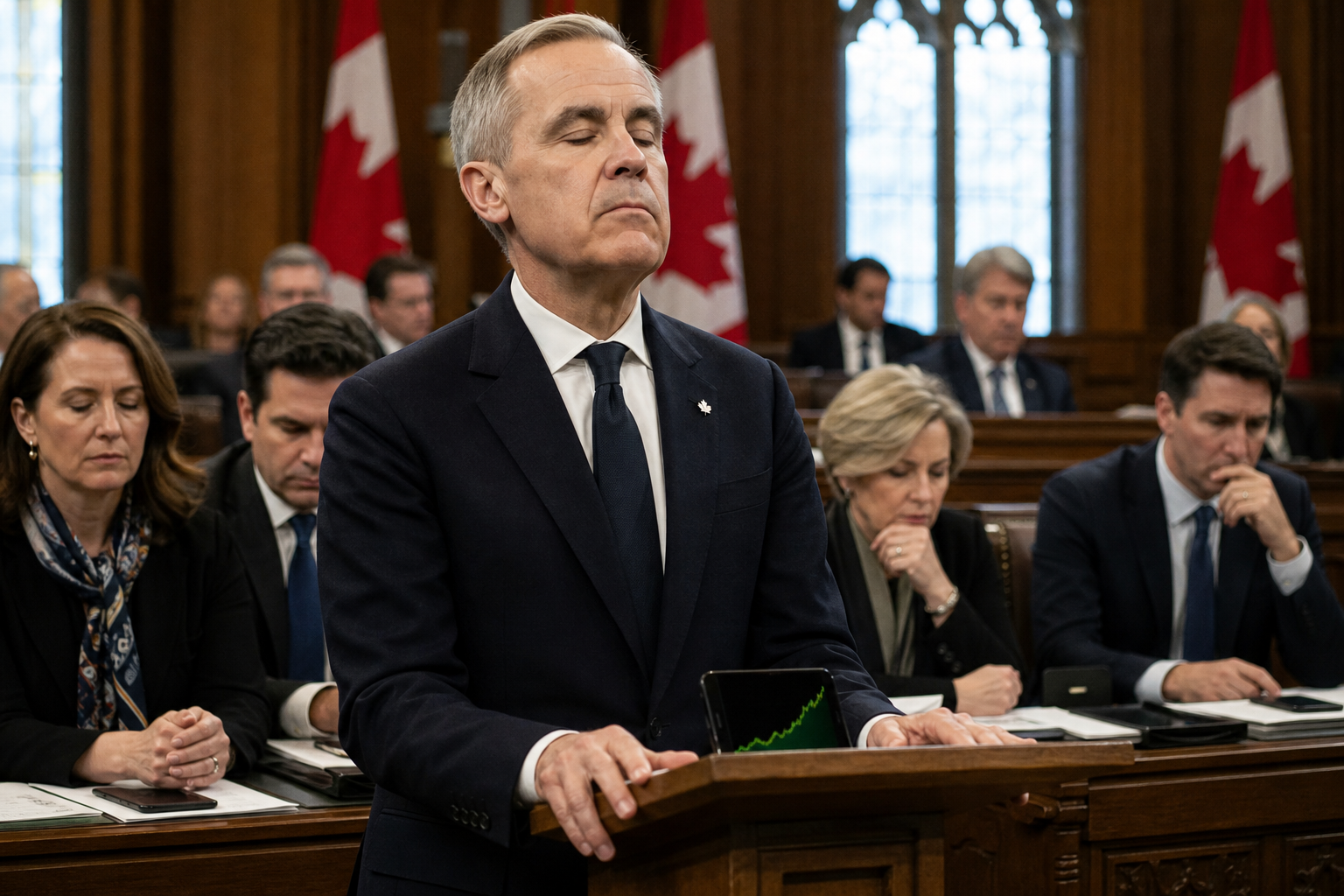
OTTAWA — Canada unveiled its boldest new plan for economic independence Thursday, promising to become less reliant on the United States just as soon as everyone stops refreshing the oil-price app long enough to applaud.
Prime Minister Mark Carney’s government introduced its second budget under the stirring title Masters of Our Destiny, a phrase officials said was selected after focus groups found “Canadian Industrial Policy With Several Variables Outside Our Control” lacked the necessary chest hair.
The budget uses a windfall in oil revenue to fund tax incentives, infrastructure and other investments meant to make Canada more resilient in a world where its largest trading partner has discovered tariffs can be used as punctuation. The resulting fiscal strategy is straightforward: Canada will finally take charge of its future by receiving an encouraging notification from global energy markets and behaving like it got into Stanford.
“For too long, Canadians have asked what Washington thinks,” Carney said in the fictional version of events, standing before a giant screen displaying only a crude-oil ticker and the words YOU ARE ENOUGH. “Now we will ask a more sovereign question: is this number still moving upward?”
Under the new program, every Canadian household will be encouraged to begin its day with a five-minute Destiny Check. Citizens will stand before a mirror, place one hand over their hearts and say, “My country’s economic confidence is intrinsic,” before quietly opening three commodity-trading tabs.
The exercise is designed to reduce emotional dependence on American trade policy, which officials conceded has become difficult since the country’s largest customer began treating the continental economy like a group project in which one member keeps changing the assignment at 2 a.m.
Carney’s government insists the oil revenue is not merely paying for the agenda. It is providing Canada with the psychological conditions required to imagine an agenda. A new federal guidebook, Boundaries, But Make Them Fiscal, advises the country to stop seeking validation from the United States and instead invest in electricity generation, housing, defense, cultural sovereignty and “the radiant calm of a pipeline that knows its worth.”
The plan initially tested well among ministers, who reported feeling visibly more sovereign after saying “productivity-enhancing capital expenditure” into an empty conference room. But trouble emerged when Finance Minister François-Philippe Champagne attempted to explain that true independence meant diversifying away from the United States while relying on an oil-price surge linked to an unstable international environment.
“That is not dependence,” Champagne clarified. “That is having a broad, sophisticated support network composed of geology, geopolitics, weather, shipping lanes and events we absolutely cannot schedule.”
The distinction became central to the budget rollout. In one internal rehearsal, aides reportedly urged ministers not to call the oil windfall “luck,” which sounded unserious, or “a gift,” which sounded religious. The approved language was “a strategic revenue enhancement generated by the universe discovering Canada has bills.”
By afternoon, the government had rolled out a new Cabinet-level position: Minister of Being Fine, Actually. The office will monitor external shocks that affect government revenue and determine whether they should be described as threats, opportunities or proof that Canada has matured beyond needing anybody, except perhaps the exact set of global conditions currently making the spreadsheet work.
The first complication arrived when several industries requested clarification on what “masters of our destiny” meant in practice. A manufacturing executive asked whether it guaranteed reliable access to markets. A housing advocate asked whether it meant faster construction. A provincial official asked whether it meant a new pipeline.
“It means we are no longer emotionally available for chaos,” replied the fictional minister, while an aide whispered that oil had dropped 43 cents.
The room fell silent. Carney’s presentation paused halfway through a slide titled Canada Is the Plan. Ministers instinctively reached for their phones, then remembered the new doctrine and placed them face down with the solemnity of diplomats signing a peace treaty.
“No,” Carney said, breathing through it. “We do not need to look.”
For nine full seconds, Canada was master of its destiny.
Then someone asked whether the grocery rebate top-up had been calculated before or after the market opened, and the entire country achieved energy independence from eye contact.
Canada Declares Independence From America, Immediately Checks Oil Price App
Mark Carney’s new sovereignty budget asks Canadians to trust themselves, their infrastructure and one unusually cooperative barrel of crude.
WHAT STARTED THIS MESS
The event underneath the joke is real. The SPILL premise, dialogue and escalation above are fictional parody.