After Midterms, RNC Discovers Trump Is a Licensing Agreement
The party may keep its ballot access, but use of the family brand now requires written approval from management.
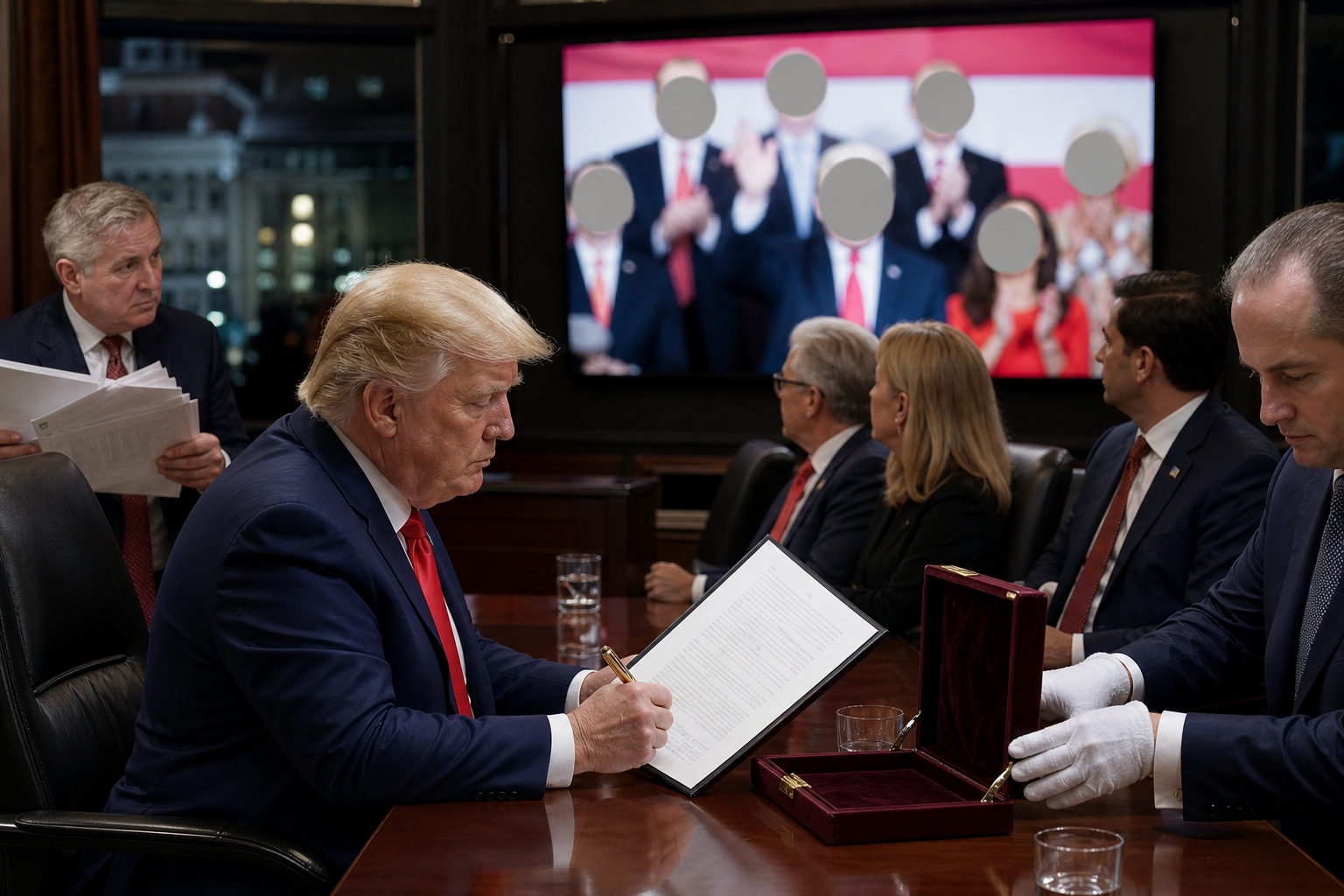
WASHINGTON — The Republican National Committee entered emergency negotiations Monday after learning that Donald Trump is not, technically, the leader of the Republican Party but a premium intellectual property package whose usage rights may be revoked for cause.
The discovery followed a revolt against RNC Chairman Joe Gruters, Trump’s preferred choice to run the committee, after the party’s bruising midterm losses. When White House allies reportedly suggested Trump could stop appearing at fundraisers or permit the committee to use his name and image in solicitations, RNC members realized they had been operating under what one fictional party lawyer called “an unusually emotional end-user license agreement.”
“Nobody is saying we can’t be Republicans,” the lawyer said, opening a 417-page brand-compliance manual. “We are merely being informed that, without the appropriate visual assets, we may need to identify ourselves through policy positions, local candidates and some kind of coherent institutional mission. Obviously, that is not a transition you make without a crisis team.”
Within hours, the committee suspended all mailers featuring Trump’s face, signature, silhouette, golf posture, red-tie color palette, upward-pointing finger, or “any hairstyle that could reasonably create consumer confusion.” Fundraising emails were replaced with a neutral placeholder reading, HELP ELECT THE PARTY YOU HAVE HEARD OF.
The replacement copy performed poorly. Donors accustomed to receiving messages from “Donald J. Trump” reportedly found themselves staring at a photo of the Capitol dome beneath the phrase “A National Political Organization Requests Your Attention,” then quietly returned to refinancing their boats.
Gruters allies insisted the chairman’s position remained strong, noting that Trump’s endorsement is not merely symbolic but a core operational utility, like electricity, donor lists or the ability to say a candidate is “with the president” without having to explain which part of the president’s agenda they mean.
But supporters of vice chair KC Crosbie said the licensing dispute proved their point. The RNC, they argued, should be capable of surviving a disappointing election without immediately receiving a cease-and-desist letter from its own spiritual mascot.
That argument triggered the next complication: the party’s compliance department could not determine whether “Republican” itself is now a protected Trump-adjacent expression. A draft memo advised state parties to avoid unauthorized references to “winning,” “MAGA,” “complete and total,” “historic,” “beautiful,” or “the greatest political movement anybody has ever seen,” leaving county chairs with the difficult task of communicating exclusively in the language of municipal zoning notices.
By Tuesday, several state parties had begun testing new, legally cautious identities. The Arizona GOP briefly tried “The Coalition for Familiar Preferences.” A Wisconsin chapter piloted “Patriotic Voters With No Pending Image Clearance.” The Florida operation attempted to go fully generic with “Republicans, Probably,” before a consultant warned that the word “probably” suggested weakness and the word “Republicans” suggested an unauthorized legacy claim.
The White House, in this fictional account, offered an off-ramp: the RNC could regain limited use of Trump’s likeness by signing a new agreement requiring that all future internal elections be described as “celebrations of continuity” and that every post-election review begin with the sentence, “First, let us acknowledge the exceptional quality of the brand.”
RNC dissidents objected that such terms would make honest evaluation impossible. The White House replied that honest evaluation had never tested well in focus groups and forwarded a sample donor email with the subject line: YOUR FEEDBACK HAS BEEN RECEIVED AND FOUND DEEPLY UNHELPFUL.
The licensing agreement is expected to remain under negotiation through the RNC’s January meeting in Arizona, where members will decide whether to retain Gruters, elevate Crosbie, or simply place the entire party in a velvet box marked “Property of Management.”
Until then, the committee has been instructed to remove all mirrors from headquarters, since several staffers reportedly mistook their own reflections for unauthorized use of the Trump brand.
After Midterms, RNC Discovers Trump Is a Licensing Agreement
The party may keep its ballot access, but use of the family brand now requires written approval from management.
WHAT STARTED THIS MESS
The event underneath the joke is real. The SPILL premise, dialogue and escalation above are fictional parody.
- NBC GOP congresswoman believes Trump will support immigration reform ↗
- FOX Trump gives Xi support on escalator ride ↗
- AP Trump's handpicked party chair faces a rebellion as midterm losses challenge president's grip on GOP ↗
- POLITICO JD Vance slams GOP governor’s call for immigration reform as ‘morally and electorally disastrous’ ↗