Hung Cao’s Navy Plans to Classify Sailors’ Feelings Above Top Secret
The new doctrine promises total privacy by ensuring no commander can ever learn anything useful in time.
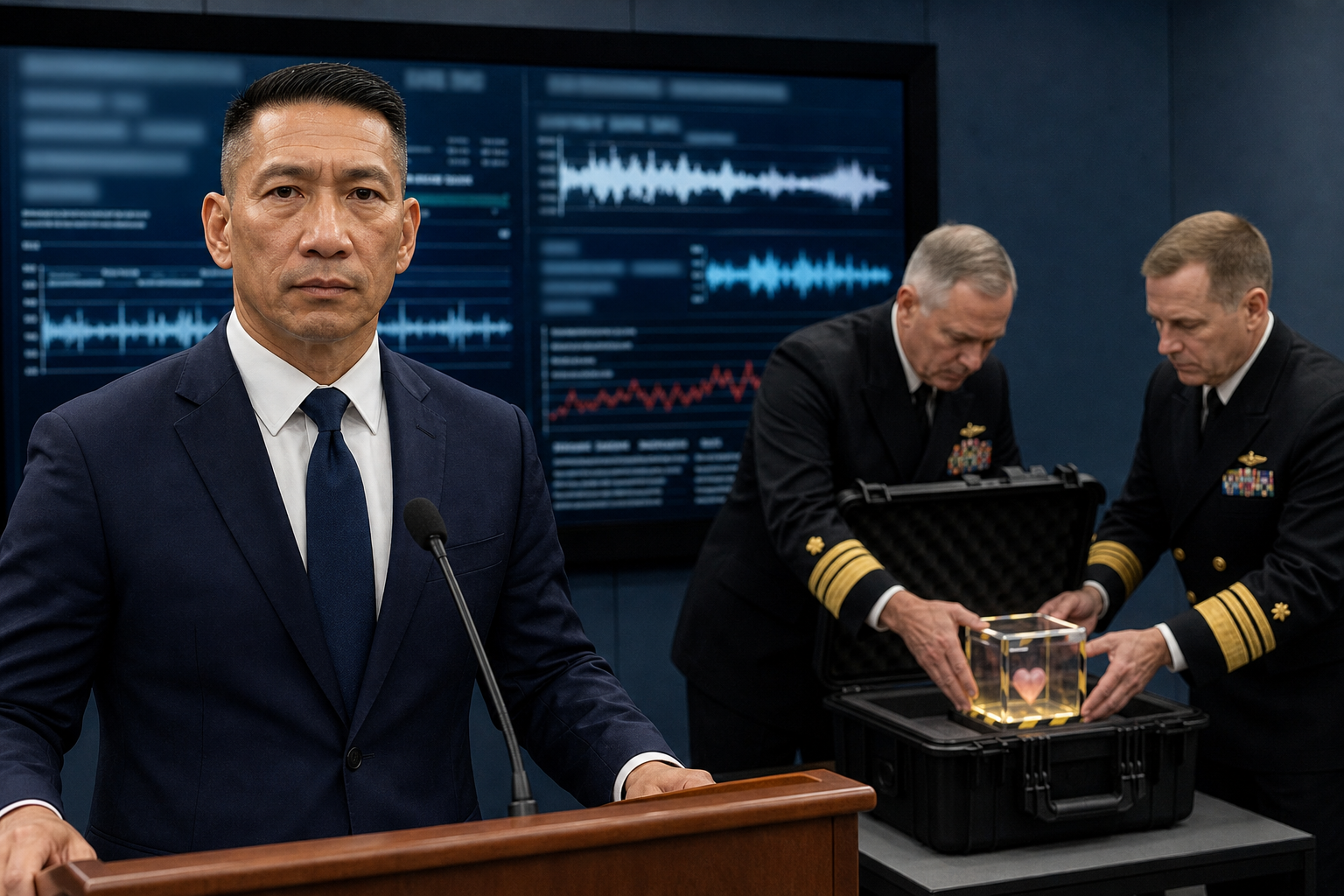
PARODY — In a wholly fictional administrative response to criticism over how sailor mental-health concerns are discussed, Acting Navy Secretary Hung Cao announced Tuesday that all feelings expressed by active-duty personnel will be classified Above Top Secret.
The new Operational Emotional Security Doctrine, or OESD, will place sadness, panic, exhaustion, grief and the increasingly broad category of “something feels off” inside a secure compartment accessible only to personnel with the proper clearance, a demonstrated need to know, and no immediate ability to help.
“Our sailors deserve privacy,” Cao said in the fictional announcement, standing before a blue curtain while a naval officer removed a microphone from a weeping ensign and placed it in a burn bag. “That is why we are creating a system where their innermost struggles can be handled with the same discretion normally reserved for submarine locations, missile specifications and whatever is happening in the Pentagon cafeteria.”
Under the policy, sailors seeking help will first submit a sealed Emotional Contact Report describing the nature of their distress without using any words that could alarm leadership. A sailor experiencing insomnia, for example, may report “persistent unauthorized wakefulness.” A sailor overwhelmed by grief may report “unplanned morale weather.” Thoughts of self-harm will be referred to as “an anomalous internal navigation issue,” then forwarded to a command wellness liaison sometime after the liaison completes cybersecurity training.
The Navy insists the program is not intended to discourage anyone from speaking up. To prove it, every sailor who speaks up will receive a classified commendation that cannot be seen, discussed or entered into any record that might affect staffing decisions.
At first, commanders embraced the doctrine. It solved a longstanding leadership problem: sailors kept bringing them information that was emotionally difficult and operationally inconvenient. One fictional destroyer captain praised the change after receiving a briefing that his crew was “performing at an unspecified emotional readiness condition somewhere between green and a matter currently under review.”
“That’s the level of detail commanders need,” he said. “Not enough to burden us with context, but enough to put a tasteful arrow on a PowerPoint.”
The system encountered its first complication when an entire engineering division filed simultaneous reports of “routine personal turbulence” during a twelve-hour shift. Because the reports were classified, the captain was informed only that there had been a morale-related event aboard ship and that he was prohibited from asking who, what, when, where or whether the engine room was still staffed.
He responded with the Navy’s approved all-hands reassurance: “I want everyone to know that whatever none of you are going through, this command takes it extremely seriously at the appropriate classification level.”
But the doctrine’s supporters say critics misunderstand its strategic brilliance. In the old model, a sailor could disclose distress directly to a supervisor, counselor or medical professional and risk receiving help before the concern had been properly processed into an institutionally manageable shape. The new model preserves chain of command, force readiness and the sacred military tradition of making a human emergency sound like a maintenance ticket.
Then came the reveal that sank the rollout: the Navy’s recruiting office requested limited access to the emotional reports for “authenticity research.” Recruiters had become concerned that younger Americans found conventional military messaging insufficiently candid and wanted to build a new campaign around phrases such as “There Is No Civilian Equivalent to This Feeling” and “Join a Team That Will Protect Your Privacy From Everyone, Including You.”
Senior officials immediately denied that the classified emotions would be used in advertising. They clarified that the material could be used only in “values-forward storytelling environments,” including social media, stadium flyovers and any video in which a service member stares meaningfully at an aircraft carrier while a piano begins to forgive the federal budget.
By late afternoon, the doctrine had been amended. Sailors will now be permitted to tell a trusted person how they feel, provided the trusted person signs a nondisclosure agreement, completes an annual anti-espionage module and agrees not to use the phrase “this seems bad” outside a secure facility.
The Navy called the revision a victory for transparency, adding that all future feelings will remain protected until they become visible from space.
Hung Cao’s Navy Plans to Classify Sailors’ Feelings Above Top Secret
The new doctrine promises total privacy by ensuring no commander can ever learn anything useful in time.
WHAT STARTED THIS MESS
The event underneath the joke is real. The SPILL premise, dialogue and escalation above are fictional parody.
- PBS NewsHour WATCH LIVE: Senate Armed Services Committee confirmation hearing for Hung Cao as Navy secretary - PBS ↗
- MS NOW John Kirby blasts Acting Navy Secy. Hung Cao's 'cavalier attitude' on sailors' mental health issues ↗
- NBC Stratton undecided on Senate leadership battle: ‘I’m hearing everybody out’ ↗