Trump’s Board of Peace Sends Israel Its First Red-Lettered Please
The board’s new Gaza emergency protocol offers every known form of pressure except the kind that changes anything.
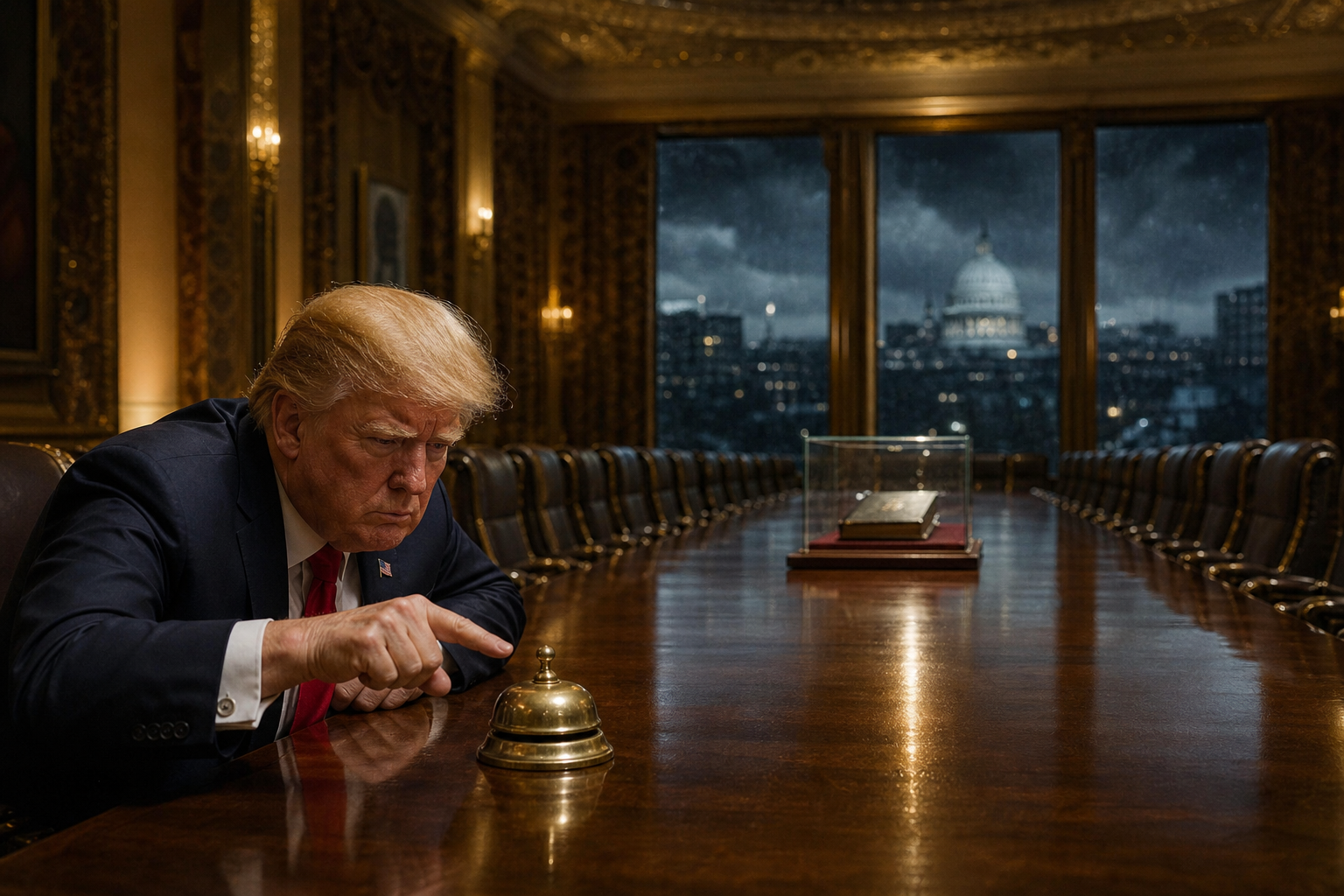
WASHINGTON—This is fictional parody inspired by real reporting.
Trump’s Board of Peace has responded to the flooding crisis in Gaza by delivering what officials described as its firmest message yet to Israel: a red-lettered “please” prepared on heavyweight stationery and read aloud in a room where no one was permitted to confuse concern with leverage.
The board’s statement reportedly began with the customary diplomatic language—urgent, grave, deeply troubling—before arriving at the phrase that made everyone sit up straighter: “We would respectfully ask that you please address this insufficient situation.”
“Not ‘please, if possible,’” said a fictional Board of Peace aide, tapping the sentence with the solemnity of a bomb technician. “This is a standalone please. It has its own paragraph. We have crossed a threshold.”
The new posture follows criticism that describing a foreseeable humanitarian catastrophe as “insufficiently” addressed may not, by itself, move enough blankets, shelter materials or aid into a devastated territory. Board members rejected that characterization, explaining that meaningful international action is a calibrated process and that nobody should underestimate the emotional force of discovering a sentence has been upgraded from regular type to the kind that looks like it was composed by a regional vice president who has just learned the customer may cancel.
Under the board’s newly unveiled Gaza Response Escalation Ladder, the first stage is concern. The second is deep concern. The third is a request for clarification regarding why the concern continues to deepen despite repeated concern. If conditions fail to improve, the board may activate Stage Four: a private call in which a senior representative says, “I want to be very direct here,” then spends 40 minutes establishing that everyone shares a common commitment to directness.
Stage Five, reserved for extraordinary circumstances, is a letter containing the word “unacceptable” without any qualifying adverb nearby.
“That word is not thrown around casually,” the aide said. “It has consequences. Not external consequences. Obviously. But people have to read it.”
The Board of Peace had initially considered a more muscular option: moving the word “insufficient” into the first sentence of its statement. But lawyers warned that this could be interpreted as an allegation that existing diplomatic language had failed, creating a dangerous precedent in which language might someday be judged by whether it accomplished anything.
Instead, the board has commissioned a task force to determine whether its concern can be made “operational.” The group will meet weekly to discuss rain forecasts, aid bottlenecks and whether a second “please” would appear decisive or merely repetitive. A draft memo obtained by SPILL recommends placing the second please in italics, a design choice supporters believe could communicate both urgency and tasteful restraint.
Then came the complication.
According to fictional internal minutes, several board members worried that an overly forceful plea could jeopardize the Board of Peace’s preferred role in the crisis: being able to say it had privately urged everyone to do better after everyone had publicly done whatever they were going to do anyway.
“Peace is delicate,” one member reportedly explained. “It requires the courage to tell powerful people that their conduct is disappointing, provided they never have to alter it in a way that makes the meeting uncomfortable.”
The board therefore adopted a compromise. Israel will receive the red-lettered please, along with a small embossed card bearing a rain cloud, a serious-looking exclamation point and a reminder that the world is watching from a safe administrative distance.
Trump, briefed on the initiative, was said to favor a stronger visual identity. He reportedly suggested the Board of Peace issue its next warning on “the biggest, most beautiful card anyone has ever seen,” then asked whether the card could also congratulate the board for responding faster than the weather.
At press time, the Board of Peace had placed its final enforcement mechanism—a third please—behind glass, to be broken only in the event of a fourth meeting.
Trump’s Board of Peace Sends Israel Its First Red-Lettered Please
The board’s new Gaza emergency protocol offers every known form of pressure except the kind that changes anything.
WHAT STARTED THIS MESS
The event underneath the joke is real. The SPILL premise, dialogue and escalation above are fictional parody.