Trump Holds Midterm Results Over for a Second Callback
The president says several outcomes showed promise but lacked the confidence to play “the will of the people.”
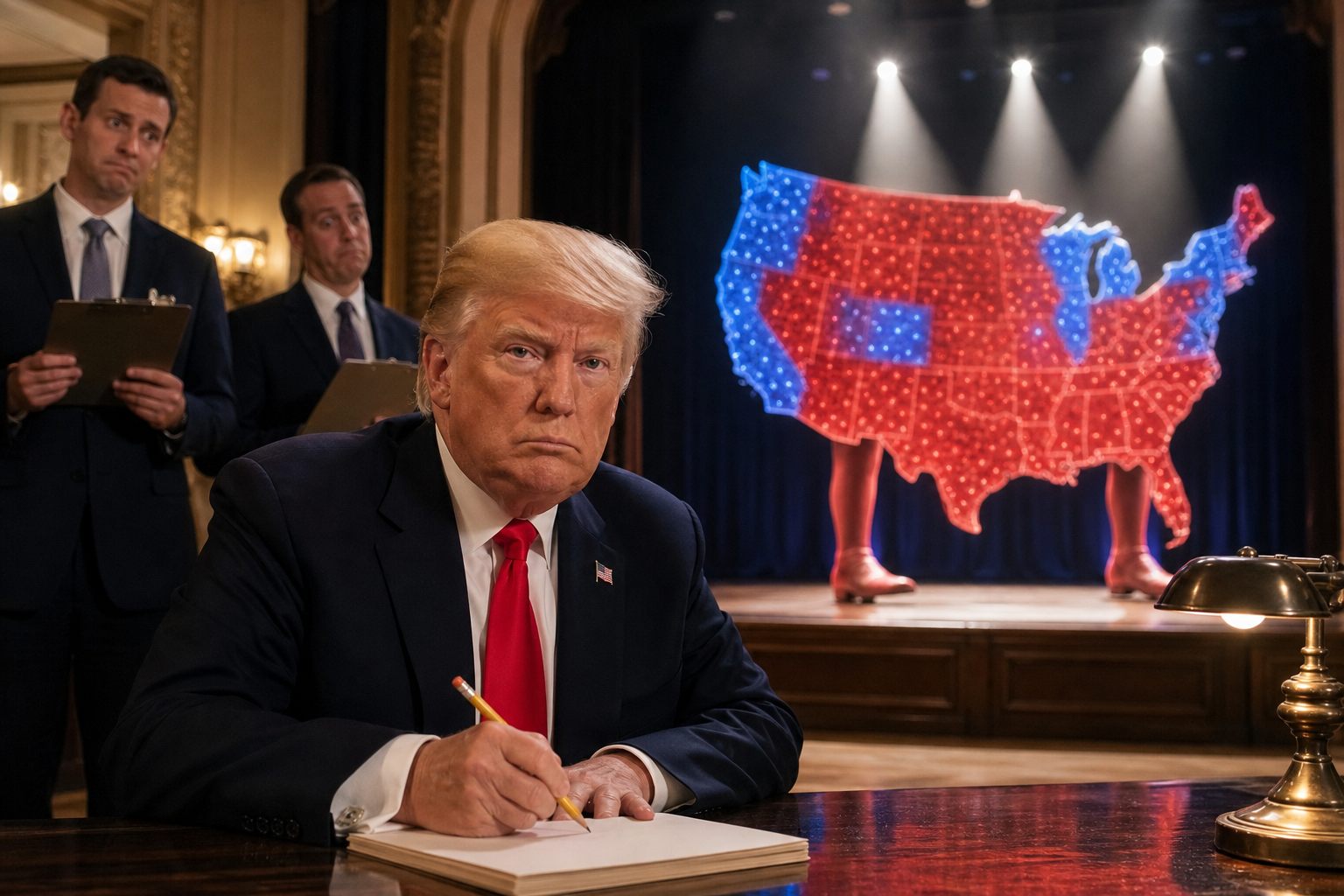
In fictional parody news, President Trump has informed several midterm election results that they will need to return to Washington for a second callback before he decides whether they have the range to be accepted by the administration.
The results, which had believed their job was simply to be counted, certified and then quietly ruin somebody’s week, were summoned into the Roosevelt Room one at a time and asked to perform the moment they “won” with more warmth, humility and an obvious understanding of who the scene was really about.
“Nobody is saying these results are bad,” Trump said from behind a long table occupied by himself, three attorneys, a television monitor playing the same county map on mute and a bowl of red-and-blue M&Ms that had been separated into an arrangement aides described as “preliminary.” “Some of them were very strong. Very strong numbers. But politics is casting. You can’t just walk in here, get the most votes, and assume you’re right for the part.”
According to fictional administration officials, the first round of callbacks began shortly after several races produced outcomes with what one senior adviser called “a frankly confusing amount of democracy in them.” Winning candidates were asked to demonstrate that they could plausibly have won without generating the specific emotional texture associated with someone else losing.
One statewide result was reportedly told it had “great raw totals” but lacked the necessary chemistry with the president. Another was praised for appearing “very authentic in the first act” before being asked whether it could try the entire victory again with fewer ballots from places that had made the room uncomfortable.
The process was initially expected to be routine. Then the election results’ representatives arrived with a problem: the certified outcomes had all brought lawyers, and the lawyers had brought binders demonstrating that their clients had already been cast by voters.
“This is where the creative process can get adversarial,” said fictional White House director of electoral development Chaz R. Vellum. “They keep talking about procedures, canvasses and state law. Fine. That is their truth. But we’re looking for something deeper: Can this result enter a room, look the president in the eye and make him feel like it happened correctly?”
That question has transformed the normally technical work of accepting election outcomes into Washington’s most exclusive screen test. The White House has hired movement coaches to teach close races how to enter with “less of a surprise-win energy.” Counties whose votes arrived late in the evening have been asked to submit self-tapes explaining why they could not have arranged their timing around cable-news expectations.
Aides said the president was especially disappointed by one result that had spent months insisting it would be close, then committed the “unprofessional” act of remaining close until the final votes were counted. “That kind of ambiguity may work in an independent film,” said Vellum. “Not in a presidential emotional environment.”
By Thursday afternoon, the process took an unexpected turn when several favorable outcomes demanded callbacks of their own. If elections were now auditions, they argued, victories deserved the right to test whether the president could convincingly portray a man accepting them without immediately asking for alternate takes.
The White House briefly agreed to the exercise. Trump entered, smiled toward an imaginary bank of cameras and said, “The people have spoken, and I respect their decision completely.”
The room went silent. A casting assistant asked if he wanted another take.
“No,” Trump said. “That one was too fake.”
Officials then explained that the president’s concern was not the results themselves but their ongoing refusal to understand the assignment. An election, in this view, is not a final decision made by millions of people under state-administered rules. It is a pilot presentation, to be revised until it earns a pickup from the person with the most notes.
As evening fell, staffers began sending polite rejection emails to several outcomes that had declined to alter their performance. The messages thanked the results for participating and encouraged them to remain available for future opportunities, including recounts, hearings and any television segment requiring a map to look vaguely guilty under studio lighting.
One result, on its way out, paused at the door and asked whether the president would accept the final casting decision.
Trump looked up from his scorecard. “Absolutely,” he said. “As soon as it stops improvising.”
Trump Holds Midterm Results Over for a Second Callback
The president says several outcomes showed promise but lacked the confidence to play “the will of the people.”
WHAT STARTED THIS MESS
The event underneath the joke is real. The SPILL premise, dialogue and escalation above are fictional parody.
- Reuters Analysts react to US midterm election results ↗
- NPR Trump reacts to midterm election results ↗
- FOX Kamala Harris urges Dems to 'be ruthless' with power after midterms, demands Trump accountability ↗
- MS NOW 2026 midterm election takeaways: The night Trump’s presidency changed ↗
- CNN Trump said he’d accept the election results. Netanyahu is challenging the outcome of his. ↗
- CBS Extended interview: Former Border Patrol chief on changes at border under Trump, more ↗
- NBC Israel’s president accepts certified election results in a blow to Netanyahu’s claim of vote fraud ↗