State Department Clears Matamoros for Its Most Dangerous Mission Yet: Email
Federal employees may resume normal operations, provided normal operations do not involve developing a sense of normalcy.
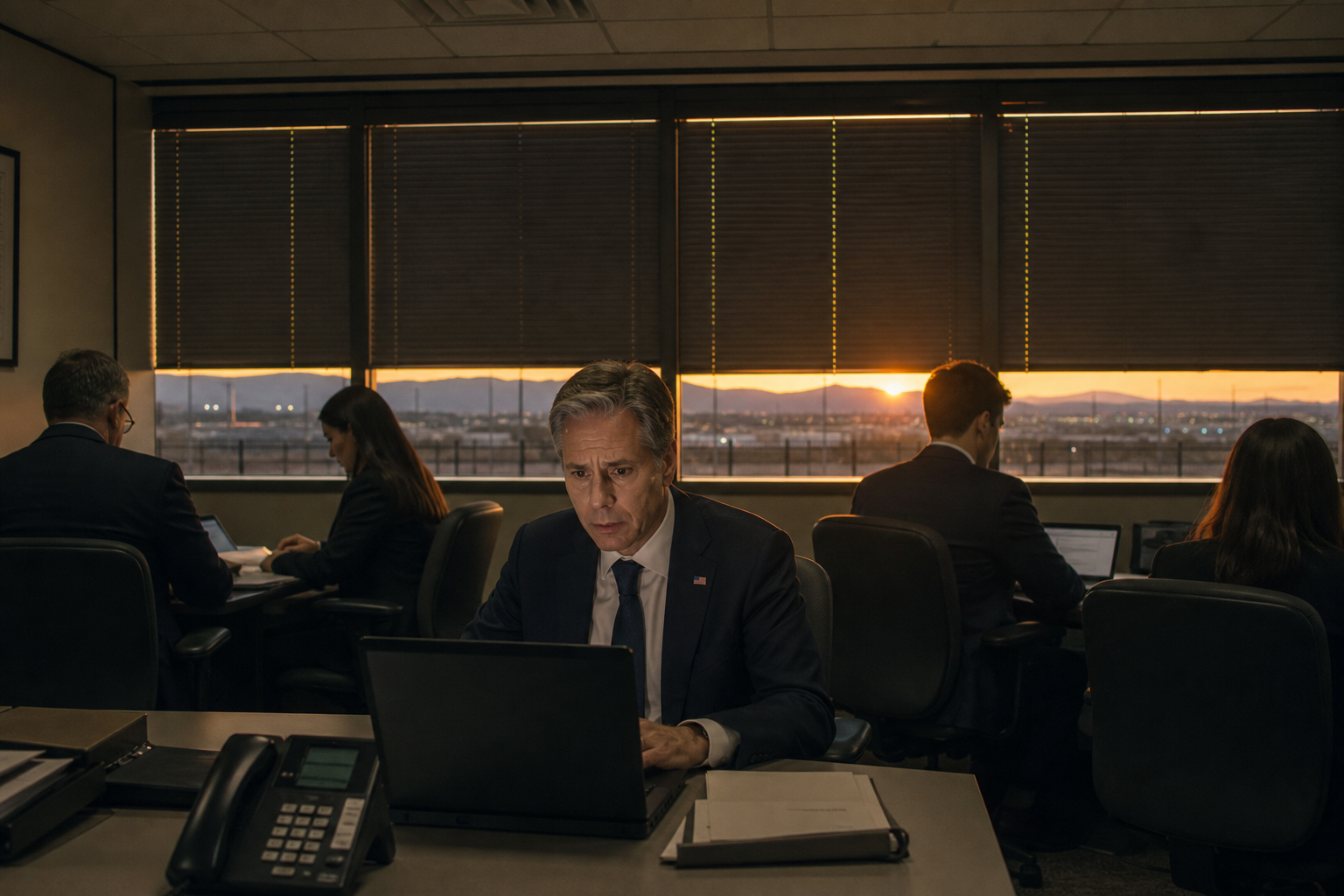
WASHINGTON— The State Department announced Tuesday that U.S. personnel in Matamoros, Mexico, may resume the federal government’s most harrowing peacetime assignment: opening Outlook in a building where everyone has agreed to sit near a window only theoretically.
The fictional decision follows the lifting of a shelter-in-place order for government employees after law-enforcement activity subsided, even as Americans were still urged not to travel to the Mexican border state of Tamaulipas. To reconcile those positions, the department’s new parody guidance establishes a narrow category of safety known as operationally calm but narratively unavailable.
“Our people are not being told the situation is normal,” said a fictional senior official, standing beside a map covered with enough discreetly colored zones to make a Crayola executive request an emergency briefing. “They are being told the situation is sufficiently non-abnormal for quarterly compliance training, provided they remain alert, avoid unnecessary movement, and do not ask why the printer has been relocated to an interior hallway.”
Under the new protocol, employees are expected to report to work in person while maintaining what managers call a “healthy professional distance from the concept of arrival.” Staff may badge into the office, answer emails, attend meetings, and use the break room, but are instructed not to describe themselves as “settled,” “comfortable,” or, in one especially stern revision, “just grabbing lunch.”
The policy has created immediate confusion among middle managers, who had spent years mastering the federal art of making work feel urgent without giving anyone enough information to identify the urgency. One supervisor reportedly sent a team-wide calendar invite titled Optional Mandatory Return to Routine, then spent forty minutes assuring employees the phrase “routine” was being used aspirationally.
“Look, we need everyone visible,” the supervisor explained in the fictional memo, “but not visible in a way that suggests anyone should be observing their surroundings too closely. Awareness is encouraged. Specific awareness creates paperwork.”
For several hours, the arrangement appeared to be working. Personnel returned to their desks. Cameras switched on. A deputy cultural-affairs officer successfully completed a slide deck called Regional Engagement Opportunities without once using the word “outside.” The office coffee machine, which had spent the shelter order unplugged under a conference table, was restored to service after officials determined it had no independent travel plans.
Then came the problem no security posture had anticipated: employees began receiving ordinary emails from Washington asking whether they could “circle back” on unrelated projects.
The phrase triggered a brief internal crisis. A task force was assembled to determine whether circling back constituted movement, whether the movement was essential, and whether an employee could be held accountable for failing to circle back while already remaining aware of their surroundings. By midafternoon, the State Department had released a clarification stating that all metaphorical travel remained authorized, while physical travel should continue to be treated as an unfortunate hobby practiced by other people.
The real bureaucratic strain emerged when the department tried to explain why federal employees could return to their posts while private Americans were still advised against travel to the state. Officials insisted there was no contradiction, only a distinction so elegant it could not survive being spoken aloud.
“Government employees have training, procedures, institutional support, and access to a chain of command,” said the fictional official. “Tourists have a rental-car confirmation, one Bluetooth earbud, and an itinerary entitled ‘Border Foodie Weekend.’ These are not comparable risk profiles.”
To reinforce that distinction, the department briefly considered issuing employees a new status badge reading Not a Visitor, Technically. The idea was abandoned after someone pointed out that it would make every employee look like a person attempting to enter a nightclub after being denied entry twice.
By evening, Matamoros staff had resumed the ancient diplomatic ritual of appearing impeccably composed while quietly refreshing three sources of information at once. Their chat statuses were updated across the mission: Available, Alert, and Not Here in Any Sense That Would Comfort You.
State Department Clears Matamoros for Its Most Dangerous Mission Yet: Email
Federal employees may resume normal operations, provided normal operations do not involve developing a sense of normalcy.
WHAT STARTED THIS MESS
The event underneath the joke is real. The SPILL premise, dialogue and escalation above are fictional parody.