Susie Wiles Gives White House Jobs Their Final Interview on Fox
The administration’s new exit process lets employees discover they’ve been fired when the host starts gently repeating the question.
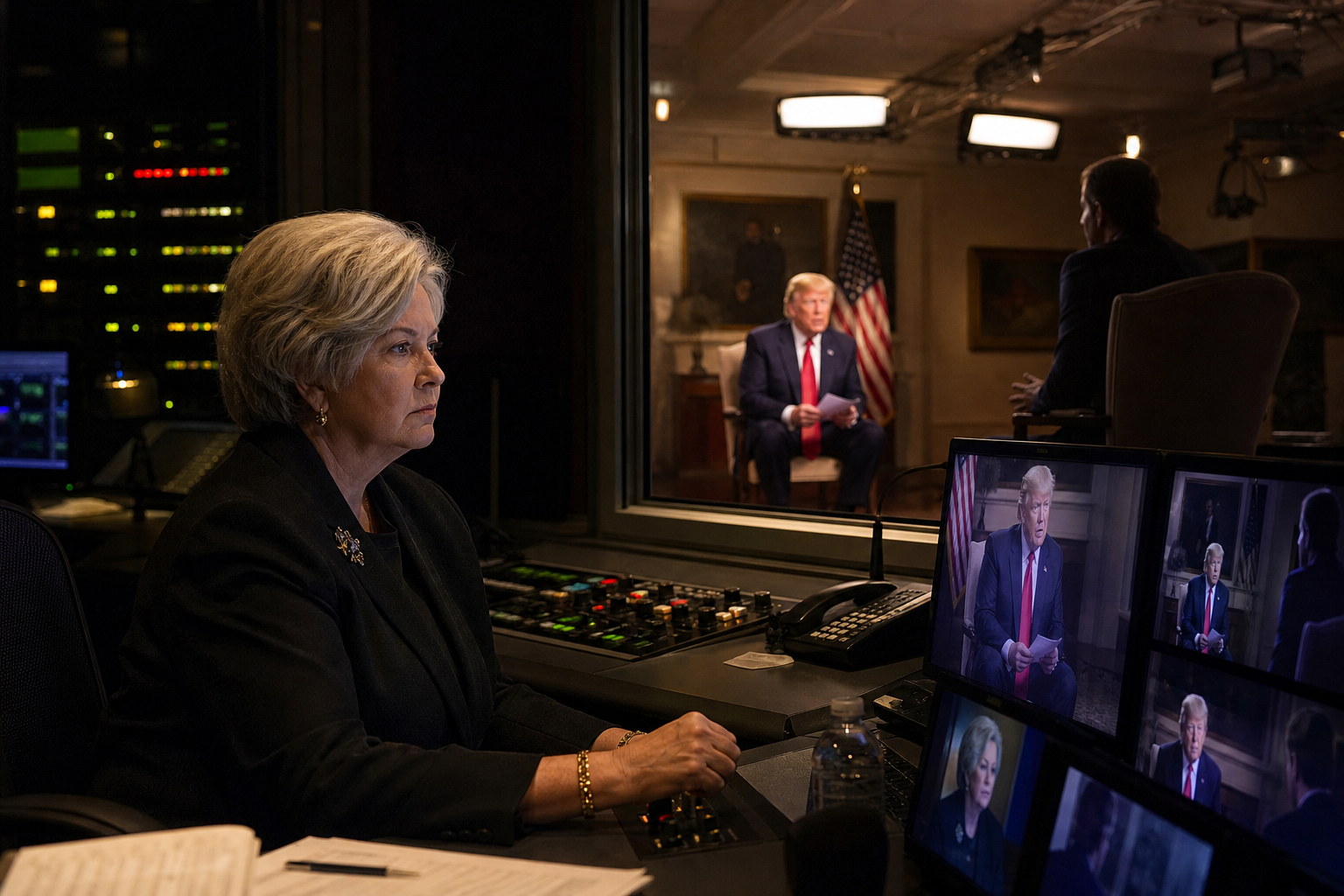
WASHINGTON — In a fictional reform intended to bring clarity, dignity and a little better lighting to White House personnel decisions, chief of staff Susie Wiles has unveiled the administration’s new employment protocol: nobody is fired until they have appeared on friendly television and made everyone involved profoundly regret trying to help.
The initiative, known internally as the Fox Final, was inspired by the brief and turbulent tenure of former press secretary Katie Zacharia, whose pre-exit interview was reportedly arranged with the sort of urgency normally reserved for a hostage negotiator locating a working landline.
Under the new system, an employee whose future is uncertain is seated across from a host who has been supplied with flattering biographical notes, several rescue ramps and a commercial break. The employee is then asked a question that should be impossible to lose: whether they retain the president’s confidence, what exactly their job is, or whether an extremely public fact about their résumé is, in fact, true.
If the answer remains upright for more than three minutes, the employee is permitted to return to work. If it begins searching the ceiling for an emergency exit, Wiles receives a discreet signal from the control room: the host’s smile becomes so understanding it could qualify for federal disaster relief.
“We wanted to end the old, cruel practice of informing people privately,” said a fictional senior administration official, speaking beside a bowl of complimentary mints labeled only with the presidential seal. “Now they can receive feedback in front of millions of Americans who have also been told this will be an easy one.”
The Fox Final has already produced a more disciplined West Wing. Staffers now arrive at work with a garment bag, a prepared anecdote about the president’s generosity and a laminated card containing three acceptable answers to every question: “The president is working very hard,” “the media is obsessed,” and “I’m standing here, aren’t I?”
Wiles, according to the fictional policy memo, will not decide who passes. That would create the appearance of a traditional management structure. Instead, she will monitor a bank of televisions from a secure viewing room called the Confidence Center, where aides track subtle indicators of job security: whether the guest begins referring to themselves in the past tense, whether the host says “take your time,” and whether someone in the control booth starts playing walk-off music before the answer has found a verb.
The plan initially thrilled the president, who reportedly appreciated its efficiency. Why spend weeks vetting a prospective spokesperson when a single interview can establish whether they possess the essential modern qualification for public service: the ability to withstand an ally saying, very softly, “But that’s not what happened.”
Then came the complication. Several Cabinet officials, exhausted by the administration’s pace, began deliberately failing their Fox Finals in hopes of securing a graceful release.
One fictional deputy secretary reportedly answered every question with a 14-minute explanation of procurement law. Another brought a chart. A third attempted to acknowledge uncertainty, triggering an immediate evacuation of the green room and a temporary suspension of all on-air honesty.
Wiles had to act. The White House amended the policy so that a spectacularly bad Fox Final no longer guarantees departure. In some cases, it now results in a promotion to a role with less public exposure and more authority over other people’s calendars.
“We cannot reward quitting behavior,” said the fictional official. “If you go on television and successfully make yourself unemployable, that demonstrates initiative. You may be exactly the kind of person we need supervising a sensitive interagency process.”
The reversal has created a new panic across the executive branch. Career staffers who once feared appearing too weak now worry about seeming too employable. One official who gave a crisp, competent answer about agricultural exports was immediately assigned three additional portfolios and invited to explain the economy on four morning shows before lunch.
Meanwhile, Wiles is said to be refining the final stage of the process: a post-interview call in which the president reassures the employee that they remain fully supported, admired and essential to the administration — a phrase now understood throughout Washington to mean the makeup team should keep the chair warm.
Susie Wiles Gives White House Jobs Their Final Interview on Fox
The administration’s new exit process lets employees discover they’ve been fired when the host starts gently repeating the question.
WHAT STARTED THIS MESS
The event underneath the joke is real. The SPILL premise, dialogue and escalation above are fictional parody.
- POLITICO Susie Wiles helped set up Fox interview ahead of press secretary’s exit ↗
- CNN Trump says ‘zero chance’ he’s replacing chief of staff Susie Wiles ↗
- NBC Trump says Susie Wiles will remain in her role at the White House ‘until the end’ ↗
- FOX Trump's chief of staff almost skipped screening that detected aggressive cancer ↗