Trump Asks Americans to Stop Spending Like the Economy Is Personal
The White House says household budgets have become emotionally involved in a national success story.
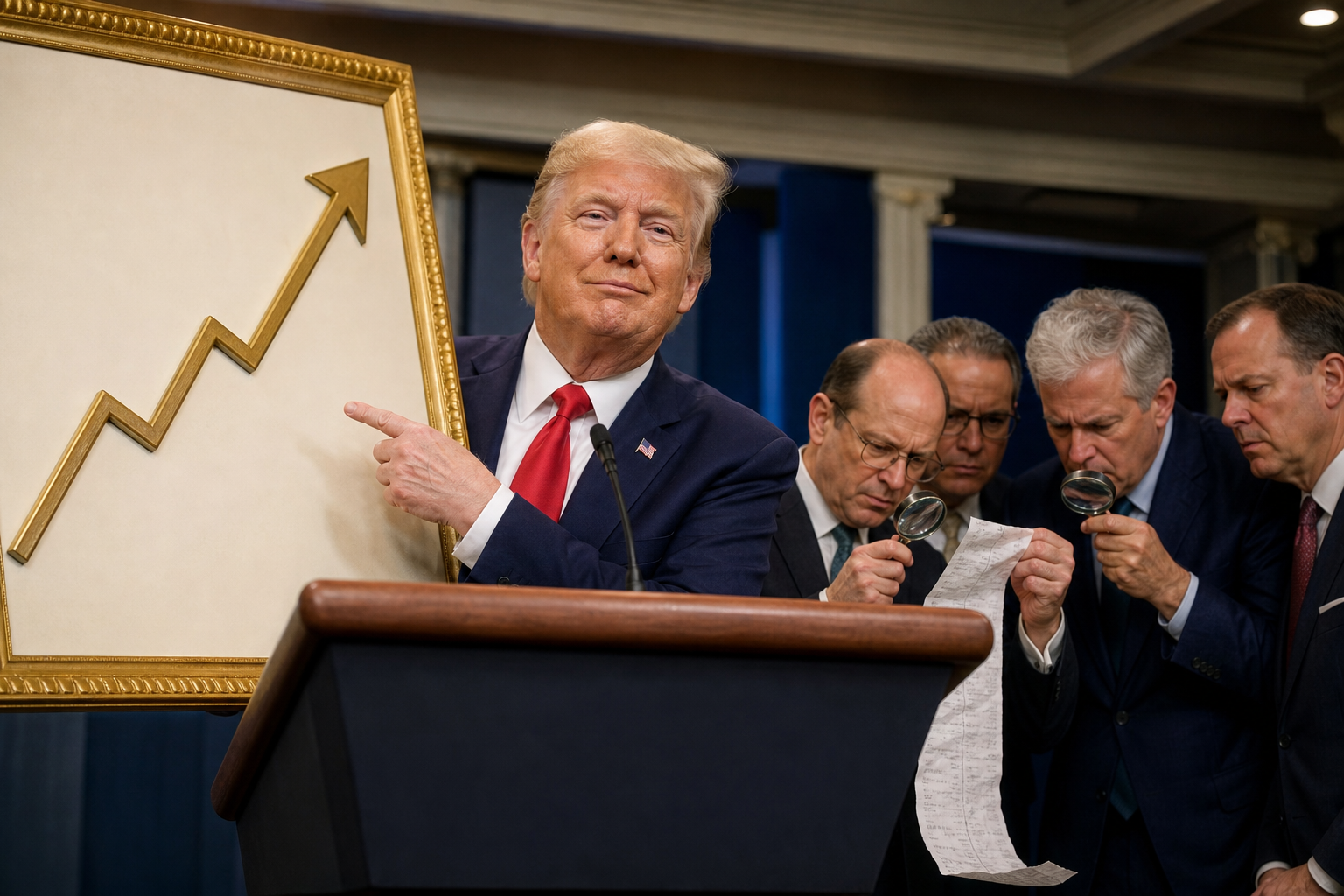
WASHINGTON— The White House announced Thursday that Americans will be encouraged to stop interpreting every purchase they make as a personal statement about the economy, following President Trump’s insistence that the country is doing great and citizens are richer now despite a fresh inflation report showing prices rising faster than expected.
The new initiative, called Perspective at Point of Sale, asks households to pause before reacting to an expensive grocery total, utility bill, plane ticket or tank of heating oil and consider whether the purchase may simply lack the bigger picture.
“For too long, Americans have arrived at the checkout counter with a narrow, self-centered question: ‘Can I afford this?’” said a fictional administration adviser, standing beside a chart showing that national confidence had been temporarily lowered by citizens looking directly at numbers. “The more productive question is whether their inability to enjoy a purchase makes the country look less rich.”
Under the voluntary guidance, shoppers are encouraged to refer to unusually high prices as “localized impressions,” mortgage payments as “legacy emotional commitments,” and any sudden desire to compare this month’s bill with last month’s bill as “an act of backward-looking negativity.”
The White House said the program would help resolve a communications problem in which voters keep bringing their own financial circumstances into conversations designed to celebrate the broader economy.
At an internal briefing, campaign officials reportedly demonstrated the preferred response to a rising grocery bill. Rather than saying, “Eggs are expensive,” a participant is instructed to place a hand over the receipt and say, “I respect the president’s larger relationship with abundance.”
The exercise initially went poorly. One staff member playing a suburban parent asked whether abundance could cover a $214 grocery run. Another, portraying a retiree, wanted to know why a good economy kept requiring her to become a student of regional electricity pricing. Both were told they had failed to maintain sufficient altitude.
“This is a president who sees the whole scoreboard,” one fictional official said. “The difficulty is that Americans keep asking why the scorekeeper is charging them $9.40 for a small bag of coffee.”
But the initiative encountered an unexpected obstacle when senior aides discovered that economic optimism is much easier to request from people who are not currently buying anything. A trial version of the program asked restaurant customers to celebrate the nation’s prosperity by declining to look at the bottom of the menu. Diners complied for nearly three minutes before remembering they had brought children.
That prompted a strategic pivot. Rather than asking Americans to ignore prices, the White House will now invite them to experience prices more patriotically. Grocery stores are not required to participate, but fictional officials said participating retailers could designate a “national perspective lane,” where customers receive a brief affirmation that a higher total reflects their proximity to a thriving civilization.
The lane’s first test produced mixed results. A shopper purchasing cereal, detergent and two bags of frozen vegetables was congratulated by a suited volunteer for living in “the world’s most premium consumer reality.” She asked if the volunteer wanted to cover the bill. He replied that the question showed an unhealthy attachment to transaction-level thinking.
The administration insists the policy is not about denying economic pain. It is about ensuring that pain does not develop an unauthorized communications strategy before the midterms.
To that end, aides are drafting a companion guide for candidates titled How to Hear a Voter Describe a Price Without Letting the Price Set the Tone. Suggested responses include nodding gravely, praising the voter’s resilience, and redirecting the conversation toward a hypothetical depression that has not happened and therefore remains competitively priced.
Trump, meanwhile, is expected to continue arguing that the economy is strong, with advisers confident the message will eventually break through once Americans agree to stop purchasing food in such a confrontational manner.
Trump Asks Americans to Stop Spending Like the Economy Is Personal
The White House says household budgets have become emotionally involved in a national success story.
WHAT STARTED THIS MESS
The event underneath the joke is real. The SPILL premise, dialogue and escalation above are fictional parody.
- Reuters Breakingviews - COMMENTARY: Japanese PM’s reflationist label is hard to shake ↗
- NPR Despite bad inflation report, Trump says economy is doing fine ↗
- MS NOW Nicolle: Trump’s economy is a ‘flashing red political crisis’ ↗
- CBS Trump insists "we're richer now" despite report showing rising inflation ↗