Lehigh Valley Candidates Enter Radio Challenge With One Rule: Name Something Still Affordable
The campaigns arrived with outreach plans, bilingual slogans and absolutely no defense against a caller who had just bought eggs.
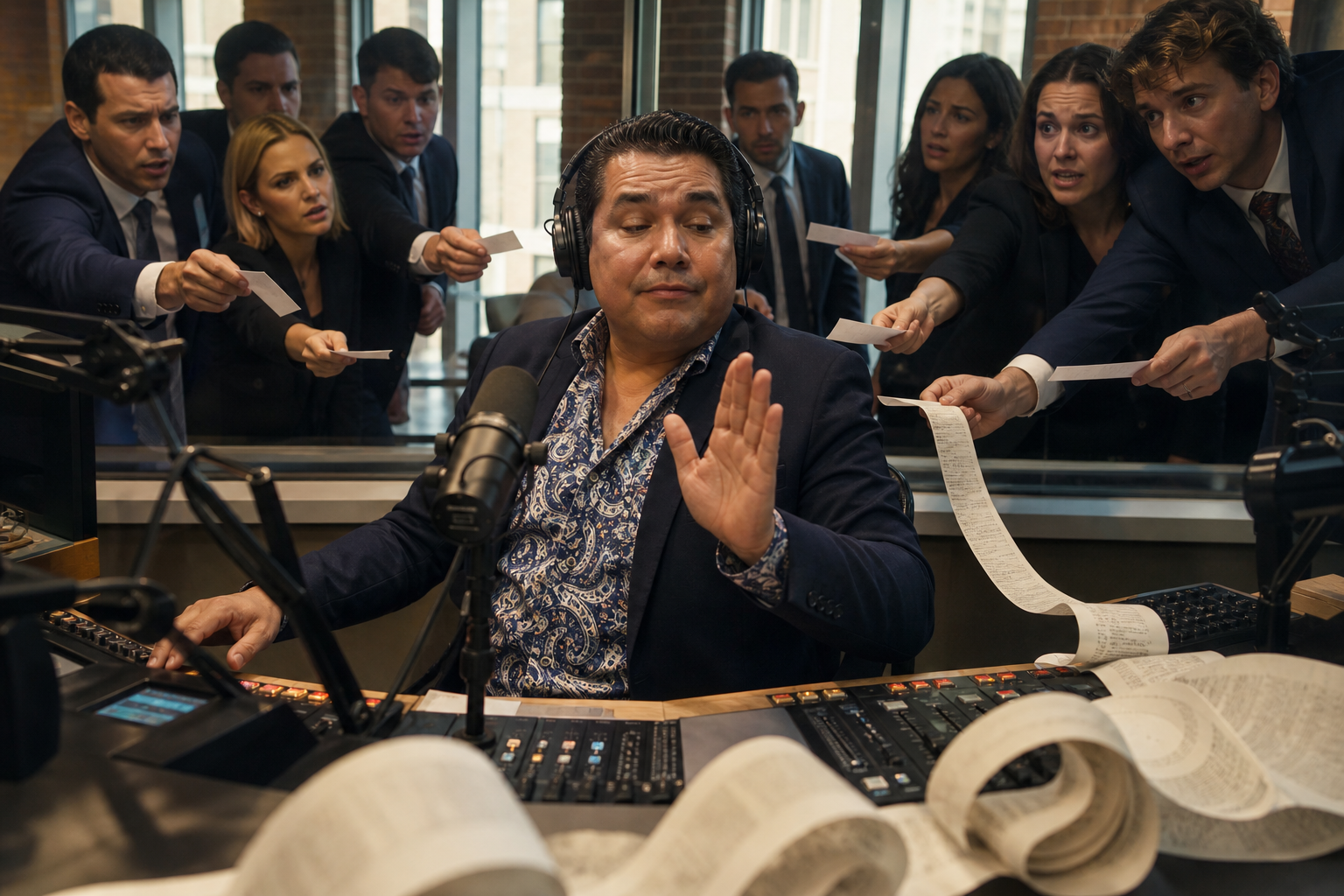
FICTIONAL PARODY. The congressional campaigns fighting over Pennsylvania’s Lehigh Valley have agreed to settle the region’s affordability debate the way every modern democratic institution eventually must: on Spanish-language morning radio, under a stopwatch, while a host asks them to name one thing that has not gotten absurdly expensive.
The segment, called Una Sola Cosa, was proposed after local listeners spent weeks calling in with grocery totals, fuel receipts, child-care bills and the sort of mortgage figures that cause a campaign consultant to look briefly toward the ceiling as if awaiting extraction.
“The rules are simple,” said fictional host Victor Martinez, standing behind a control board equipped with a laugh track, a censor button and an emergency sound effect labeled THAT’S NOT WHAT IT COSTS AT MY STORE. “A candidate gets thirty seconds to identify one ordinary thing that remains within reach of an ordinary household. No luxury items. No things your donor owns. No ‘the American dream.’”
Republican Rep. Ryan Mackenzie’s fictional campaign arrived first with a prepared list: faith, family, freedom, common sense and an aggressively laminated photo of a gas pump from 1998. Democratic challenger Bob Brooks’ team came carrying a firefighter helmet, a bilingual brochure and a legal pad titled DO NOT SAY ‘KITCHEN-TABLE ISSUES’ UNLESS THERE IS ACTUALLY A KITCHEN TABLE.
The first round did not go well.
Mackenzie’s representative offered “a nice evening at home.” Within nine seconds, a caller pointed out that electricity had become “a monthly hostage negotiation.” Brooks’ representative said “a homemade meal,” prompting another caller to ask whether the campaign had seen the price of cooking oil lately or had merely heard rumors of it from a nonprofit gala.
Both campaigns then attempted the safest available answer: “community.” Martinez waited respectfully before pressing a button that produced the sound of a register rejecting a debit card.
By the second hour, the contest had become less a radio segment than a live demonstration of why campaigns prefer words such as values, which cannot be weighed at checkout and rarely demand a coupon.
At first, staffers treated the callers as a communications challenge. They passed handwritten notes into the studio: “Acknowledge frustration.” “Pivot to jobs.” “Smile in a way that suggests you have personally compared store-brand cereal.” But the callers had developed an unfair advantage. They were discussing specific amounts of money.
One caller described a child-care payment so large that both campaigns briefly asked whether it could be categorized as infrastructure. Another explained that he had voted for change, received several varieties of it in policy mailers, and would now like the kind that used to remain in his wallet after buying groceries.
That was when the campaigns discovered the radio show’s hidden danger: the public did not appear interested in being sorted into demographic buckets. It wanted somebody to explain why every bucket now cost $14.99 and came with a loyalty-app requirement.
In an emergency meeting at a downtown Allentown coffee shop whose menu had no listed prices, operatives from both sides agreed that their outreach had become too ambitious. Instead of persuading voters, they would begin seeking permission to acknowledge objects.
The Mackenzie campaign unveiled a new slogan: “We See the Cart.” Brooks countered with: “We Also See the Cart.” For six tense hours, the district’s political future hinged on whether either candidate could credibly claim to have noticed a shopping cart before October.
Then came the reveal that panicked everyone: focus groups loved the radio challenge. Not because they trusted the campaigns more, but because it was the first time anyone connected to an election had been forced to remain in the room after saying the word “affordability.”
Consultants immediately tried to expand the format. Town halls would now feature price scanners. Debate moderators would be authorized to interrupt answers with an actual utility bill. Candidates delivering remarks about economic optimism would be seated beside a person silently opening a pharmacy app.
The idea collapsed when a trial audience asked both campaigns to identify the price of a gallon of milk without consulting a donor, a pollster or the sacred mist surrounding the phrase “working families.”
Martinez ended the pilot episode by thanking the candidates for participating and announcing tomorrow’s topic: whether either party could locate a loaf of bread without calling it a stakeholder.
Lehigh Valley Candidates Enter Radio Challenge With One Rule: Name Something Still Affordable
The campaigns arrived with outreach plans, bilingual slogans and absolutely no defense against a caller who had just bought eggs.
WHAT STARTED THIS MESS
The event underneath the joke is real. The SPILL premise, dialogue and escalation above are fictional parody.