Cornell Administration Seeks Tenure in Handling Its No-Confidence Vote
The faculty may withdraw its confidence, but the trustees have been assured that institutional endurance is a form of scholarship.
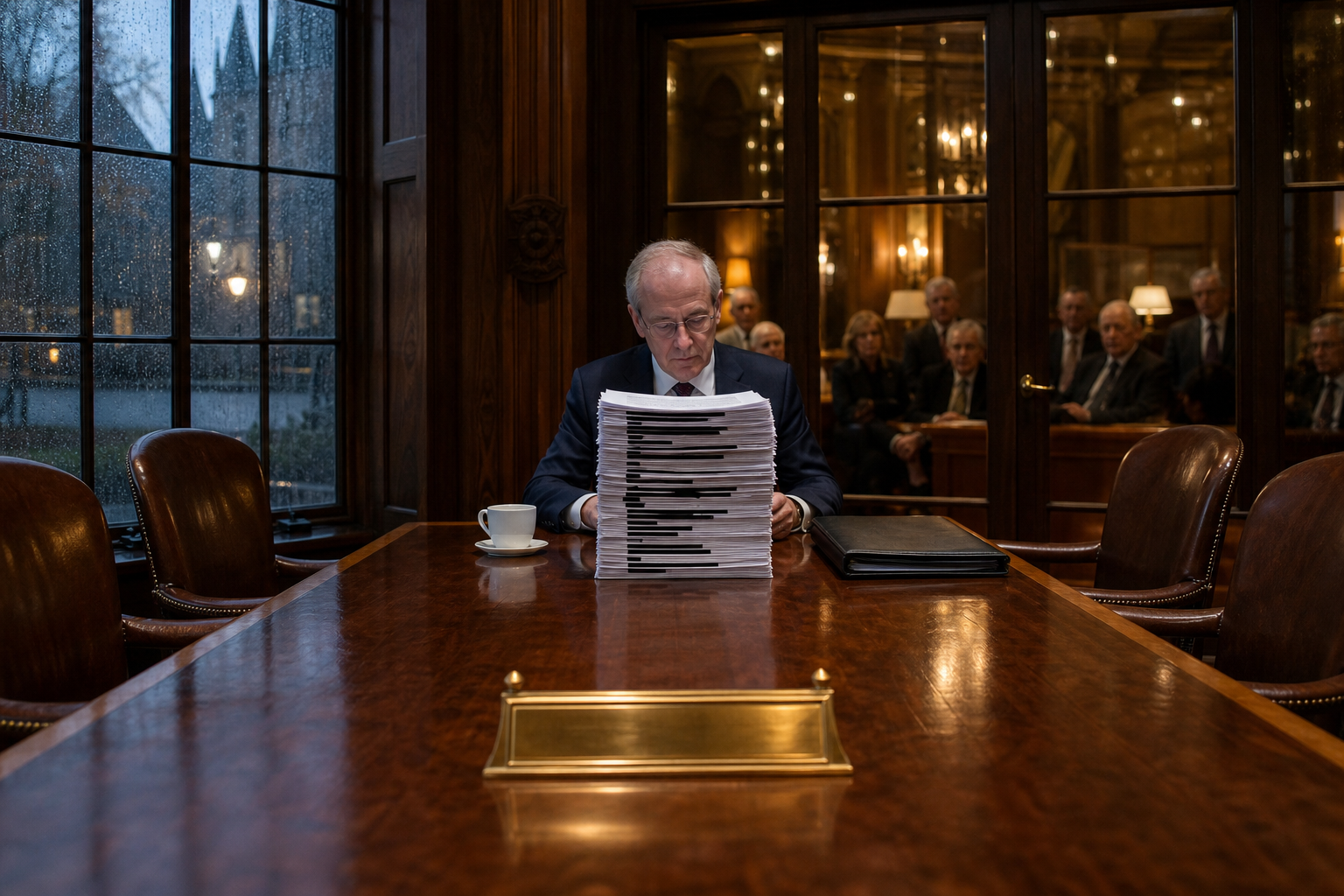
ITHACA, N.Y. — PARODY — Cornell’s administration responded Tuesday to a proposed faculty no-confidence vote by announcing that it would seek tenure in the field of handling no-confidence votes, a discipline administrators described as “interdisciplinary, emotionally demanding, and ideally conducted without consequences.”
The application, reportedly bound in burgundy leather and submitted to the Board of Trustees through a portal that closes exactly three minutes before anyone finds the supporting documents, argues that university leadership has produced an original body of work on institutional response. Its central thesis: confidence is not a requirement for administration, merely one possible classroom atmosphere.
“A no-confidence vote is not a verdict,” said fictional Vice Provost for Long-Term Employment Dr. Meredith P. Caliper. “It is peer feedback. And as everyone in higher education understands, peer feedback should be considered carefully, filed permanently, and revisited only after the person who wrote it has forgotten why they were upset.”
The faculty resolution follows widespread criticism of Cornell’s handling of an alleged 2024 sexual assault case, protests on campus, and demands for greater transparency and accountability. In the fictional tenure dossier, those developments are presented as proof that the administration has achieved the highest form of academic impact: making an entire community engage with its work whether it wanted to or not.
Under Cornell’s new proposed standard, administrators must demonstrate excellence in three areas: research, teaching and service. Research consists of locating increasingly intricate ways to explain why a straightforward question cannot be answered at this time. Teaching involves explaining those limitations to people who have asked a straightforward question. Service is defined as remaining in the building while other people hold meetings about whether you should remain in the building.
Caliper said the administration’s strongest credential was its “pedagogical commitment to process.” She pointed to a series of town halls in which officials answered urgent concerns with phrases including “ongoing review,” “appropriate channels,” and “we hear you,” which the dossier identifies as a groundbreaking trilogy in contemporary institutional literature.
“People mistake repetition for evasiveness,” Caliper said. “But repetition is how universities establish tradition. We have repeated our commitment to transparency so frequently that it now qualifies as a historic campus landmark.”
The first complication emerged when faculty members requested access to the tenure materials. Administrators initially agreed, then explained that disclosure could compromise the integrity of the process by allowing reviewers to know what they were reviewing. A redacted version was later circulated, revealing only the words “Cornell,” “leadership,” and several passages from a receipt at the Statler Hotel.
That might have been enough to derail an ordinary tenure case. But this is an administrative one, meaning the candidate gets to define the discipline while occupying the department, controlling the syllabus, and sending calendar invites to the people judging them.
Then came the second, more ambitious turn. The administration announced it had identified outside evaluators from peer institutions: other university leaders who, according to a draft letter, possess “deep expertise in being criticized by faculty, students, alumni, newspapers, investigators and an email chain marked Urgent.” Their evaluations will be confidential, though one leaked recommendation reportedly praised Cornell for “refusing to let public concern rush a university into the reckless act of appearing accountable before every committee has had lunch.”
The trustees, meanwhile, were briefed that denying tenure could create a chilling effect. If an administrator can lose lifetime institutional protection merely because the faculty has no confidence in the administration, one trustee reportedly asked, “what message does that send to future administrators considering bold choices such as waiting?”
Faculty members were invited to submit comments through the standard course-evaluation system, where each critique is scored from one to five on whether it demonstrates “constructive engagement with leadership’s learning objectives.” Any response that merely says the administration should be held accountable is automatically rerouted to a wellness resource containing a JPEG of a stone labyrinth.
At the conclusion of the process, Cornell expects to issue the administration a lifetime appointment, a congratulatory plaque, and a modest teaching reduction so it can devote more time to explaining why nobody else’s confidence falls within its area of expertise.
Cornell Administration Seeks Tenure in Handling Its No-Confidence Vote
The faculty may withdraw its confidence, but the trustees have been assured that institutional endurance is a form of scholarship.
WHAT STARTED THIS MESS
The event underneath the joke is real. The SPILL premise, dialogue and escalation above are fictional parody.
- NBC Cornell University president calls alleged gang rape 'deeply disturbing' ↗
- PBS NewsHour News Wrap: Cornell students protest handling of alleged rape - PBS ↗
- FOX Cornell protesters swarm campus to support Jane Doe, call for university president's resignation ↗
- CNN Attorney for accused Cornell University student speaks out ↗