Trump Administration Lets SUVs Set Their Own Fuel Economy Goals
Vehicles will now submit a self-assessment before federal regulators decide whether the dashboard deserves to be believed.
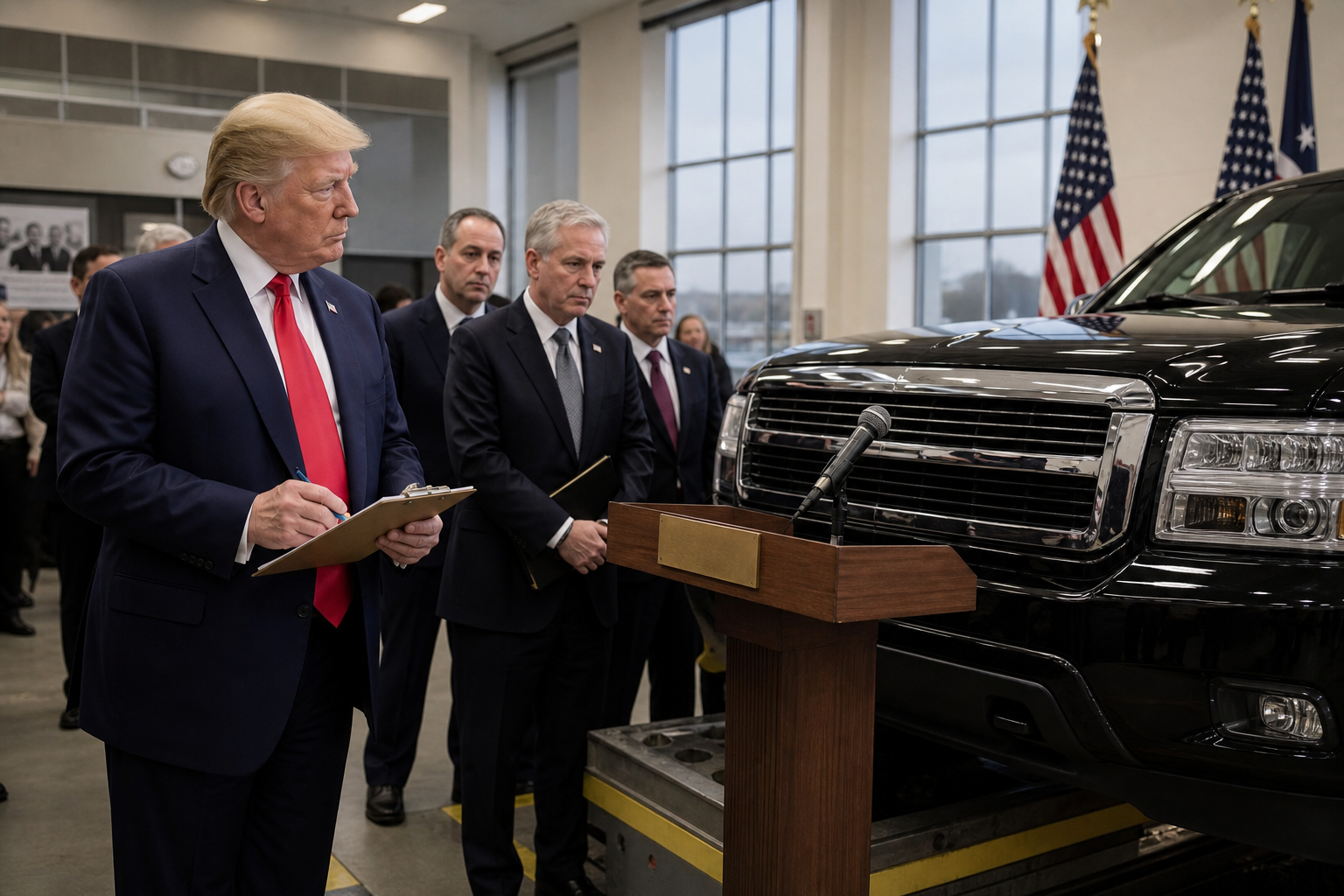
The Trump administration has replaced federal fuel-efficiency standards with a voluntary self-reporting program in which every vehicle is invited to describe the kind of mileage it believes it could achieve if traffic, weather, hills, passengers, and federal negativity were removed from the equation.
Under the new National Vehicular Optimism Initiative, automakers will no longer need to meet a single government mileage target. Instead, each model will attend a short confidence interview in a climate-controlled conference room at the Department of Transportation, where it may present a mood board, list its strengths, and explain why its fuel consumption should be understood as “aspirationally low.”
“A vehicle is more than a number on a sticker,” said an administration official in a prepared statement printed on the back of a valet ticket. “A vehicle is a job creator with cupholders.”
Large SUVs are expected to perform especially well. One prototype, the Liberty Mammoth XL, reportedly entered its review session wearing a dealer-installed chrome grille and informed regulators that it gets “at least 47 miles per gallon spiritually.” Officials approved the claim after the vehicle’s rear camera displayed an American flag at sunset.
The program encountered an early complication when several compact cars arrived with spreadsheets, laboratory data, and modest, technically defensible estimates. Their applications were returned as incomplete because they lacked a section titled “Why This Car Refuses To Lose.” A Toyota engineer said the company had attempted to submit actual fuel-consumption figures before being advised that the figures needed “more belief in themselves.”
To prevent consumers from confusing the new estimates with older government testing, window stickers will no longer list miles per gallon. They will feature three gauges: “Can Do,” “Road Presence,” and “How It Feels When You Merge.” The Environmental Protection Agency will maintain a small reference chart translating the results into approximate gasoline purchases, though the chart has been moved behind a decorative plant in the lobby.
Dealerships have already begun training sales staff to walk customers around the vehicle while asking whether they have ever met a highway willing to tell them no. Buyers who select the optional Freedom Exhaust package will receive an embossed certificate confirming that their SUV has been designated a “high-potential commuter.”
Federal fleet managers were briefly concerned that government sedans might need to participate, until the administration clarified that official vehicles will be exempt because their fuel economy is classified as a matter of national morale. The first federal sedan to complete the process reportedly selected 92 miles per gallon, then requested a larger parking space to celebrate.
At press time, regulators had announced a separate pilot program allowing gas pumps to display only the price drivers feel they deserve.
Trump Administration Lets SUVs Set Their Own Fuel Economy Goals
Vehicles will now submit a self-assessment before federal regulators decide whether the dashboard deserves to be believed.
WHAT STARTED THIS MESS
The event underneath the joke is real. The SPILL premise, dialogue and escalation above are fictional parody.
- CNN 100 Israeli settlers drove a Palestinian family from home again. Netanyahu blamed a ‘handful of rioters’ ↗
- NBC Cornell rape allegations highlight consent laws and Israeli settlers attack family trying to return home: Morning Rundown ↗
- NPR Trump weakens fuel efficiency standards. And, Cornell fraternity rape case reopened ↗
- PBS NewsHour New York prosecutors reopen investigation into alleged rape at Cornell University - PBS ↗
- CBS Details emerge in case of former Cornell student alleging gang rape by fraternity members ↗
- MS NOW NY Gov. Kathy Hochul calls for review of Cornell sex assault case ↗