Republicans Are Skipping Trump’s Dallas Convention as the Midterms Tighten
The RNC wants its September 9-10 Dallas gathering to put Donald Trump at the center of the 2026 campaign. But House Republicans in competitive races are weighing whether appearing beside an unpopular president helps them win in November.
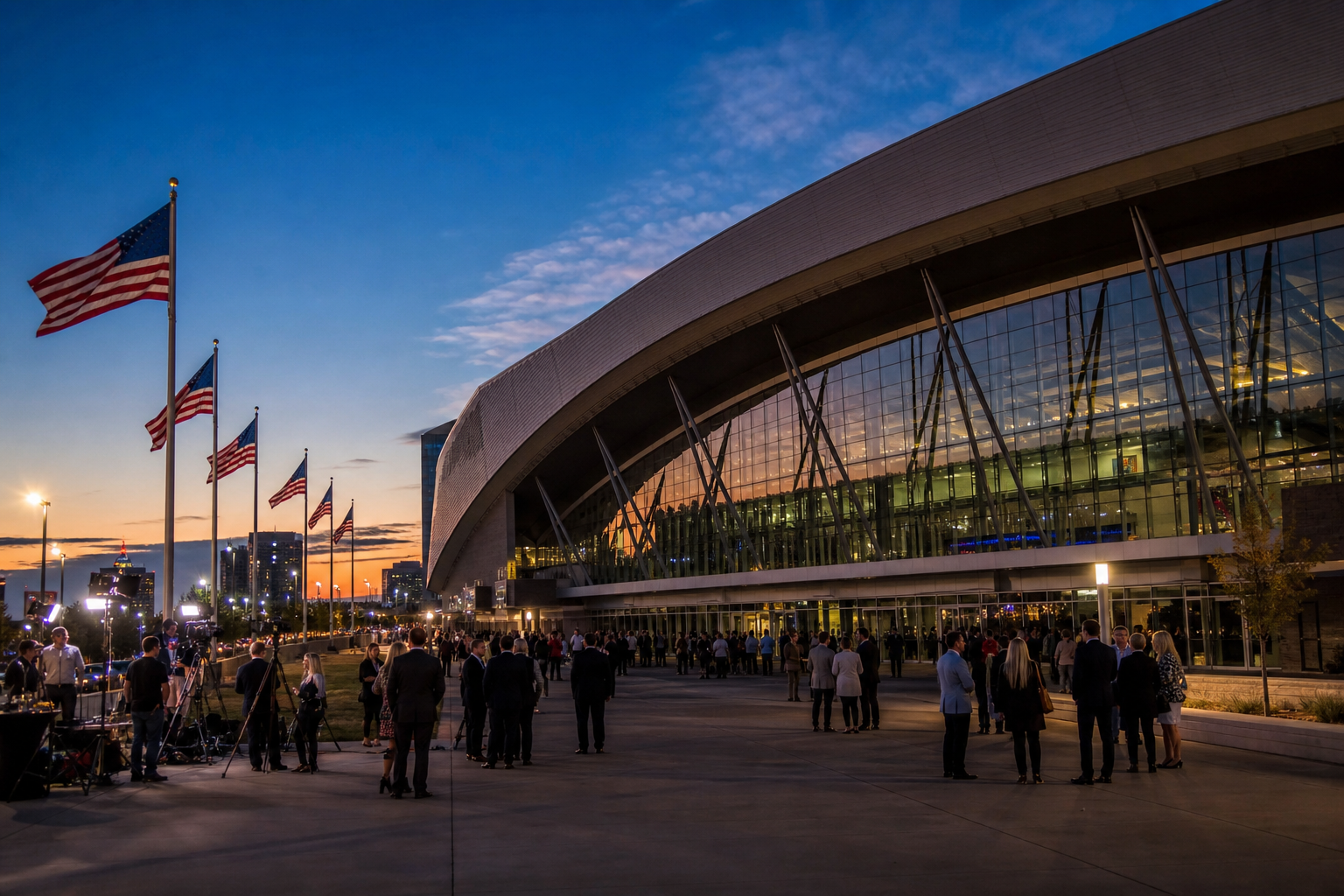
The RNC wants its September 9-10 Dallas gathering to put Donald Trump at the center of the 2026 campaign. But House Republicans in competitive races are weighing whether appearing beside an unpopular president helps them win in November.
Republicans are heading to Dallas this week for an unusual midterm convention built around President Donald Trump. But a growing number of House Republicans and GOP candidates are making a different calculation: their most urgent political work may be back home, far from a national event that deliberately turns the November 2026 elections into a referendum on Trump.
The two-day Republican National Committee gathering at the American Airlines Center is scheduled for September 9 and 10. Party leaders have promoted it as a first-of-its-kind midterm convention, while RNC Chairman Joe Gruters has embraced the nickname “Trump-a-palooza.” The official purpose is straightforward: energize Trump’s coalition, raise money and put Republican candidates before a national audience ahead of an election that will determine control of Congress and key governorships.
But the convention arrives as Trump’s standing with voters has weakened. An NBC News poll conducted from August 20 through September 1 found 36% approving of Trump’s job performance and 64% disapproving — the weakest result of his second term in that poll. Polls are snapshots rather than election results, and individual surveys carry margins of error. Still, the political problem for vulnerable Republicans is plain: Trump can energize intensely loyal supporters, but tying closely to him can also hand Democrats a ready-made argument in suburban and swing districts.
WHAT HAPPENED
NBC News and POLITICO reported that House Republicans are split over attending the Dallas event. Some see the convention as a chance to access Trump’s fundraising network, elevate their campaigns and activate voters who backed him in 2024. Others have cited prior commitments, district events and the practical need to campaign locally.
That is not a trivial scheduling conflict. Midterm candidates typically spend the final stretch before voting starts raising money, meeting local leaders, preparing for debates and building a turnout operation. A nationally televised gathering can be useful for candidates who need help with name recognition or donor access. For an incumbent in a close House district, however, time spent on a Dallas stage may create footage and headlines that make it harder to maintain an independent local identity.
Republican candidates in Arizona illustrate the split. Rep. Andy Biggs, the Republican nominee for governor, is not expected to attend, according to reporting from Arizona television station AZFamily. Rep. Juan Ciscomani, who faces a competitive reelection race in Arizona’s 6th Congressional District, is also staying in-state as he prepares for a televised debate. Jay Feely, the Republican candidate in Arizona’s competitive 1st District, is scheduled to speak in Dallas.
The divergence is a recognition that the party’s 2026 challenge is not the same in every district. Candidates in safely Republican territory can use Trump’s presence to consolidate the GOP base. Candidates seeking independents and voters who supported Biden or Democrats in recent cycles have a narrower path.
WHY IT MATTERS
Trump and the RNC are not trying to avoid that contrast. The event’s structure is designed to make Trump the central figure in the midterms — a strategy based on the belief that the president’s personal appeal can bring lower-propensity Republican voters to the polls even when he is not on the ballot.
That strategy has a substantial downside. Midterm elections often become judgments on the party holding the White House, especially when voters are dissatisfied with economic conditions or the president’s performance. Republicans lost the House in the 2018 midterms during Trump’s first term. The 2026 map is different, and history is not destiny. But the underlying constraint remains: candidates cannot entirely separate themselves from the governing party’s record while asking voters to preserve that party’s control of Washington.
The House stakes are especially immediate. Even a small shift in closely divided districts can determine who controls the speakership, committee gavels, investigative authority and the legislative agenda for the final two years of Trump’s term. Democrats need only a modest number of gains if the chamber remains closely divided. Republicans, meanwhile, need to protect incumbents in districts where Trump’s national numbers may be less durable than the party’s local infrastructure.
That makes convention attendance politically meaningful but not dispositive. A candidate’s decision to skip Dallas does not itself prove a break with Trump or his agenda. Campaigns have legitimate logistical reasons to prioritize district events. But when numerous candidates in competitive races choose local campaigning over a major Trump-centered convention, it shows the party’s central strategic tension in public: how to benefit from Trump’s base without making every swing-seat race solely about him.
THE RECEIPTS
The RNC’s convention website identifies Dallas as the location for a September 9-10 gathering intended to celebrate Trump’s agenda, showcase Republican candidates and rally the party before November. Trump and Vice President JD Vance are expected to headline the program. The event is not a normal presidential nominating convention and will not decide delegates or select a ticket; it is a campaign and party-mobilization production.
NBC News reported broad reluctance among House Republicans and candidates to attend, while POLITICO similarly documented divisions among Republican lawmakers over whether the event is worth leaving the campaign trail. Reporting around the event has also pointed to practical objections, including the demands of local races and the cost of access to some convention programming.
None of that means Republicans lack an electoral path. National conditions can change quickly, turnout is uncertain, and candidates can outperform their party’s presidential brand. It does mean the RNC’s gamble is unusually explicit: rather than insulating congressional candidates from Trump, the party is inviting them to run alongside him.
WHAT HAPPENS NEXT
The first test comes this week, when the Dallas convention reveals who appears on stage, who stays away and whether the event produces a sustained message beyond Trump’s personal appeal. The more consequential test comes after candidates return to their districts. Voters will see whether Republicans campaign on specific local and congressional records, on the administration’s agenda, or on a blend of both.
For Democrats, the convention offers a clear target: argue that every Republican appearing in Dallas is endorsing Trump’s governing record and its consequences. For Republicans, the task is harder but not impossible: use Trump to increase turnout among supporters while persuading skeptical voters that their own candidate is responsive to local concerns.
By November, Dallas may be remembered as a successful show of party unity, a costly diversion from close races, or simply one stop in a long campaign. As of September 8, the evidence supports a more limited conclusion: Republicans are not united on whether a Trump-centered national spectacle is the best way to win the seats that will decide power in Washington.
REPORTING SOURCES
Sources used for the original report.