Illinois mother faces murder charges after 2-year-old’s death; prosecutors cite texts about Lindsay Clancy trial
A Will County court filing says Corie Walsh was discussing the closely watched Massachusetts case hours before her son was found dead. The filing alleges that fact as context, not proof that the trial caused the killing.
A Will County court filing says Corie Walsh was discussing the closely watched Massachusetts case hours before her son was found dead. The filing alleges that fact as context, not proof that the trial caused the killing.
An Illinois mother has been charged with first-degree murder after her 2-year-old son was found dead in the basement of the family’s Frankfort home on September 1, according to a prosecutor’s petition seeking to keep her detained before trial. The filing says the mother, Corie Walsh, had been actively discussing the nationally watched murder trial of Massachusetts mother Lindsay Clancy with friends until about 12:30 p.m. that day.
That detail is stark. It is also being used online to make a larger claim that the Clancy trial somehow caused or inspired the Illinois child’s death. The public record does not establish that. Prosecutors have alleged that Walsh was closely following the case; they have not alleged that the trial caused the killing, and no publicly reported evidence demonstrates such a link.
What is established at this stage is narrower and more consequential: a child is dead, Walsh faces three first-degree murder counts, and the case will move through Illinois courts while authorities and defense lawyers litigate what happened and Walsh’s mental state.
What happened
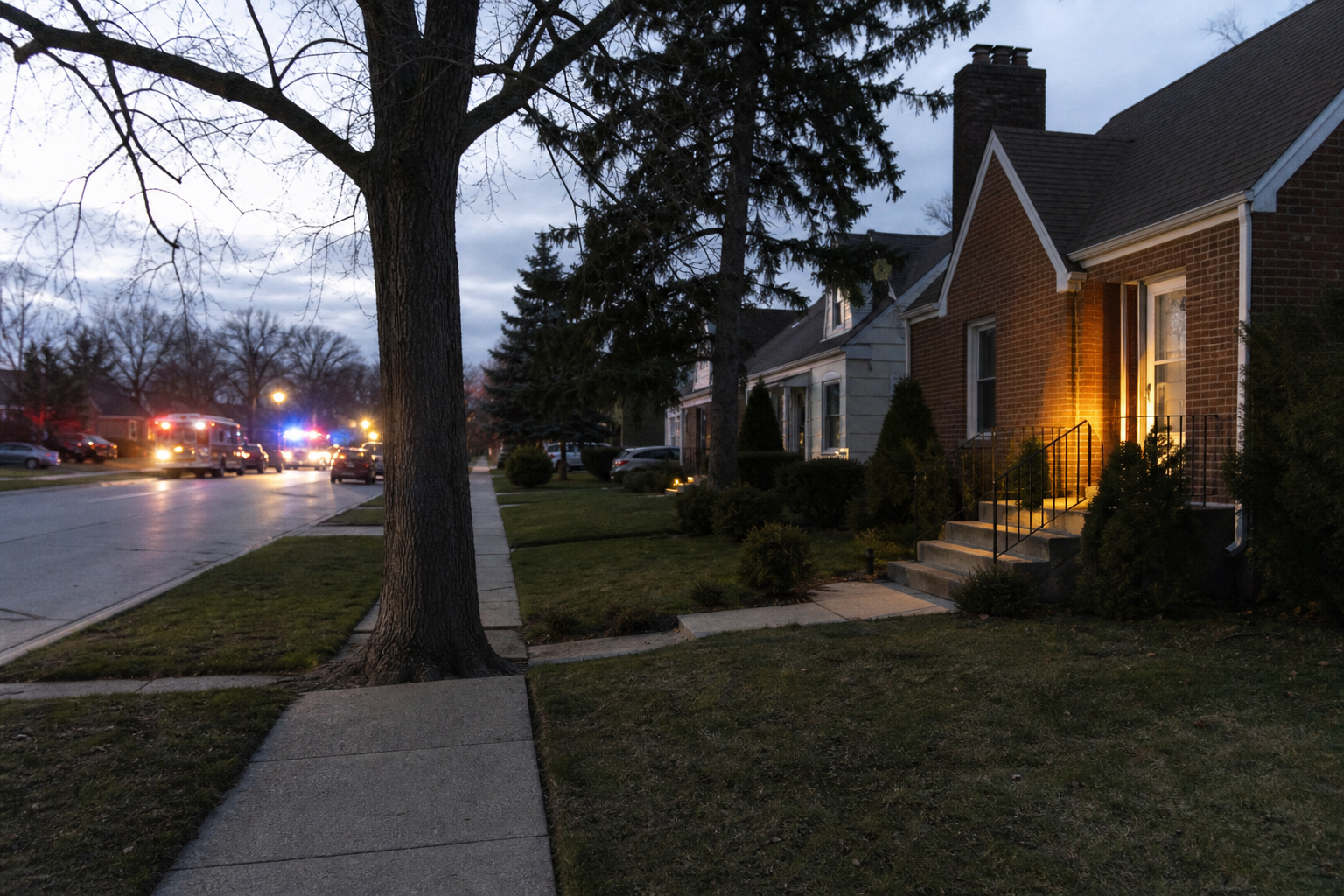
Authorities were called to the Walsh home in Frankfort, southwest of Chicago, shortly before 4 p.m. on September 1 after a neighbor found the 2-year-old, Barrett, in the basement, according to the detention petition described by The Associated Press. The neighbor began CPR and called 911. The child was taken to a hospital and pronounced dead.
The petition says police later found Walsh in a bathtub with what authorities described as self-inflicted injuries. She was taken to a hospital. Prosecutors alleged that Walsh subsequently told investigators she killed her son because she believed he was the “devil” and the “anti-Christ.” Those are allegations contained in a prosecution filing, not a judicial finding of fact.
Walsh has been charged under three theories of first-degree murder. Multiple counts in an Illinois homicide case do not mean prosecutors are alleging multiple victims; they commonly reflect different legal theories for the same death. The state must still prove its case in court beyond a reasonable doubt.
Her attorney, Andrea Lyon, has said Walsh was experiencing a psychotic episode and called the death a tragedy for the entire family. That defense position is central to what comes next, but it does not resolve criminal responsibility. Illinois courts will have to evaluate evidence concerning intent, mental condition and any applicable legal defenses.
The receipts
The public reporting rests on the Will County petition seeking to deny Walsh pretrial release. Prosecutors said witnesses told investigators that Walsh had become “very invested” in the Lindsay Clancy case and had been exchanging messages about it in a group text up to roughly three and a half hours before the scene was discovered.
The filing also described an autopsy finding of asphyxia due to ligature compression of the neck. Separate reporting has noted that final cause-and-manner determinations can remain subject to completion of police, toxicology and coroner reviews. That distinction matters: the prosecution’s account and the medical evidence cited in the petition are serious, but the criminal case remains pending.
The timing also matters. On September 1, the jury in Clancy’s Massachusetts murder trial was deliberating. On September 4, a Massachusetts judge declared a mistrial after the jury could not reach a unanimous verdict. Clancy remains charged in the 2023 deaths of her three children. Her lawyers argued she was legally insane and suffering from postpartum psychosis; prosecutors argued she understood her acts and knew they were wrong.
What the record does not show
The fact that Walsh followed the Clancy trial is not proof that the trial motivated the alleged killing. It is not proof of a “copycat” crime. It is not proof that media coverage of a public proceeding caused a private act of violence.
Those assertions would require evidence of causation: a documented statement of motive, communications tying the trial to a plan, expert analysis tested in court, or other corroborating facts. No such evidence has been made public. The AP reported explicitly that Illinois authorities have not alleged that the Clancy trial played a role in the death beyond Walsh’s discussion of the case.
That is not a technicality. The difference between a documented fact and an inference is the difference between reporting and speculation. The filing may become relevant at trial as prosecutors seek to establish Walsh’s state of mind. For now, it establishes only what prosecutors say witnesses observed: intense interest in the Massachusetts case and messages about it earlier that day.
Why it matters
This case arrives amid a highly emotional national argument over serious mental illness, criminal responsibility and the public attention surrounding the Clancy prosecution. Those questions demand precision, particularly when a child has died and a defendant’s mental health may be central to the litigation.
Mental illness can be real and acute. It also does not automatically answer the criminal-law question of legal insanity, which has specific statutory standards and must be decided from evidence. Nor should the allegations against Walsh be used to retroactively decide the unresolved Clancy case. They involve different defendants, different evidence, different state laws and separate juries.
The responsible public focus is on the institutions now exercising power: Will County prosecutors must disclose and prove evidence fairly; defense counsel must test the state’s account; the court must safeguard due process; and the coroner and police must complete their investigations. Public grief does not lower the burden of proof. It does make accuracy more necessary.
What happens next
Walsh’s case will proceed through Illinois criminal court, beginning with detention, charging and pretrial litigation. Prosecutors may present further forensic evidence, witness accounts and digital communications. Walsh’s defense can challenge that evidence and may advance a mental-health defense. A judge or jury, not internet commentary, will determine whether the state has proved guilt.
The Massachusetts case against Clancy is also unresolved following the mistrial. Prosecutors must decide whether and how to retry it. Neither the mistrial nor the Illinois charges supplies an answer to the other case.
The bottom line
A 2-year-old child died, and his mother is charged with murder. Prosecutors say she had been discussing the Lindsay Clancy trial hours earlier. That is a documented allegation in a court filing. The bigger claim—that the Clancy trial caused or inspired the death—has not been established by the evidence made public so far.
REPORTING SOURCES
Sources used for the original report.
- FOX Judge declares mistrial in Lindsay Clancy case after jury deadlocks ↗
- CNN Mother "invested" in Clancy murder trial now accused of killing her young son ↗
- AP Illinois mom charged with killing toddler was closely following Lindsay Clancy trial, officials say ↗
- NBC Lindsay Clancy’s attorney asks for Trump pardon in first interview since state mistrial ↗