NATO Says Russia’s Stealthier Submarines Are a Bigger Threat Than at Any Point Since the Cold War
A former commander’s warning about quieter Russian nuclear submarines tracks with NATO’s own assessment: Moscow’s newer undersea fleet is harder to detect, forcing allied navies to rebuild skills and capacity neglected after the Cold War.
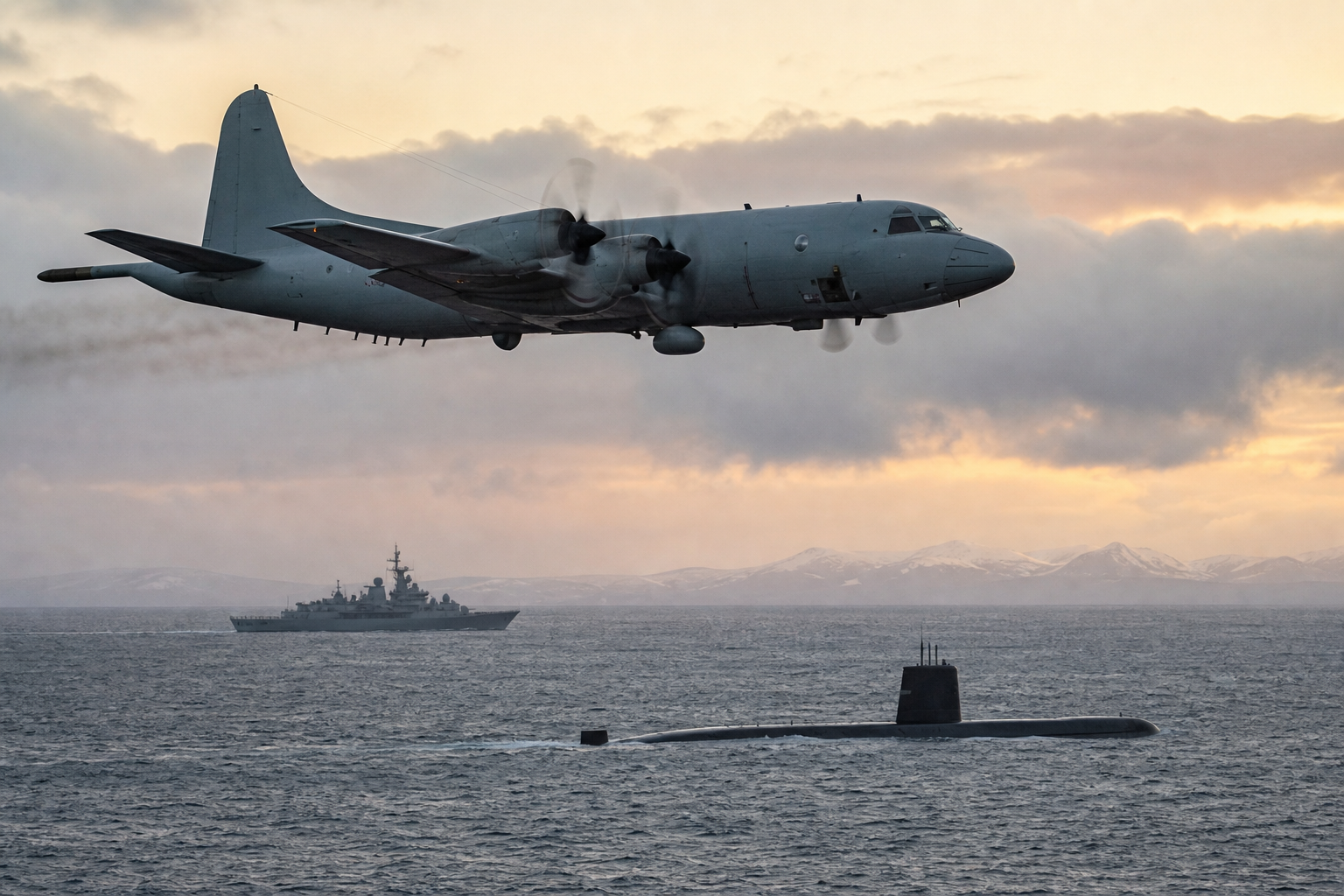
A former commander’s warning about quieter Russian nuclear submarines tracks with NATO’s own assessment: Moscow’s newer undersea fleet is harder to detect, forcing allied navies to rebuild skills and capacity neglected after the Cold War.
NATO’s own research center has delivered the clearest version of the warning: the submarine threat facing the alliance is greater than at any time in more than four decades.
That assessment gives weight to renewed concerns about Russia’s quieter nuclear-powered submarines. The immediate alarm is not that Russia has suddenly achieved naval supremacy or that war is imminent. It is that modern Russian boats are more difficult to find and track than their Soviet-era predecessors, while NATO spent decades after the Cold War allowing parts of its anti-submarine warfare capacity to atrophy.
The practical stakes are high. A submarine that cannot be reliably detected can stalk naval forces, threaten shipping routes, collect intelligence, protect Russia’s nuclear deterrent or fire cruise missiles from positions that complicate an allied response. Undersea warfare is deliberately opaque; governments do not publicly disclose many details about detection capabilities, patrols or submarine movements. But the public record shows NATO is treating the problem as a central defense challenge, not a hypothetical.
WHAT HAPPENED
A report circulated under the headline, “Russia’s quieter nuclear submarines threaten NATO, former commander warns,” put renewed attention on Moscow’s undersea forces. SPILL could not independently verify the full underlying interview or every detail attributed to the unnamed former commander from the supplied link alone. But the broad warning is consistent with official NATO and U.S. Navy records.
NATO’s Centre for Maritime Research and Experimentation said in its 2025 annual report that Russia is investing in new submarines that are “far stealthier” than Soviet-era vessels and that the threat to NATO and its member nations is greater than at any point in the past four decades. The center said the alliance needs to build state-of-the-art anti-submarine warfare capacity, combining crewed platforms with maritime autonomous systems and underwater sensing technology.
That is a significant institutional assessment. NATO is not merely describing Russia as a general geopolitical adversary; it is identifying a specific military problem: detecting and tracking submarines that are built to avoid detection.
Russia’s newer undersea fleet includes nuclear-powered ballistic-missile submarines, designed to preserve Moscow’s ability to launch nuclear weapons after an attack, and nuclear-powered cruise-missile and attack submarines that can threaten ships and land targets. Those missions are different, but both depend heavily on stealth.
WHY QUIETER BOATS CHANGE THE CALCULATION
Submarine warfare is a contest of sound. Hull design, propulsion systems, machinery isolation, coatings and operating behavior can all reduce the acoustic signature that enemy sensors use to locate a vessel. Quiet does not mean invisible or invulnerable. It means detection becomes harder, slower and more dependent on favorable conditions, persistent surveillance and highly trained crews.
The U.S. Navy publicly acknowledges that modern submarines present a distinctive detection problem because they can be extremely quiet in the noisy ocean environment. The service says active sonar can extend the range at which forces detect, identify and track quieter submarines, while also stressing that the ability to conduct anti-submarine warfare is perishable and requires frequent realistic training.
That helps explain why NATO has elevated anti-submarine exercises and maritime surveillance. In February and March 2026, allied warships, aircraft and submarines conducted the Dynamic Manta exercise near Sicily. The drill included U.S., British, Canadian, French, German, Greek, Italian, Portuguese and Turkish participants. Maritime patrol aircraft deployed sonar buoys, while naval forces practiced finding and pursuing submarines in a coordinated operation.
Those exercises are not proof that NATO has solved the challenge. They are proof that the alliance sees the challenge as serious enough to devote scarce ships, aircraft, crews and training time to it.
THE RECEIPTS
NATO’s strategic documents now frame Russia as the alliance’s most significant, direct and long-term security threat. Its maritime strategy, released in 2025, specifically points to Russian military buildup in the Baltic, Black and Mediterranean seas, as well as in the High North and Arctic.
The geography matters. The North Atlantic and Arctic are particularly consequential for the United States, Canada, Britain, Norway and other NATO members. Those waters connect North America and Europe, host vital undersea infrastructure and sit near the Russian Northern Fleet, which operates some of Moscow’s most capable submarines.
Russian submarines can also create problems far from those northern waters. A nuclear-powered attack or guided-missile submarine has the endurance to operate at distance, potentially putting pressure on NATO naval operations across the Atlantic and Mediterranean. The danger is not limited to a direct attack. A credible undersea threat can force an adversary to divert aircraft, warships and surveillance assets simply to locate and monitor a submarine.
For the United States, that means the issue competes directly with other military demands: deterring China in the Indo-Pacific, sustaining deployments in the Middle East, supporting Europe and maintaining the readiness of an aging fleet. Anti-submarine warfare requires specialized platforms and expertise. It cannot be improvised in a crisis.
WHAT THE WARNING DOES — AND DOES NOT — ESTABLISH
The available evidence supports the conclusion that Russia’s modern submarine force is an important and growing NATO concern, and that quieter boats make the detection mission more demanding. It does not support overheated claims that Russian submarines can operate undetected everywhere, that NATO is defenseless, or that a confrontation is inevitable.
Russia also faces constraints. Building and maintaining nuclear submarines is difficult, expensive and vulnerable to industrial bottlenecks. Public assessments of the Russian navy have repeatedly shown gaps between Moscow’s ambitions and its ability to field forces at the desired scale. The secrecy surrounding undersea operations also makes confident public claims about comparative capabilities inherently limited.
Still, capability is not measured only by fleet size. A relatively small number of hard-to-find submarines can impose outsized costs on an opponent. That is the basic strategic problem NATO is preparing for.
THE BOTTOM LINE
The consequential fact is not the rhetoric of a single former commander. It is NATO’s documented conclusion that Russian submarines are becoming more stealthy and that the alliance faces its most serious undersea challenge in decades.
That does not make every dramatic claim about Russian naval power true. But it does mean dismissing the issue as Cold War nostalgia would be a mistake. NATO is spending real resources on anti-submarine exercises, sensors, aircraft, autonomous systems and maritime readiness because Russia’s undersea force can threaten allied ships, sea lanes and deterrence planning without ever appearing above the surface.
WHAT HAPPENS NEXT
NATO’s test will be whether its stated concern produces durable capability: more trained crews, reliable maritime patrol aircraft, modern sonar, better sharing of underwater intelligence and enough ships and submarines to sustain operations in multiple theaters.
Those choices will carry budget and political consequences in the United States and across Europe. They will also shape a broader question for NATO: whether the alliance can rebuild a demanding Cold War-era military specialty while simultaneously confronting Russian aggression in Europe, protecting critical infrastructure and preparing for challenges beyond the Atlantic.
REPORTING SOURCES
Sources used for the original report.