Ontario’s premier and the Seneca Nation are pushing back on “Lake America.” The underlying records show the order changes federal U.S. usage and map data—not the name Canada, international bodies or private citizens must use.
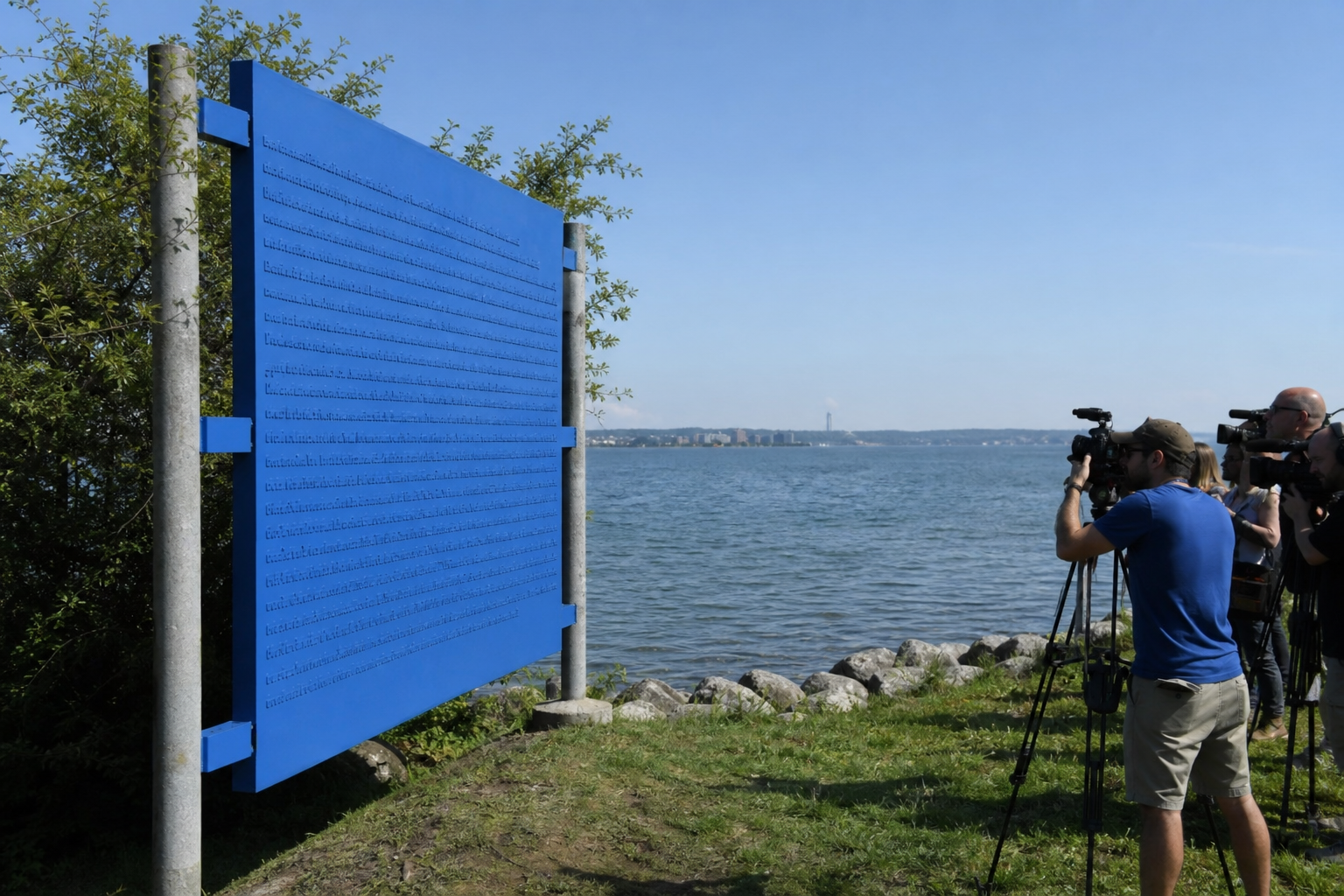
Ontario Premier Doug Ford’s new shoreline sign is a blunt answer to President Donald Trump’s August 27 executive order: “Lake Ontario — Now and Always.” But the larger dispute is not settled by competing signs or political declarations. It turns on a more practical question: what, exactly, did Trump’s order change?
The answer is narrower than the order’s rhetoric suggests. Trump directed the Interior Department and the U.S. Board on Geographic Names to change the lake’s name to “Lake America” in the federal government’s Geographic Names Information System, or GNIS, and to use that name across federal maps, contracts, documents and communications. The federal database was updated by August 29, according to Google, which said it began showing “Lake America” to Maps users in the United States.
That is a real administrative change with immediate public effects. It is not, however, a power to compel Canada, international institutions, private mapmakers or the people who live around the lake to abandon the name Lake Ontario.
What the executive order does—and does not—do
Fact check: It is misleading to describe the order as having renamed the lake everywhere. The White House order applies to U.S. federal nomenclature. It tells Interior Secretary Doug Burgum, working with the Board on Geographic Names, to remove references to Lake Ontario from GNIS and instruct federal agencies to use “Lake America.” The statute cited in the order, 43 U.S.C. sections 364 through 364f, assigns the Interior secretary and the board responsibility for uniform geographic naming across the federal government.
That authority is meaningful inside the U.S. system. GNIS is the government’s official naming reference for federal maps and other federal products. Google said its U.S. Maps label follows GNIS changes, while users in Canada will continue to see “Lake Ontario.” Users elsewhere will see both names. The practical result is a split-screen geography: one label for U.S.-based Google users, another in Canada, and a dual label outside both countries.
But Lake Ontario is a boundary water shared by New York and Ontario. The 1909 Boundary Waters Treaty governs cross-border water disputes, water levels, diversions and pollution. It recognizes the two countries’ respective authority on their sides of the boundary and their equal and similar rights to use the shared waters. Nothing in Trump’s order changes that treaty, shifts the international boundary or grants the United States control over Canada’s use of the lake’s name.
The White House order says the United States claims most of the lake’s volume because its deepest waters are in U.S. territory. That assertion does not alter the treaty framework. Nor does the order identify any new U.S. legal right over the Canadian side of the lake. Its operative provisions concern the federal government’s terminology.
Ford’s sign and the Seneca Nation’s objection
Ford unveiled the large blue sign at Fifty Point Conservation Area in Hamilton, Ontario, on August 29. In a video message, he argued that Lake Ontario’s name predated Trump and would outlast his presidency. The sign is symbolic, but it communicates a concrete governmental position: Ontario will continue calling the water Lake Ontario.
The Seneca Nation’s objection adds a separate issue often flattened in the U.S.-Canada political fight: Indigenous history. Seneca Nation President J. Conrad Seneca called for the order to be rescinded and said the existing name reflects Indigenous peoples who lived around the lake long before either the United States or Canada existed. He also described the action as disrespectful and invoked treaty concerns.
The core historical point is supported. Canadian government naming materials trace “Ontario” to an Iroquoian-language origin, though accounts differ in the precise source term and translation. That uncertainty is important. A place name’s Indigenous roots should not be used to make a casual claim that one modern Indigenous nation exclusively “owns” its origin. What is clear is that the name did not begin with either country’s modern political institutions, and the Seneca Nation is entitled to state how a federal renaming affects its history and identity.
Why this is more than a map-label fight
The order arrived during a worsening trade conflict with Canada, and the White House text presents the change as a recognition of U.S. investment, shipping, defense and economic interests in the Great Lakes. Trump separately said he was sending “no message” to Canada. Those two things are difficult to separate: the order itself repeatedly stresses American primacy over a lake that borders Canada, while its timing coincides with tariffs and retaliatory measures.
Still, the evidence does not support treating the change as a transfer of sovereignty or a revision of water-management rules. Americans and Canadians should distinguish political symbolism from legal effect. A federal agency, a U.S. map and a search result may now display “Lake America.” Navigation, environmental coordination, drinking-water systems, shipping rules and bilateral water rights remain governed by existing law and agreements.
The episode also illustrates how executive power can rapidly change official language without resolving public acceptance. The administration set a federal naming rule; Google’s U.S. product followed the federal source it uses. But neither action required Ontario, Canada’s federal government, tribal governments, local governments, schools, publishers or individual map users to adopt the same label.
What to watch next
First, watch whether federal agencies consistently implement the order beyond GNIS and Google’s U.S. label. The order gives the Interior Department 30 days from August 27 to complete the directed actions, even though the GNIS change occurred sooner.
Second, watch for a formal legal challenge. The executive order says it creates no privately enforceable right, which could complicate a direct lawsuit. But a challenge could focus on statutory procedure, administrative action or a specific federal decision implementing the new name. No court ruling resolving those questions was identified as of August 30.
Finally, watch whether the dispute remains rhetorical or spills into practical U.S.-Canada cooperation. The name on a sign does not change who controls water use. But in a period of tariff retaliation and strained diplomacy, a symbolic dispute over a shared lake can become another test of whether both governments can keep routine cross-border institutions functioning.