The National Park Service’s latest preservation finding strengthens the administration’s case for keeping the arch at Memorial Circle, but it also formally identifies adverse effects on the very historic landscape the project would remake. Major approvals, mitigation terms and a court challenge remain unresolved.
The National Park Service has made a consequential finding on President Donald Trump’s proposed 250-foot monumental arch near Arlington Memorial Bridge: it says the project would cause legally defined adverse effects to historic properties, including the designed visual relationship among the Lincoln Memorial, Arlington National Cemetery, Arlington House and the broader monumental core of Washington.
That is not the same thing as a final federal approval to build it.
The distinction matters. The Park Service’s assessment supports the administration’s position that Memorial Circle is the appropriate place for the project and says the arch’s effects cannot be entirely avoided without moving it or abandoning the central commemorative feature. But the same document says the project alters historic properties’ integrity through changes to character-defining views, settings and spatial relationships. In other words, the administration is advancing a project after acknowledging that it will damage features preservation law is designed to make agencies confront. (apnews.com)
What the Park Service actually found
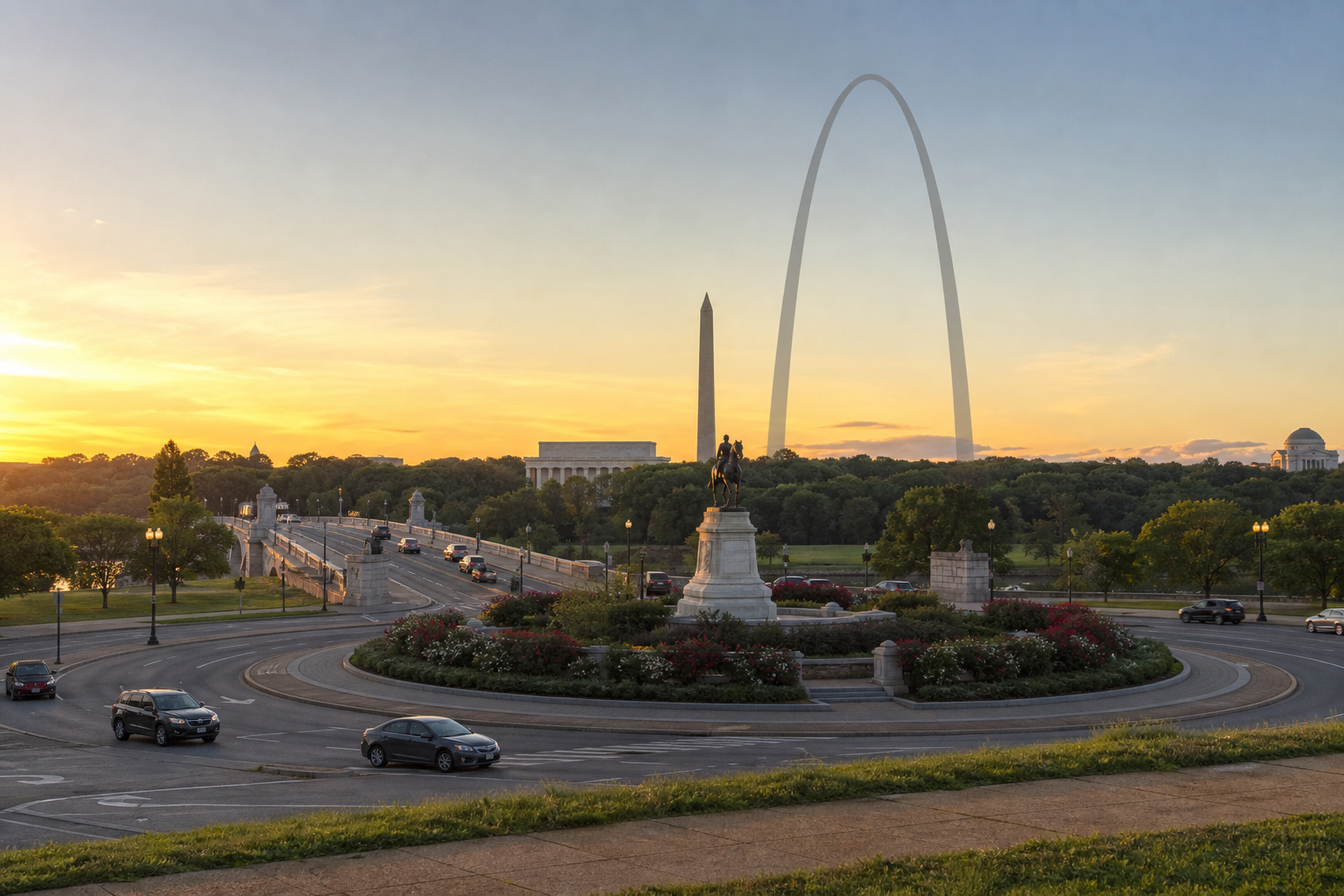
The proposed structure would stand at Memorial Circle on Columbia Island, at the west end of Arlington Memorial Bridge. Current plans describe a concrete arch clad in granite, about 250 feet tall when its statuary is included, with a 55-foot opening and an observation deck. The Interior Department says the project is intended to commemorate the country’s 250th anniversary and serve as a ceremonial gateway. (planning.nps.gov)
The preservation finding is more specific than the broad claim that the structure may affect Washington’s skyline. Under the National Historic Preservation Act process, the Park Service concluded that the proposal meets the federal definition of an adverse effect because it would alter qualities that make historic properties eligible for the National Register of Historic Places.
Its list of most substantially affected resources includes the Memorial Avenue Corridor, Arlington Memorial Bridge, Lady Bird Johnson Park, Arlington National Cemetery, Arlington House, the Lincoln Memorial, the National Mall and its historic district. It also identifies effects involving the Washington Monument, the Jefferson Memorial cultural landscape, East and West Potomac parks, Rock Creek and Potomac Parkway, and potentially the Pentagon. (planning.nps.gov)
The central issue is the corridor’s intentional design. The Park Service says the bridge-and-avenue composition was created as a ceremonial connection from the Lincoln Memorial toward Arlington House and Arlington National Cemetery, intended to symbolize reunion between North and South. The proposed arch would be placed directly within that axial composition. (planning.nps.gov)
Fact check: “backing” the arch does not erase the finding of harm
Claim: The Park Service “backed” Trump’s arch, so preservation concerns have been resolved.
Verdict: Misleading. The agency’s report gives the administration an important argument for proceeding at Memorial Circle: it frames the site’s ceremonial history as part of the project’s rationale and dismisses smaller designs on the grounds that they would more fully block the Lincoln Memorial–Arlington Cemetery view. Yet the assessment does not find the project harmless. It formally finds adverse effects and says future work must address avoidance, minimization and mitigation. Proposed steps include design refinements to reduce visual intrusion, construction controls, and further archaeological investigation. (planning.nps.gov)
That means the debate has shifted from whether the arch would alter protected historic resources—the agency says it would—to whether the federal government can lawfully accept, mitigate and proceed with those effects.
Why the process is still incomplete
The National Capital Planning Commission approved preliminary site and building plans on July 9, not final plans. Its action explicitly requires the administration to return for final review. Before that happens, commissioners said they still need a justification for the 250-foot height and updated information about off-site traffic, pickup and loading, granite selection, and any Federal Aviation Administration lighting or safety requirements. The commission also said it must determine whether the Height of Buildings Act binds the federal government for this project. (ncpc.gov)
The Park Service assessment likewise says a programmatic agreement is to be developed with consulting parties to govern continuing consultation and resolution of adverse effects, including any archaeological impacts. It notes that the project area has moderate-to-high archaeological sensitivity and that additional subsurface work may be needed before construction disturbs deeper soils. (planning.nps.gov)
Those details are not procedural trivia. They determine what the arch’s final design can be, what construction safeguards apply, whether archaeological work changes the timetable and whether the administration has completed the preservation obligations it says it is following.
The separate question: Does Congress have to authorize it?
A federal lawsuit filed in February by veterans and an architectural historian argues that the executive branch cannot construct the arch without congressional authorization under the Commemorative Works Act and related law. The complaint is an allegation, not a court finding, and the administration disputes the plaintiffs’ legal theory. But the case remains important because it presents a separate issue from historic preservation: whether the president and executive agencies possess the underlying authority to build the monument at all.
The publicly available docket shows cross-motions for summary judgment were being litigated in July, with a plaintiffs’ notice of supplemental authority filed August 11. SPILL could not verify a later merits ruling from the public docket materials reviewed for this report. (washingtonpost.com)
What to watch next
Three events will show whether the project is moving from a high-profile proposal to a buildable federal project: a finalized preservation agreement and mitigation plan; final National Capital Planning Commission action, including its answer on height and transportation questions; and a ruling in Lemmon v. Trump.
The broader accountability question is not whether an administration may favor a new monument. It is whether the government can clearly show the public what legal authority, final approvals, mitigation commitments and financing arrangements will govern a project that its own preservation analysis says will permanently alter one of the country’s most deliberate commemorative landscapes.