Tech · ↑ RISING
Humanoid Robot Posts 8.64-Second 100 Meters at Beijing Games
Tiangong Ultra lowered the sprint mark for a second straight day, while crashes beyond the finish line underscored the gap between fast demonstrations and dependable workplace robots.
80 SPILL SCORE?
WHAT IS THE SPILL SCORE?A 0–100 measure of story momentum based on reporting activity, source strength, recency and developing coverage.
It measures momentum — not truth, importance or political favorability.85–100 SURGING · 70–84 RISING · 50–69 MOVING
BY SPILL NEWSROOM · PUBLISHED Aug 27, 2026 · 7:22 AM
Tiangong Ultra lowered the sprint mark for a second straight day, while crashes beyond the finish line underscored the gap between fast demonstrations and dependable workplace robots.
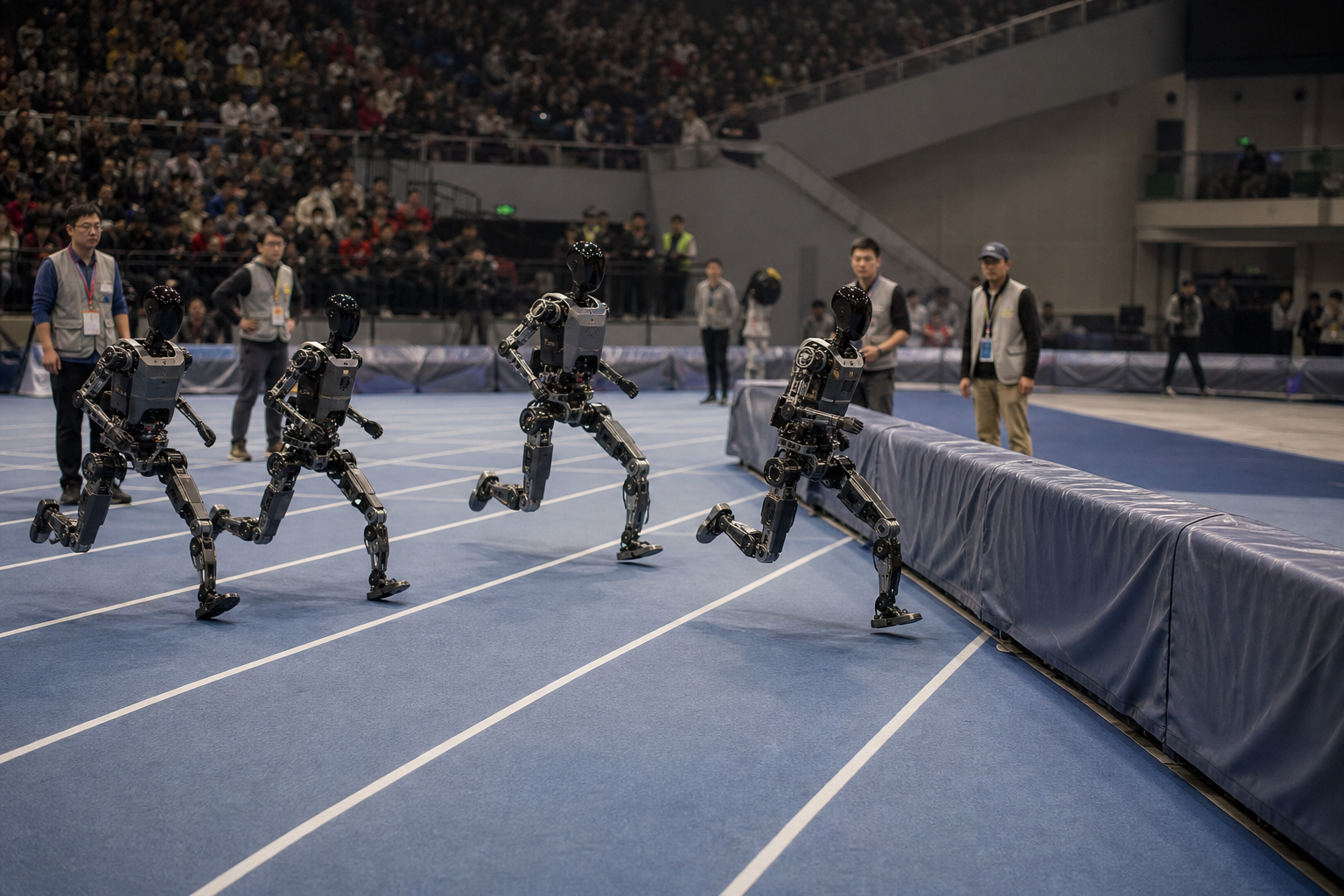
BEIJING — A humanoid robot called Tiangong Ultra ran 100 meters in 8.64 seconds on August 26, setting a new mark at the World Humanoid Robot Games in Beijing and improving on records set earlier in the five-day competition.
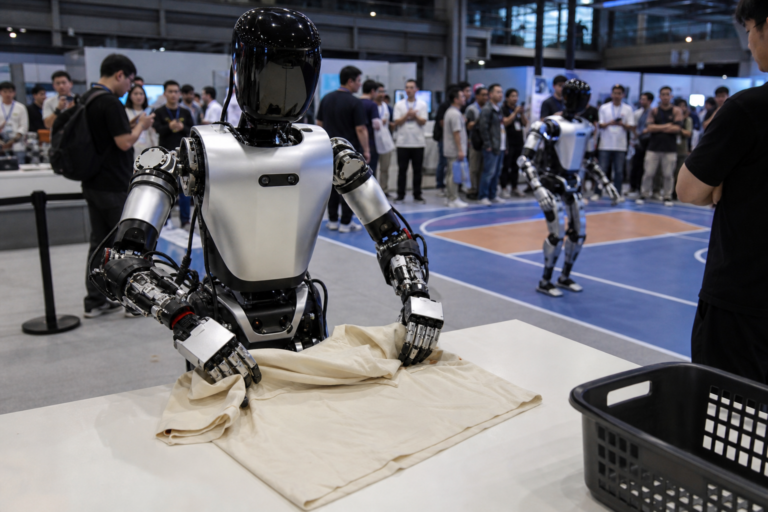
The same model had run 8.86 seconds the day before, after posting 9.39 seconds at the start of the games. More than 2,000 humanoid robots took part in the event’s second edition, competing in sports including running, soccer and boxing, as well as tasks modeled on housework, hotel service and emergency response.
The sprint finale also highlighted the machines’ limitations. Several robots, including the winner, hit a padded barrier after crossing the line. Some produced sparks and were attended to with fire extinguishers before being removed from the track.
The speed results surpassed the 9.58-second men’s human world record held by Usain Bolt, but the events are not equivalent athletic contests. The robot races took place in a controlled setting, and Reuters reported that industry executives and researchers say current humanoids still struggle with the adaptability, dexterity and reliability needed for broad, general-purpose work.
The games included practical challenges such as industrial assembly, material handling, EV charging and restaurant work. Those tests, rather than headline sprint times alone, are intended to gauge whether humanoid robots can complete useful tasks without frequent human intervention.
SPILL INTELLIGENCE
THE WHOLE STORY
01WHAT HAPPENED
Tiangong Ultra recorded an 8.64-second 100-meter run at the Beijing World Humanoid Robot Games, beating marks set by the same model earlier in the competition. Several runners crashed after the finish, with some sparking as staff responded.
02HOW COVERAGE DIFFERS
The coverage differs mainly in scope, not in its account of the event. AP centers on the final-day sprint record and the crashes after the race. Reuters uses the games as part of a broader examination of whether China’s rapidly expanding humanoid-robot sector can convert demonstrations into commercially useful machines.
03COMMON GROUND
Both reports portray the games as evidence of rapid gains in humanoid robot hardware while emphasizing that strong performances in structured demonstrations do not by themselves establish readiness for sustained, autonomous work in unpredictable settings.
04THE DIVIDE
There is no meaningful political or factual divide in the reporting. The distinction is analytical: AP focuses on the competition’s immediate results, while Reuters places those results alongside evidence of continuing technical and commercial constraints.