The Nancy Grace Roman Space Telescope lifted off aboard a SpaceX Falcon Heavy, beginning a mission to chart vast stretches of the cosmos, probe dark energy and search for worlds beyond the solar system.
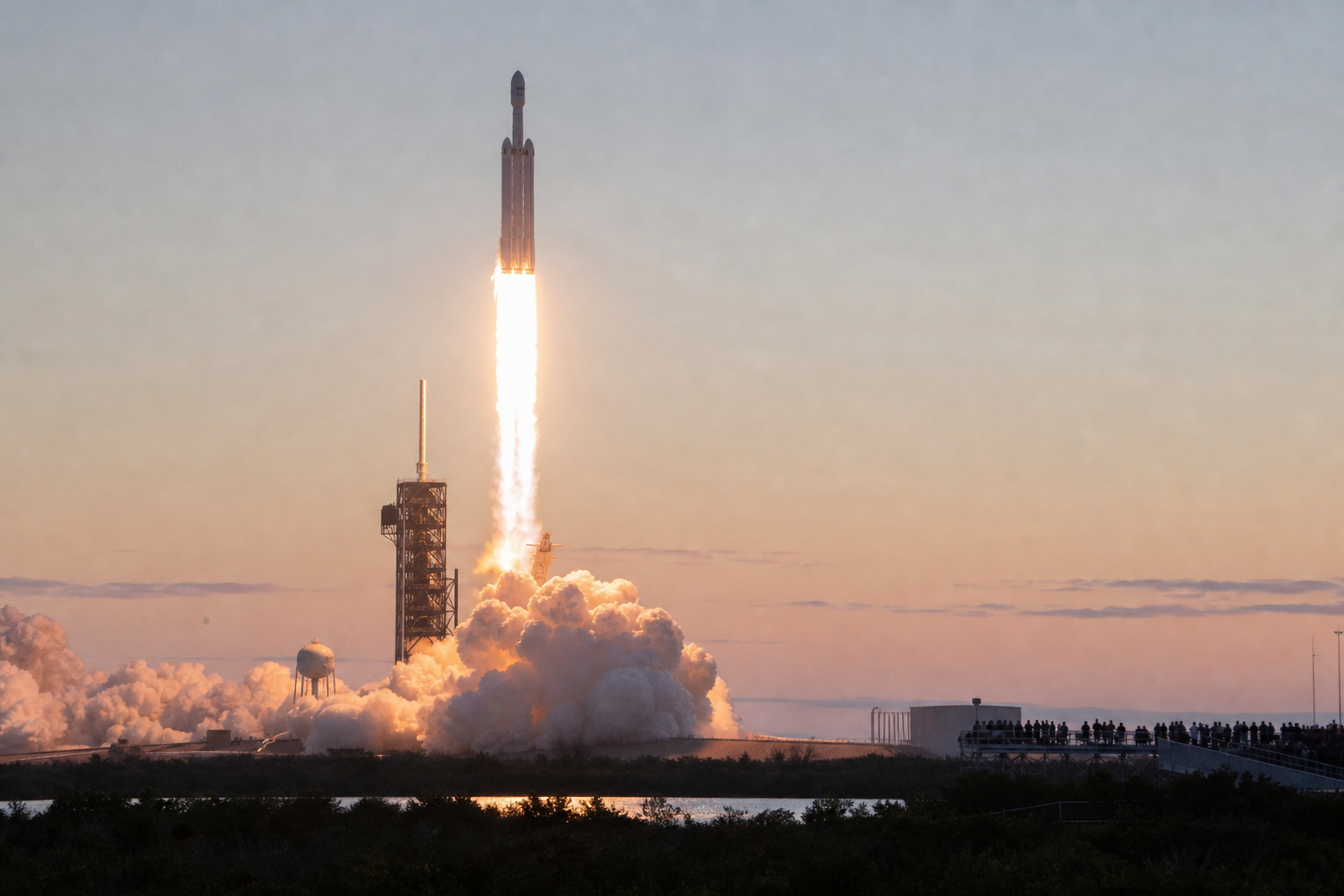
NASA launched its Nancy Grace Roman Space Telescope from Kennedy Space Center in Florida on Sunday, sending the agency’s newest flagship observatory toward a vantage point roughly 1 million miles from Earth.
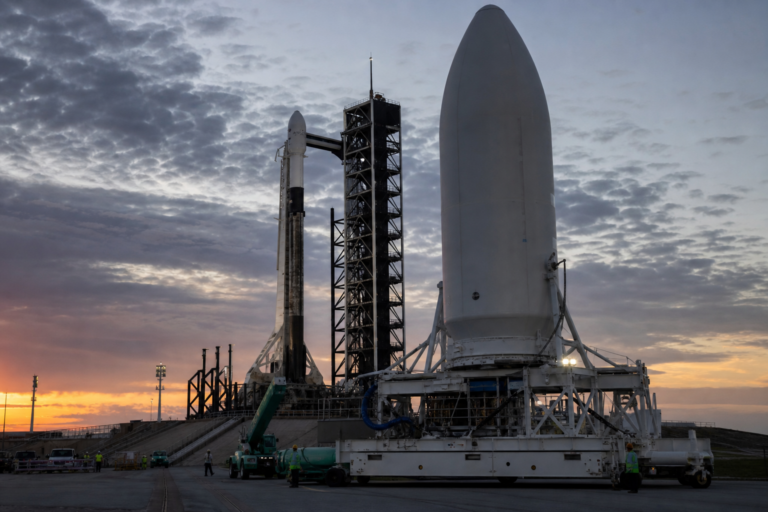
Roman lifted off at 7:26 a.m. EDT aboard a SpaceX Falcon Heavy rocket from Launch Complex 39A. NASA said the telescope’s wide-field infrared surveys will help researchers map billions of galaxies, study dark matter and dark energy, investigate black holes and identify planets beyond the solar system.
The observatory is named for Nancy Grace Roman, NASA’s first chief astronomer. Its principal instrument is designed to capture broad, detailed views of space, with a field of view at least 100 times larger than Hubble’s, according to NASA. That wider perspective is intended to let scientists observe large cosmic populations rather than only individual targets.
Roman also carries a coronagraph, a technology demonstration that blocks a star’s glare so astronomers can better see faint objects nearby, including exoplanets and the disks of material from which planets form. CNN’s coverage focused on that starlight-suppression system, while the Associated Press emphasized the larger survey mission and the launch itself.
The telescope is headed for the Sun-Earth L2 point, a region of space beyond Earth where it will operate in an orbit that supports long, stable observations. NASA expects the mission to last at least five years. AP reported that the project cost about $4.3 billion.
Roman will join a growing set of observatories studying the universe at different scales, including Hubble, the James Webb Space Telescope and the European Space Agency’s Euclid mission. Its central promise is breadth: a rapid, panoramic view that could make room for discoveries researchers have not yet anticipated.