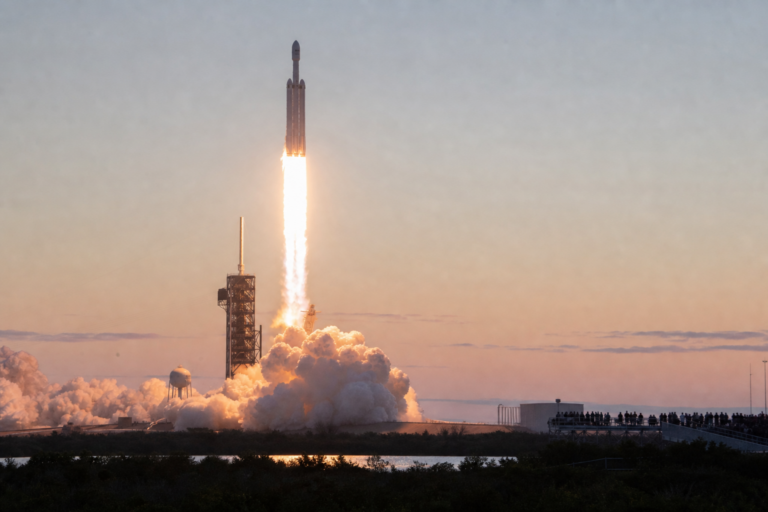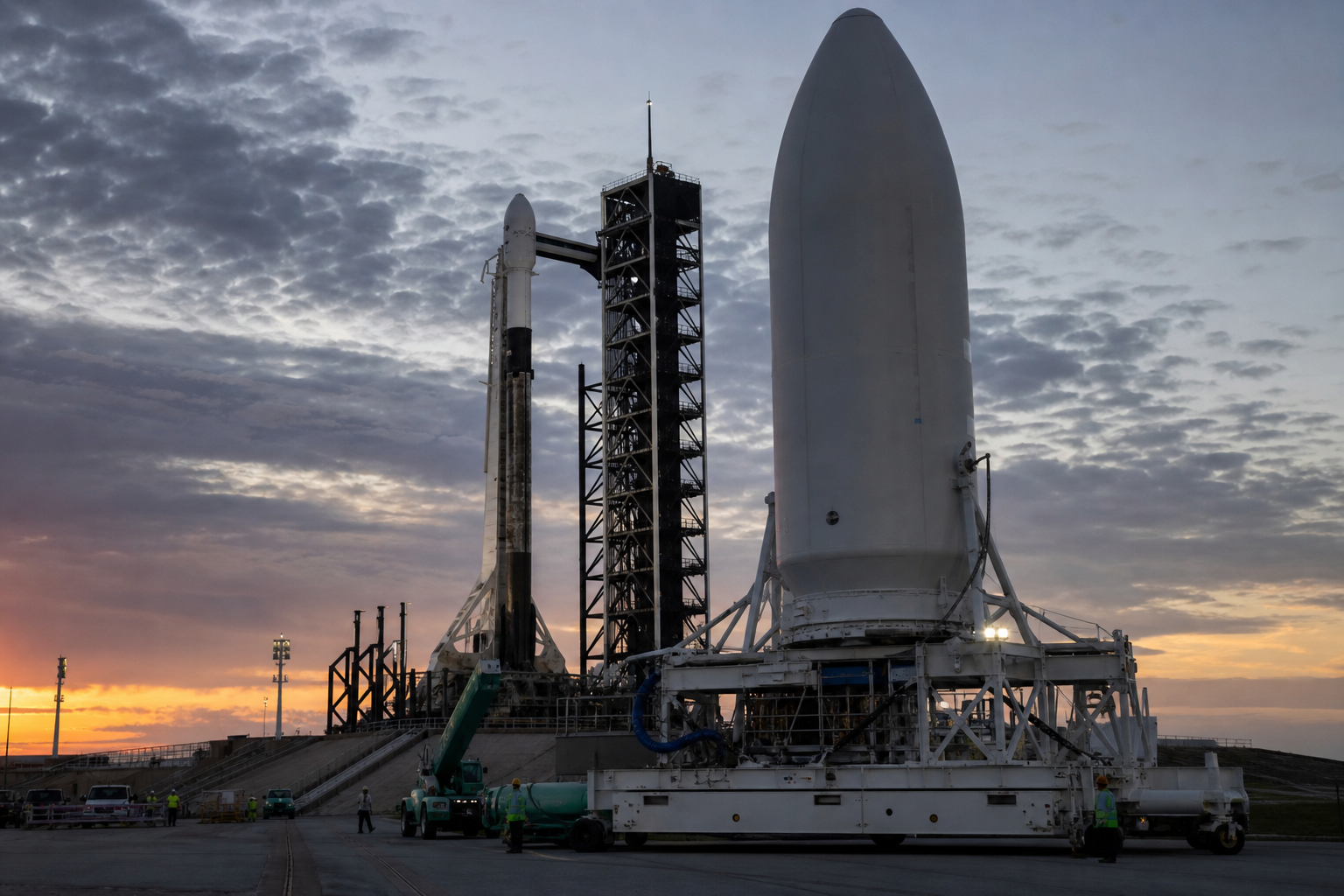
The Nancy Grace Roman Space Telescope is scheduled to lift off from Florida on Aug. 30, beginning a mission to survey dark energy, distant galaxies and planets beyond the solar system.
NASA is targeting Sunday, Aug. 30, for the launch of the Nancy Grace Roman Space Telescope, a wide-field infrared observatory designed to study some of astronomy’s biggest unanswered questions.
Roman is scheduled to lift off no earlier than 7:26 a.m. EDT aboard a SpaceX Falcon Heavy rocket from Launch Complex 39A at Kennedy Space Center in Florida. NASA says the telescope will travel to the Sun-Earth L2 point, about 1 million miles from Earth, where it will undergo deployments and commissioning before regular science operations begin.
The mission’s central instrument is built to image a much broader patch of sky at once than Hubble can. That capacity is intended to help researchers map the distribution and evolution of galaxies, track Type Ia supernovas and test explanations for the universe’s accelerating expansion, including dark energy.
Roman will also survey the crowded center of the Milky Way for planets, including worlds that are difficult to find with other methods. Its coronagraph, meanwhile, is a technology demonstration intended to advance techniques for blocking starlight and directly studying planets and debris disks around nearby stars.
NPR’s reporting emphasizes Roman’s potential role in testing the prevailing cosmological model and the possibility that a broad new survey could uncover unexpected phenomena. The telescope is named for Nancy Grace Roman, NASA’s first chief astronomer and a key advocate for space-based astronomy.
A successful launch would start, rather than complete, the mission’s most consequential phase. Roman will need to reach its destination, calibrate its instruments and begin returning data before astronomers can assess how closely its discoveries match the mission’s ambitious forecasts.