Gen. Dan Caine’s written assurance is significant, but its most important limit is in the wording: it describes current military plans, not every potential federal action around the November 3 midterms.
Gen. Dan Caine, the chairman of the Joint Chiefs of Staff, has given a direct answer to a question that should not be ambiguous before a federal election: the U.S. military has no plans to send federal troops or federalized National Guard personnel to polling places during the November 3, 2026, midterms.
In a letter to Sen. Elissa Slotkin, D-Mich., Caine also said the Joint Force has no plan to use those personnel to seize ballots, voting machines or other election materials. He wrote that he had neither received nor expected to receive an unlawful order concerning the military’s role in the election.
The central claim in Caine’s letter is supported by the available record. There is no disclosed Pentagon plan to put federal military personnel at polling sites or to take custody of election equipment. Defense Secretary Pete Hegseth, who received a similar request from Slotkin, had not publicly responded as of August 31.
But the distinction between no plans and no authority matters. Caine’s letter is a statement of the military’s present posture. The more durable protection is federal law, which generally makes it a crime for a federal military or civil official to order, bring or keep troops or armed men at a general or special election site. The statute contains an exceptionally narrow exception for repelling armed enemies of the United States.
What the general answered — and what he did not
Caine’s answer covers two categories: federal active-duty military personnel and National Guard members who have been federalized. That is a meaningful category. Federalized Guard forces operate under federal command, rather than under a governor’s authority, and are part of the “Joint Force” Caine leads in his role as the nation’s senior military officer.
The letter also specifically rejects a scenario that became a concern after the 2020 election: military involvement in taking control of voting machines, ballots or other election records. A military role in election administration would be far outside the ordinary division of responsibilities in U.S. elections, which are run chiefly by state and local officials, subject to federal constitutional and statutory rules.
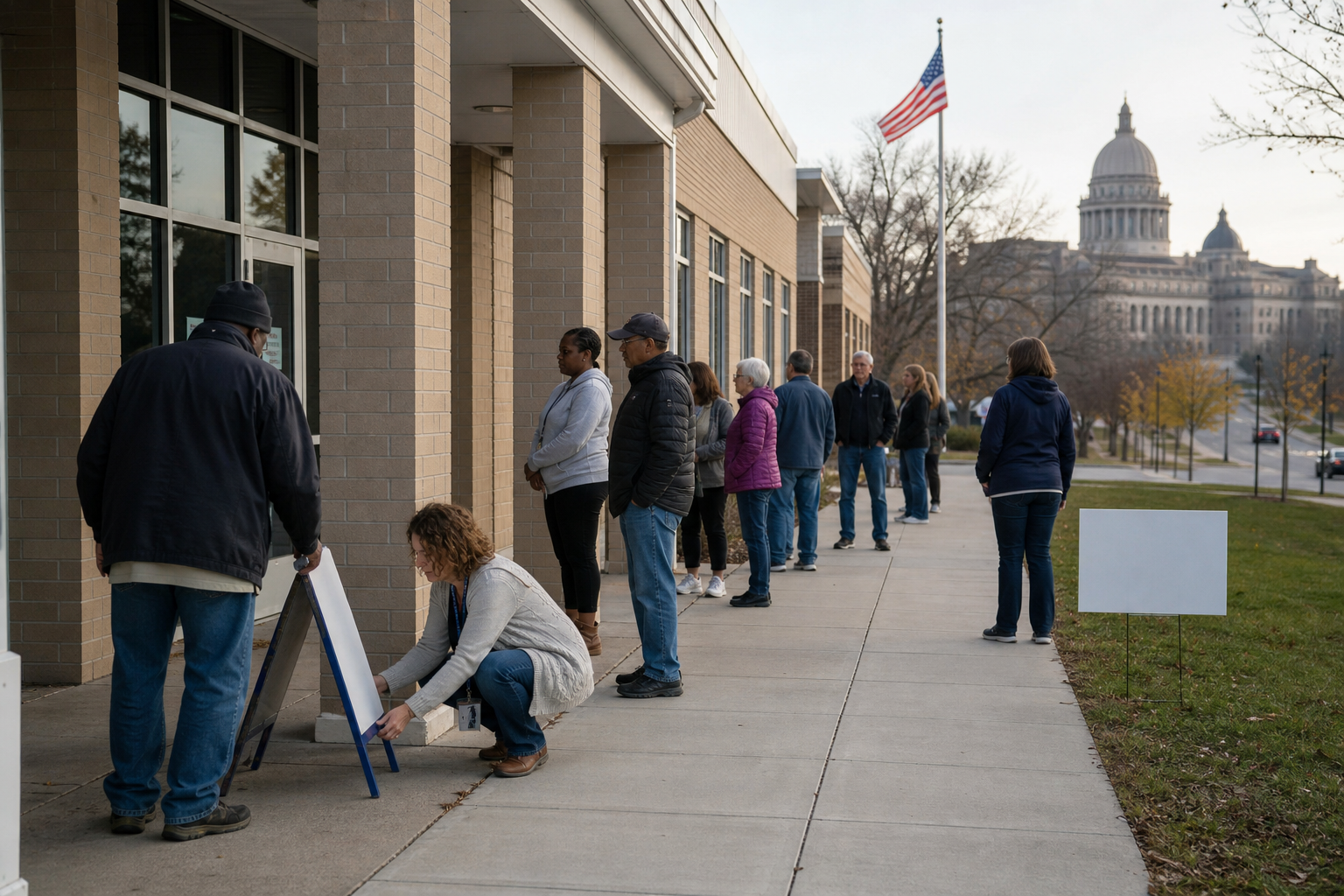
Yet Caine did not issue a universal statement that no federal personnel of any kind will be near voting locations. His letter addressed the military. It did not describe potential actions by civilian federal agencies, nor did it set rules for National Guard personnel who remain under state command. Those are legally and operationally different questions.
That does not mean such actions would automatically be lawful. Federal law separately prohibits intimidation and interference with voting, and state laws often regulate conduct at or near polling places. But readers should not treat a military assurance as a blanket description of every law-enforcement or election-security decision that could arise in the final weeks before Election Day.
The legal baseline is stronger than a promise
The relevant federal prohibition, 18 U.S.C. § 592, predates this election cycle by generations. It prohibits federal officials from using troops or armed men at places where general or special elections are held, except in the statute’s armed-enemy contingency. Violations can carry a prison sentence, a fine and disqualification from federal office.
That law is narrower than a broad ban on every security presence in an entire city on Election Day. Its language is directed at troops or armed personnel at the place where voting occurs. Still, it is an important legal line: the federal government cannot turn polling sites into military posts simply by asserting generalized concern about election integrity, disorder or fraud.
There is also an important distinction between military deployment and lawful federal election monitoring. The Justice Department can send attorneys and other personnel to monitor compliance with voting-rights laws, and federal observers may be assigned in circumstances authorized by a court. Those observers are not soldiers sent to administer elections or seize election materials.
Why the statement matters now
The immediate political context is a broader argument over federal power in elections. Trump has repeatedly pressed claims about election fraud and has advocated a greater federal role in voting rules. Those claims and proposals must be evaluated separately from Caine’s response.
For this story, the narrow fact-check is straightforward: there is no evidence in the general’s letter that the Pentagon is preparing to deploy federal troops to polling places. To the contrary, Caine expressly said it is not. It would be inaccurate to report that the military has been ordered to the polls, or that Caine disclosed a plan to seize ballots or machines.
It would also be inaccurate to convert his letter into an irreversible guarantee about all federal activity connected to the election. A future directive, court dispute, agency operation or state-level security decision would have to be judged on its own facts and legal authority.
The practical test before November 3 is therefore concrete. Watch for written federal directives; changes in National Guard command status; Justice Department announcements specifying whether personnel are monitors, investigators or armed agents; and any effort to place federal officers at voting locations rather than at a lawful distance under state rules. Those details, not campaign rhetoric alone, would determine whether government conduct crosses from election protection into unlawful interference.
Caine’s letter lowers the temperature around one especially consequential possibility: direct use of the federal military at the polls. The law supplies an additional safeguard. But the public still deserves precise answers from civilian officials about what other federal election-related operations, if any, are planned.